 注: 建议图片大小150px*50px
丨
注: 建议图片大小150px*50px Views: 0 Author: Site Editor Publish Time: 2026-07-19 Origin: Site


For playground contractors, importers, and municipal project managers, specifying kindergarten playground surfacing is far more than choosing an attractive color palette. Behind every successful project lies a complex decision matrix: safety compliance, material durability, UV stability, installation feasibility, lifecycle cost, and supplier reliability. The stakes are high, because children's safety is non-negotiable, and project budgets don't allow for premature failures.
This guide addresses the real questions procurement professionals ask: What differentiates EPDM from recycled rubber? Why do some installations fade within months while others remain vibrant for years? How can I avoid contractors who cut corners on base preparation? What makes a supplier reliable when shipping halfway across the globe?
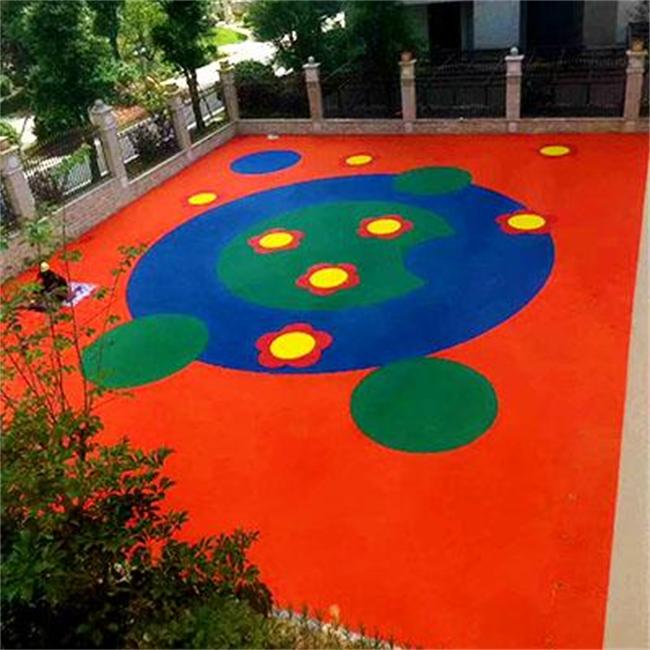
What Is EPDM Kindergarten Playground Surfacing?
EPDM (Ethylene Propylene Diene Monomer) is a synthetic rubber elastomer that, when processed into colored granules and bound with a UV-stable resin, creates seamless, impact-absorbing surfaces for children's play areas. Unlike recycled rubber from scrap tires, EPDM is engineered from virgin polymer compounds, allowing precise control over physical properties and color consistency .
The system typically employs a two-layer construction: a resilient SBR (Styrene-Butadiene Rubber) base layer for shock absorption, topped with a colored EPDM wearing course that provides durability, UV protection, and aesthetic appeal . Total system thickness for kindergarten applications generally ranges from 15mm to 30mm, depending on required critical fall height protection .
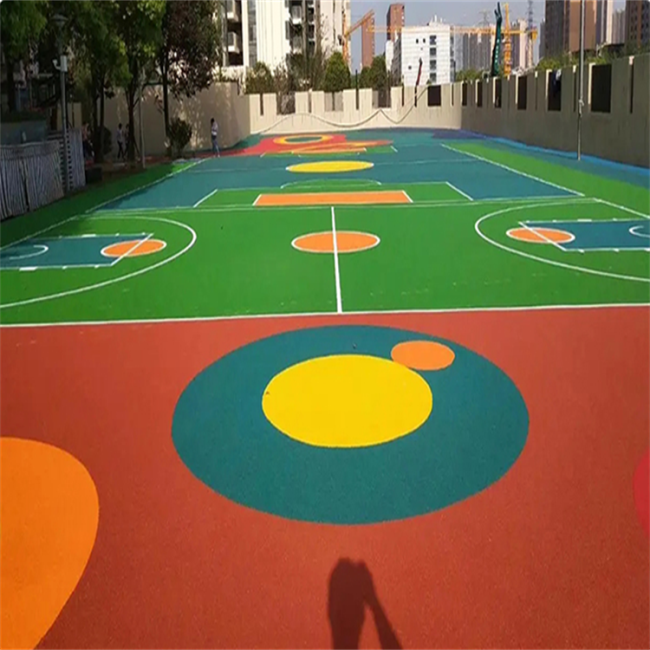
The Technical Differentiator: Sulfur-Free Vulcanization
Traditional EPDM manufacturing relies on sulfur-based vulcanization to cross-link polymer chains. However, this conventional approach introduces a fundamental weakness: sulfur residues degrade under UV radiation and heat, releasing sulfuric compounds that cause odor and accelerate polymer breakdown .
Advanced sulfur-free (peroxide-based) vulcanization technology eliminates this vulnerability. By using organic peroxides as cross-linking agents, the polymer structure achieves greater stability, transforming the material's entire performance profile .

Why Kindergarten Playgrounds Increasingly Specify EPDM
Safety Performance That Lasts
Impact attenuation—the ability to absorb energy during a fall—remains the primary safety metric for playground surfacing. EPDM systems, when properly installed, maintain consistent shock absorption properties over extended service life. While loose-fill materials like engineered wood fiber can displace and compact, reducing safety margins, unitary EPDM surfaces provide stable protection throughout fall zones .
The critical fall height of properly engineered EPDM systems exceeds 1.4 meters, covering most kindergarten equipment requirements. For installations targeting higher fall heights, thickness adjustments accommodate increased impact demands .
Regulatory Compliance
In China, kindergarten surfacing must meet GB 36246-2018 requirements, regulating volatile organic compounds, physical performance metrics, and colorfastness. The standard mandates impact absorption values of 35% or greater for game areas, vertical deformation between 1.0mm and 5.0mm, and specific tensile strength thresholds .
Accessibility Advantage
EPDM unitary surfaces provide stable, wheelchair-accessible routes without the ongoing maintenance required to keep loose-fill materials compliant. For projects where accessibility is non-negotiable—public kindergartens, inclusive education facilities—EPDM simplifies both initial compliance and long-term ADA adherence .

The Hidden Costs of Low-Quality EPDM: What Procurement Must Avoid
UV Degradation and Fading
The most visible failure mode of inferior EPDM is color fading. Low-quality granules often employ insufficient UV stabilizers or rely on surface coatings rather than through-pigmented material. When the surface layer wears, the color underneath differs from the top, revealing inconsistent appearance .
Sulfur-based EPDM further compounds this problem. Under UV exposure, sulfur residues degrade, causing discoloration and surface powdering within 12–24 months. Quality sulfur-free formulations maintain color integrity significantly longer, with accelerated weathering tests demonstrating retention exceeding 90% after 2000 hours of UV exposure .
Odor Issues
One persistent complaint from kindergarten administrators involves rubber odor, particularly in hot weather. This problem almost invariably traces to sulfur residues in conventional EPDM or, worse, the use of recycled SBR (styrene-butadiene rubber) containing tire compounds. When temperatures rise, these materials off-gas sulfurous compounds that are not only unpleasant but potentially concerning from a health perspective .
Sulfur-free EPDM eliminates this problem at the molecular level. With no sulfur to degrade, the material remains odorless even under intense summer heat.
Installation Failures
Poor installation practices represent perhaps the greatest source of project failure. Insufficient base preparation, inadequate thickness, improper binder ratios, or unfavorable weather conditions during curing all produce surfaces that fail prematurely .
Critical questions to ask potential installers: How will you verify thickness in fall zones? What is your plan for drainage? What weather conditions are acceptable for installation? Who supervises the work, and what is their track record?
The Pitfalls of Recycled Content
Sourcing lower-cost alternatives carries hidden liabilities. Recycled rubber from tire crumb contains varying compositions, metal fragments, and contaminants. Consistent color is impossible. UV resistance is unpredictable. And the presence of polycyclic aromatic hydrocarbons (PAHs) can trigger regulatory non-compliance .

Performance Metrics: What the Numbers Mean
For contractors and procurement managers comparing specifications, several key metrics differentiate quality EPDM from commodity products:
Tensile Strength
Superior EPDM formulations achieve tensile strength of 4–7 MPa, compared to the minimum industry requirement of 0.7 MPa under GB/T 14833. Higher tensile strength translates to better resistance to tearing and abrasion under heavy foot traffic .
Elongation at Break
Quality EPDM exhibits elongation values exceeding 450%, indicating the material's ability to flex without cracking. This property is particularly critical in climates with temperature extremes, where thermal expansion and contraction stress the surface .
Density
Lower bulk density (under 1.60 kg/dm³) provides better coverage per kilogram of material, directly affecting material costs. Superior processing achieves consistent granule shape and minimized dust content, optimizing yield .
Colorfastness
UV resistance ratings (typically scored 4–5 on the grayscale) indicate whether the EPDM retains its intended color under prolonged sunlight exposure. The pigment should be infused throughout the granule, not surface-coated, ensuring color remains even as the surface wears .
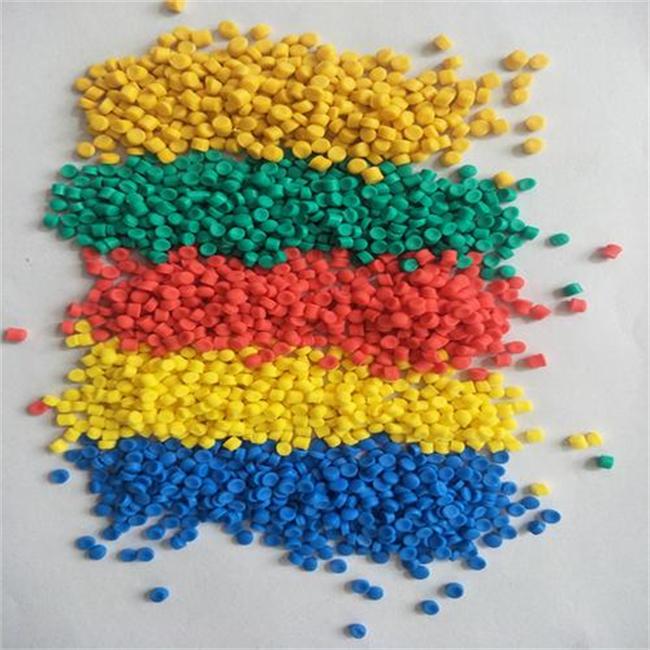
How to Select a Reliable EPDM Supplier
Technical Capability Assessment
Verify whether the manufacturer employs sulfur-free vulcanization technology. This single technical choice determines odor elimination, UV resistance, and service life extension. Suppliers operating proprietary peroxide-based systems demonstrate deeper technical competence than those simply blending and coloring generic EPDM compounds .
Production Capacity and Consistency
Suppliers with integrated manufacturing—from polymer compounding through granulation and coloring—maintain tighter quality control than those simply processing purchased raw materials. Automated batching and consistent process parameters ensure batch-to-batch consistency, critical for projects requiring color matching across multiple shipments .
MOQ Flexibility and Lead Times
Project demands vary widely, from small kindergarten renovations to large municipal developments. Suppliers offering flexible minimum order quantities (MOQ) support both trial orders and emergency replenishment. Similarly, rapid response times—ideally under 2 hours for inquiries—signal operational responsiveness .
Customization Capabilities
Standard colors serve many projects, but custom color matching may be required for corporate branding, themed playgrounds, or architectural specifications. Suppliers with in-house color labs and Pantone matching capability add value for differentiated projects.

Construction and Installation Best Practices
Base Preparation
The foundation determines the lifetime performance of any surfacing system. Concrete or asphalt bases require:
- Proper curing (minimum 28 days for concrete)
- 95% or greater compaction
- Drainage design to prevent ponding
- Acid washing for concrete to create optimal bonding surfaces
Contractors should verify base conditions before material arrives, as base corrections constitute one of the most common sources of costly change orders .
Weather Considerations
Installation conditions directly affect curing and long-term adhesion. Temperature extremes—below 5°C or above 35°C—require adjustments to binder formulations. High humidity accelerates curing, potentially reducing working time. Rain during application or within 24 hours of curing compromises adhesion .
Thickness Verification
Regulatory requirements and fall-height protection depend on specified thickness. Spot-check measurements during installation, with documented verification, ensure the final surface meets design requirements. For kindergarten applications, the wearing course typically ranges from 5–15mm, with total system thickness adjusted for equipment fall heights .

FAQ
How do I verify EPDM meets safety standards?
Request official test reports covering impact attenuation (ASTM F1292 or EN 1177), chemical safety (REACH/RoHS for Europe, GB 36246 for China), and UV stability. Confirm the reports come from accredited third-party laboratories, not supplier self-certification. For critical projects, consider independent lab verification of delivered material .
What is the typical service life of quality EPDM surfacing?
Sulfur-free EPDM systems, properly installed and maintained, provide 10+ years of service with significant performance retention. Sulfur-based materials may begin degrading within 2–3 years under high-UV conditions. The difference is attributable to molecular stability: without sulfur residues, peroxide-crosslinked EPDM resists oxidative degradation .
Can I get samples before ordering?
Reputable suppliers provide physical samples ($20–$50, typically refundable upon order confirmation) that allow evaluation of color accuracy, granule geometry, and material properties. For larger projects, sample installations on site permit testing of binder compatibility and final appearance .
How should I evaluate competing bids?
Compare the full scope: material specifications (virgin vs recycled, sulfur-free vs conventional), thickness assumptions, base preparation requirements, installation labor quality, warranty terms, and delivery timeline. The lowest unit price rarely corresponds to lowest total project cost when hidden factors—early replacement, maintenance demands, safety re-testing—are considered .
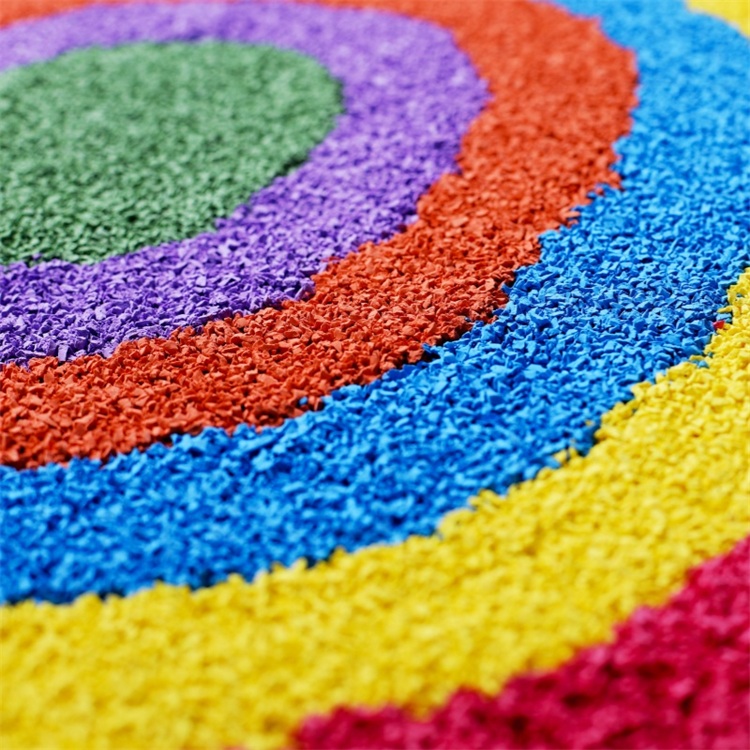
The EPDM Advantage: Summary for Decision Makers
1. Odor-free: Sulfur-free technology eliminates sulfurous off-gassing, ensuring no unpleasant smell even under intense summer heat
2. Extended service life: Molecular stability from peroxide cross-linking multiplies service life by 3x compared to conventional EPDM
3. Superior mechanical properties: Tensile strength (4–7 MPa) and elongation 2–3x higher than standard requirements
4. Exceptional UV resistance: Color retention under accelerated weathering far exceeds conventional formulations
5. Environmental compliance: Meets food-grade safety standards, REACH, and GB 36246 requirements
6. Flexible procurement: No minimum order quantity; full customization available for color and Granule size
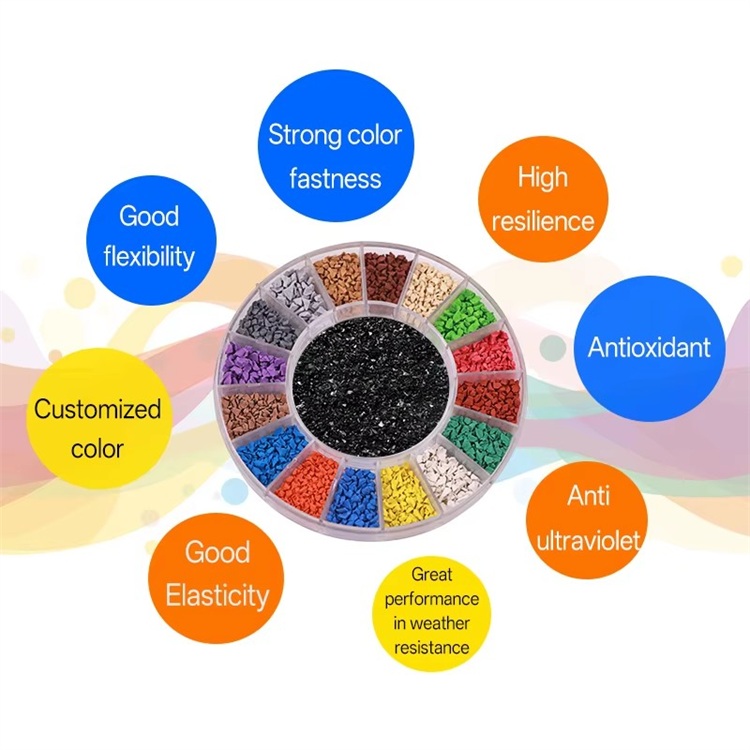
About Our Manufacturing Capability
With over 25 years of industry experience and complete in-house production lines, we engineer EPDM granules using proprietary sulfur-free vulcanization technology. Our facility produces 20,000 tons annually, supporting projects ranging from single kindergarten installations to large-scale municipal developments.
Key Specifications:
- Tensile strength: 4–7 MPa
- Elongation at break: 450%+
- Density: Under 1.60 kg/dm³
- EPDM content: 20% minimum
- UV resistance rating: 4–5 grayscale
- Available colors: Full Pantone matching
- Granule sizes: 0.5–1.5mm, 1–3mm, 1–4mm, 2–4mm

Contact us to discuss your project requirements, request samples, or arrange a technical consultation.
WOW(LYG) New Material Co Ltd is a manufacturer specializing in the production of EPDM rubber granules. We use sulfur-free vulcanization technology, it increases the service life by more than 3 times than traditional EPDM granules, and enhances the performance, including anti-aging, high-temperature resistance, and colorfastness.
We have over 25 years of production experience and offer customization for colors and granule sizes. NO MOQ.


