 注: 建议图片大小150px*50px
丨
注: 建议图片大小150px*50px Views: 0 Author: Site Editor Publish Time: 2026-07-28 Origin: Site


When a child falls from a swing, the surface beneath them is the difference between a minor scare and a visit to the emergency room. Data consistently shows that nearly 70% of playground safety accidents are directly linked to ground impact. For contractors, importers, and municipal project managers, specifying "Outdoor Playground Surfacing" is never just about aesthetics—it is about risk mitigation, lifecycle cost analysis, and long-term brand reputation.
You are not just looking for a material. You are looking for a system that guarantees safety compliance (ASTM F1292, EN1177), withstands UV degradation, offers wheelchair accessibility (ADA compliance), and delivers a return on investment over a decade or more.
This guide cuts through the marketing noise. We address the specific pain points of the procurement and installation cycle, providing a technical deep-dive into EPDM (Ethylene Propylene Diene Monomer) surfacing, the industry gold standard, and why modern innovations have made it superior to traditional alternatives.
What is Outdoor Playground Surfacing? (The Technical Definition)
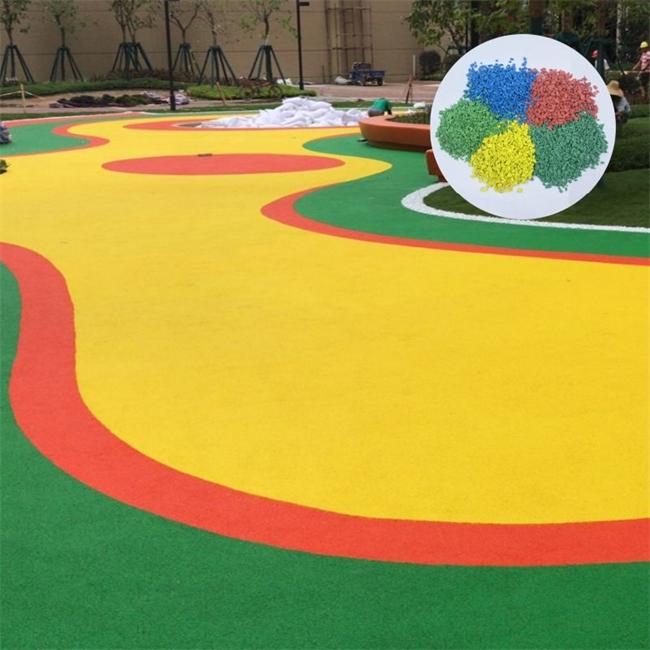
Outdoor Playground Surfacing refers to the protective surfacing installed beneath and around playground equipment. It is engineered primarily for impact attenuation (reducing the severity of fall injuries) and accessibility. While options exist ranging from loose-fill (wood fiber, sand) to unitary systems (tiles, turf), EPDM rubber surfacing is the current benchmark for commercial and municipal projects.
There are two primary installation methods for EPDM:
1. Poured-in-Place (Wet-Pour): A seamless system where EPDM granules are mixed with a polyurethane (PU) binder on-site and troweled over a shock-absorbing base layer (usually SBR rubber). This is preferred for large areas, custom graphics, and uniform fall protection.
2. Rubber Tiles: Pre-manufactured, interlocking tiles ideal for smaller spaces, indoor areas, or renovation projects where modular replacement is a priority.
The Pain Points: Why Traditional Materials Fail
Understanding the "why" is crucial. Whether you are a Purchasing Manager evaluating bids or a Contractor worried about callback costs, here is what usually goes wrong with standard outdoor surfacing:
The "Fade and Fail" Scenario
Standard EPDM or SBR (recycled tire rubber) contains sulfur as a vulcanizing agent. Under UV exposure, sulfur breaks down, releasing sulfuric acid that bleaches colors, creates a chalky residue, and significantly weakens the polymer chain. This leads to the "Black Carbon" residue that stains children's clothes and hands—a major red flag for schools and daycare centers.
Inconsistent Granulometry
If the granule size of the EPDM granules is not uniform (generally 1–3mm or 2–4mm), the surface texture becomes uneven. This affects slip resistance and shock absorption predictability. A poorly mixed batch often leads to "fat edges" or "thin spots" that fail drop tests.
Poor Base Preparation (The Drainage Disaster)
A reputable playground surfacing contractor knows that the sub-base (usually asphalt or concrete) must have correct slopes (typically 1–2%) to facilitate drainage. If standing water accumulates around swing bays, the binder (glue) fails prematurely, leading to delamination.

The EPDM Advantage: Performance Parameters You Can Measure
For Architects and Engineers, numbers matter. Here is the technical data that justifies the specification of high-grade EPDM.
No-Sulfur Technology (The Game Changer)
We utilize a peroxide-based vulcanization system rather than traditional sulfur systems.
- No Odor & Zero Leachate: Because there is no sulfur, high temperatures and UV exposure do not trigger the release of sulfuric acid or mercaptans (smelly compounds).
- Molecular Stability: The molecular structure remains intact, preventing the "cracking" or "pitting" seen in sulfur-vulcanized products.
Superior Mechanical Properties
To ensure longevity under heavy foot traffic, we test for these key metrics:
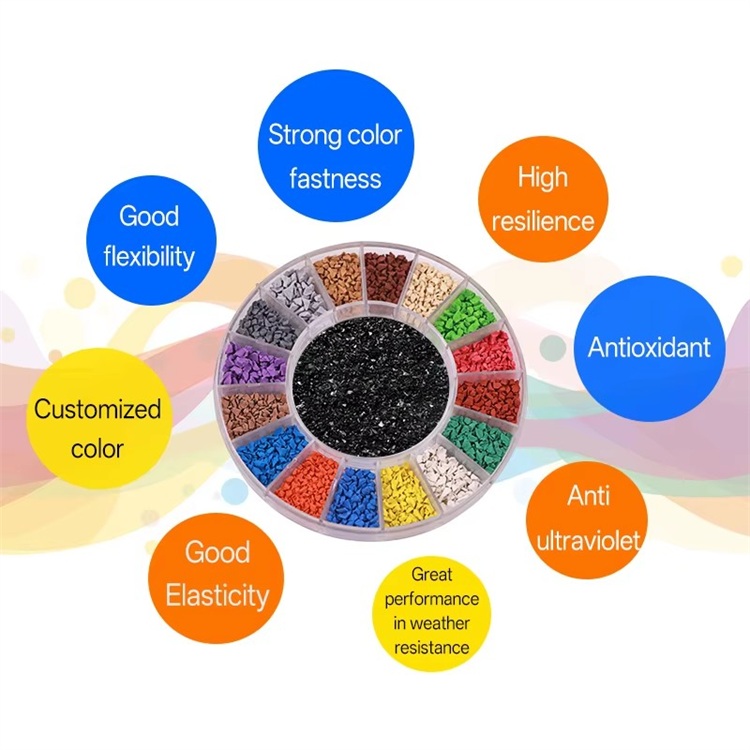
- Tensile Strength: Our granules achieve 4–7 MPa (Mega Pascals). Standard industry requirements often hover around 2.5 to 3.5 MPa. Higher tensile strength means the granules are harder to tear out of the binder.
- Elongation at Break: Exceeding 600–650%. This ensures the surface flexes upon impact rather than cracking.
- Abrasion Resistance: The loss of volume in wear tests is minimized by up to 5 times compared to standard granules, directly translating to a service life exceeding 15 years.
UV Performance & Color Stability
Forget the old reputation of fading colors. Modern high-performance EPDM (like GEZOFLEX endurance) is tested under UVA exposure of 4,896 kJ (2,550 hours) and even 9,600 kJ (5,000 hours). These granules show a colorfastness rating of 4-5 on the Grey Scale—meaning no visually discernible color change for decades.
The Role of the Binder: Why EPDM Granules Alone Aren't Enough
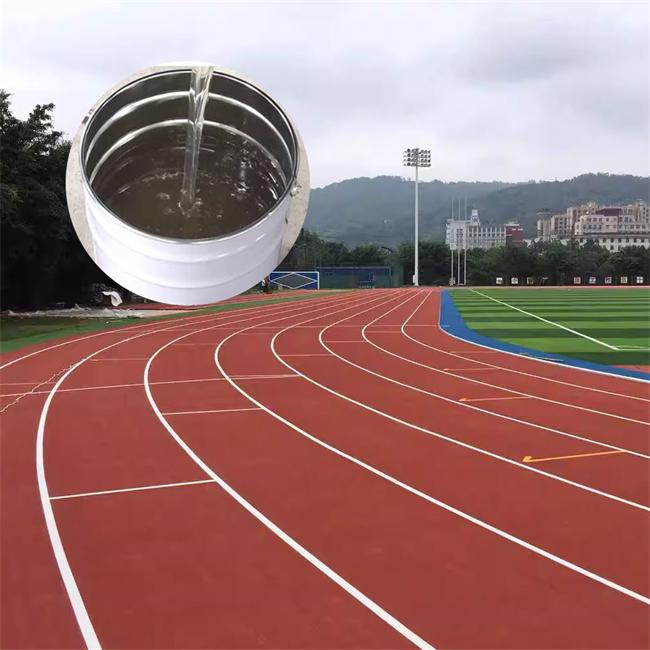
One of the most overlooked aspects of playground surfacing is the choice of Polyurethane (PU) Binder.
If the binder fails, the EPDM granules "pop" out, creating a rough, unplayable surface.
- Aromatic Resins: These are cheaper but turn yellow and chalky under UV light. While mechanically sound, the aesthetic degradation is significant.
- Aliphatic Resins: These are UV-stable and prevent the yellowing effect. It is mandatory to use these with brighter colors (Whites, Pinks, Bright Yellows, Bright Blues) to maintain the vibrant appearance.
Critical Safety Compliance: ASTM, EN1177, and HIC
For Government Procurement and Municipal Contractors, compliance is non-negotiable. A standard playground surface must meet:
- ASTM F1292: Mandates the standard specification for impact attenuation. The surface must be engineered to specific Critical Fall Heights (CFH) .
- EN1177: The European equivalent for impact absorption.
- ADA Compliance: The surface must be firm, stable, and slip-resistant to allow access for wheelchairs and mobility aids.
Key Decision Factor: Specifying the right thickness is critical. A 40mm thickness is suitable for lower equipment (under 1.5 meters), but if you have a high slide (over 2.5 meters), you may need a depth of 60mm to 80mm to pass the HIC (Head Injury Criterion) test.
How to Avoid the "Lowest Bidder" Trap
We often see procurement teams fall for the initial price, only to suffer long-term losses. Here is how to avoid common mistakes:
1. Vet the Installation Team
A product is only as good as its installation. Demand to see:
- Manufacturer Certification: Is the contractor certified by the EPDM producer?
- Crew Experience: Ask about their on-site supervisor's experience. Lack of slope control leads to ponding and rapid surface failure.
2. Demand a Written Quality Control Plan
Contractors must verify thickness and depth during installation with spot checks. A "we've done this a lot" attitude is a red flag. They should use zone-based mapping—high-traffic areas like swing exits require special reinforcement.
3. Check the EPDM Content (Polymer Content)
Many manufacturers dilute granules with excessive fillers. Look for EPDM polymer content of 22% or higher to ensure durability. Poor quality granules have polymer content lower than 20%, resulting in poor elongation and tensile strength.
4. Reject "Black Carbon" Residue
If the supplier is vague about the vulcanization process, proceed with caution. Ask for documentation proving the material is non-toxic, PAH-free (Polycyclic Aromatic Hydrocarbons), and free from heavy metals like Lead and Zinc.

Why Architects and Engineers Are Specifying Advanced EPDM
Beyond standard safety, modern playgrounds are designed as interactive spaces. Our EPDM solution allows for:
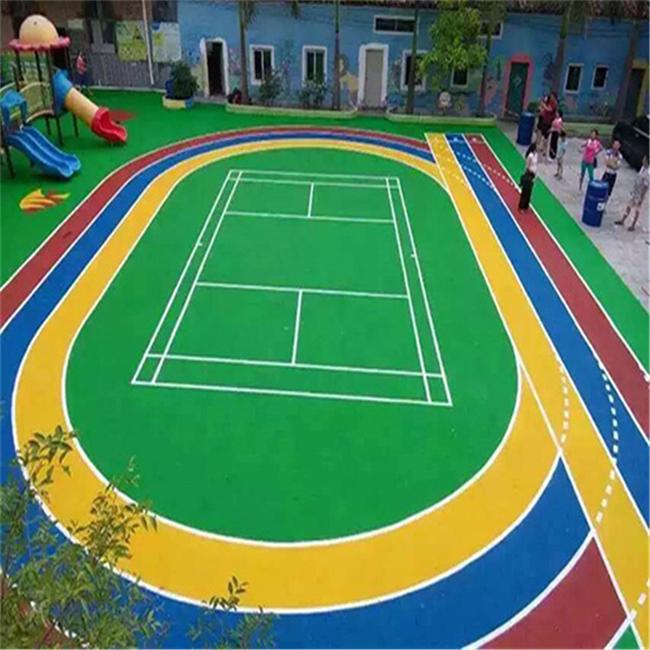
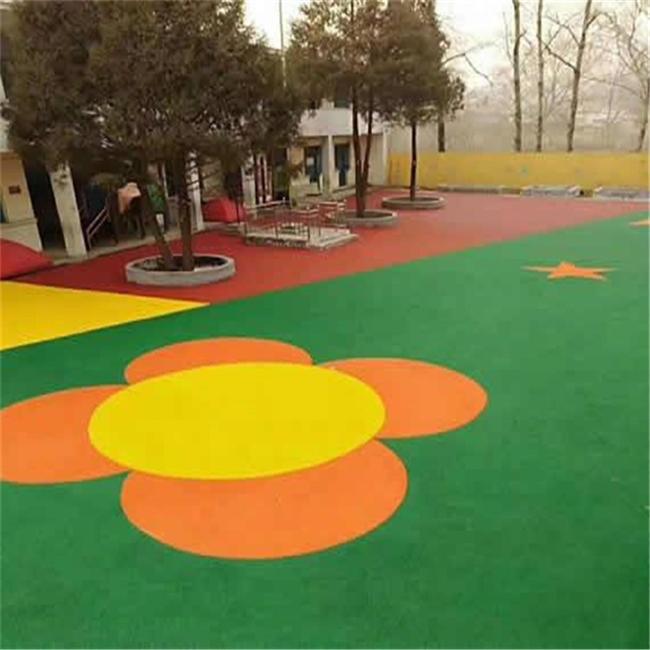
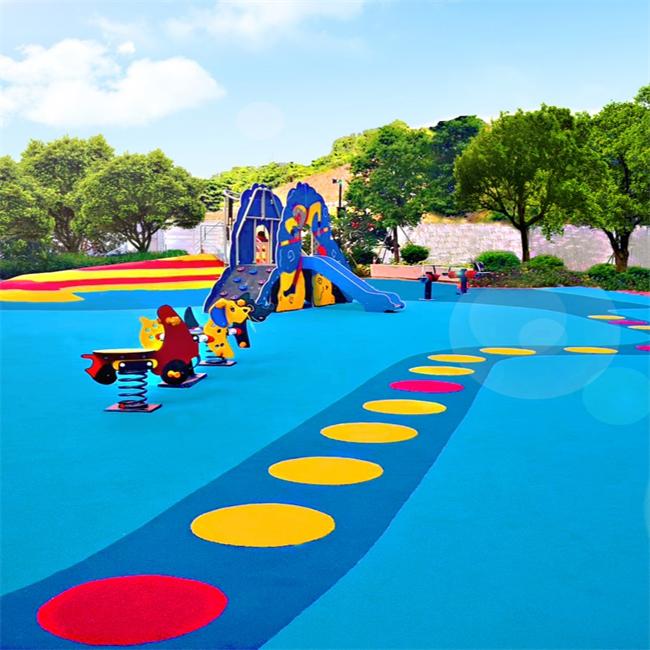
- Architectural Integration: Custom graphics, logos, and interactive games (like hopscotch) can be integrated seamlessly during the pour-in-place process.
- No MOQ Flexibility: Projects vary in size. We support projects with no minimum order quantity (no MOQ) , allowing custom color and size batches for even small renovation projects.
- Low Density & Angular Shape: Our granules have a "cubical" shape with angular edges, which lock together better with the PU binder than round granules, reducing the quantity of binder needed and lowering overall system density.

Frequently Asked Questions (FAQs) for Contractors and Buyers
Q: What is the biggest risk to the lifespan of a playground surface?
A: Drainage. If the base preparation fails to account for water runoff, the binder degrades, causing the surface to lift or crack. Always ensure the contractor provides a plan for slopes and transitions to prevent a "bathtub effect".
Q: What thickness do I need for my project?
A: It depends on the Critical Fall Height of your equipment. For slides and climbing frames over 2.5 meters, you will likely need a minimum of 60mm to 80mm of shock-absorbing material.
Q: How do I maintain the surface to keep the warranty valid?
A: You should perform routine cleaning to remove debris and occasional washing with water and mild detergent. You also need to inspect for "spalling" (granule loss) in high-wear zones and address it with repairs promptly.
Selecting "Outdoor Playground Surfacing" is a decision that requires technical analysis, not just a visual glance. By opting for advanced, sulfur-free EPDM technology, you are choosing:
1. A Lifecycle Cost Reduction (up to 3x longer lifespan).
2. Safety Assurance (consistent Critical Fall Height performance).
3. Aesthetics (UV-resistant colors that do not fade).
4. Sustainability (non-toxic and recyclable materials).
Backed by 25+ years of industry expertise, our advanced EPDM granules are designed to exceed the demands of modern play environments. With flexible sourcing options, low bulk density for easier handling, and strict adherence to international safety standards, we ensure your project stands the test of time.


Ready to discuss your project specifications or need a sample kit for testing? Contact our technical sales team to get certified product data sheets and installation guidelines.
WOW(LYG) New Material Co Ltd is a manufacturer specializing in the production of EPDM rubber granules. We use sulfur-free vulcanization technology, it increases the service life by more than 3 times than traditional EPDM granules, and enhances the performance, including anti-aging, high-temperature resistance, and colorfastness.
We have over 25 years of production experience and offer customization for colors and granule sizes. NO MOQ.


