 注: 建议图片大小150px*50px
丨
注: 建议图片大小150px*50px Views: 0 Author: Site Editor Publish Time: 2026-07-23 Origin: Site


Why Poured Rubber Surface Demands Attention
For playground contractors, sports surfacing installers, and procurement managers, selecting the right surfacing material isn't just about aesthetics—it's about safety compliance, long-term durability, and budget management. The poured rubber surface market has evolved significantly, but with that evolution comes confusion: what separates a 5-year surface from a 15-year surface? Why do some installations fade within months while others remain vibrant for years? This guide cuts through the marketing noise to deliver technical insights for industry professionals making critical purchasing decisions.

What Exactly Is a Poured Rubber Surface?
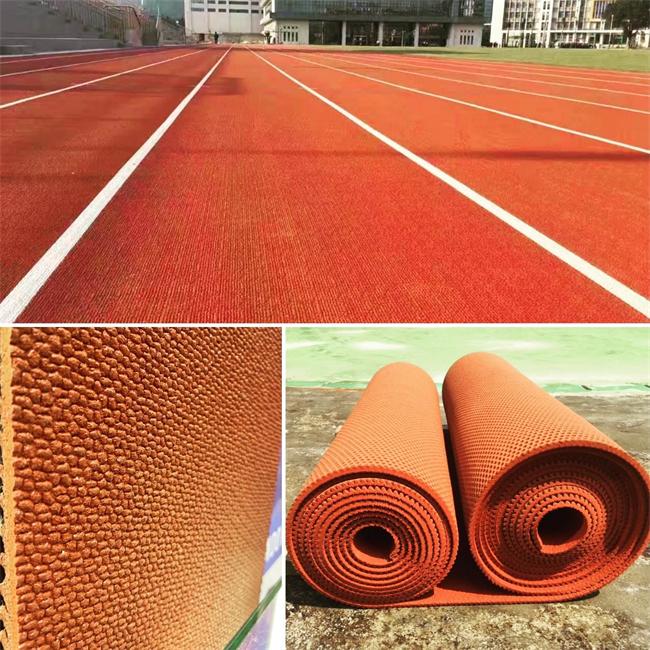
A poured rubber surface—often called "wet pour" or "poured-in-place" (PIP) rubber—is a seamless, two-layer safety surfacing system installed on-site. The construction typically consists of:
Base Layer (Cushion Layer): 1 to 5 inches thick, made from SBR (Styrene Butadiene Rubber) granules derived from recycled tires, bound with polyurethane adhesive. This layer provides impact absorption and fall height protection.
Wear Layer (Top Layer): Approximately 3/8 inch (9.5mm) thick, composed of EPDM (Ethylene Propylene Diene Monomer) granules. This layer delivers color, UV protection, and the finished surface texture.
The two-layer system creates a monolithic, porous surface that drains water, provides ADA-compliant accessibility, and meets critical fall height safety standards like ASTM F1292 and EN 1177.
Why Choose Poured Rubber Surface Over Alternatives?
Safety Performance: Unlike loose-fill materials (wood chips, sand, rubber mulch) that displace over time, poured rubber maintains consistent impact attenuation across the entire surface. This is critical for playground compliance—once installed, the surface doesn't shift or create dangerous uneven areas.
Accessibility: The seamless, firm-yet-resilient surface allows wheelchair access and mobility aid use, meeting ADA requirements that loose materials often fail.
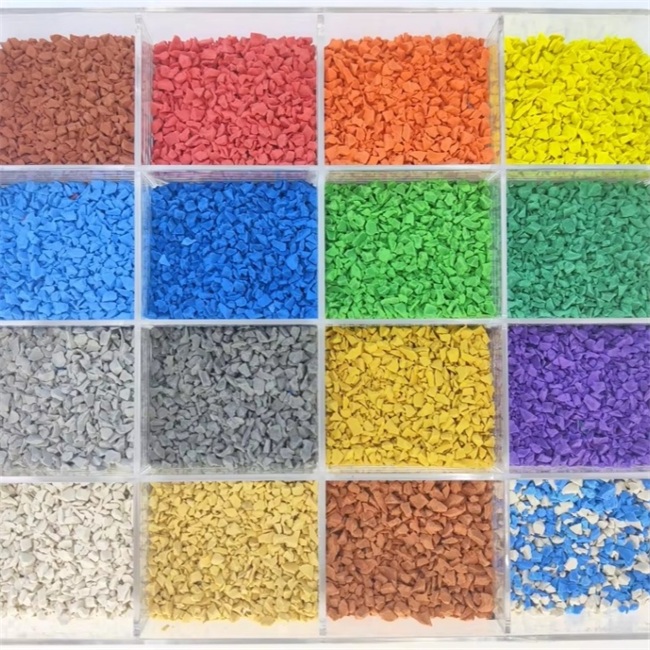
Design Flexibility: With a wide range of EPDM colors and the ability to create patterns, logos, and zones, poured rubber surfaces offer unlimited design potential for playgrounds, sports facilities, and commercial spaces.
Durability: When properly installed with quality materials, a poured rubber surface can last 10-15+ years with minimal maintenance.

The Critical Decision: EPDM vs. SBR
This is where many procurement mistakes happen. Understanding the difference directly impacts project longevity.
EPDM Granules (Top Layer):
- Synthetic rubber engineered for outdoor exposure
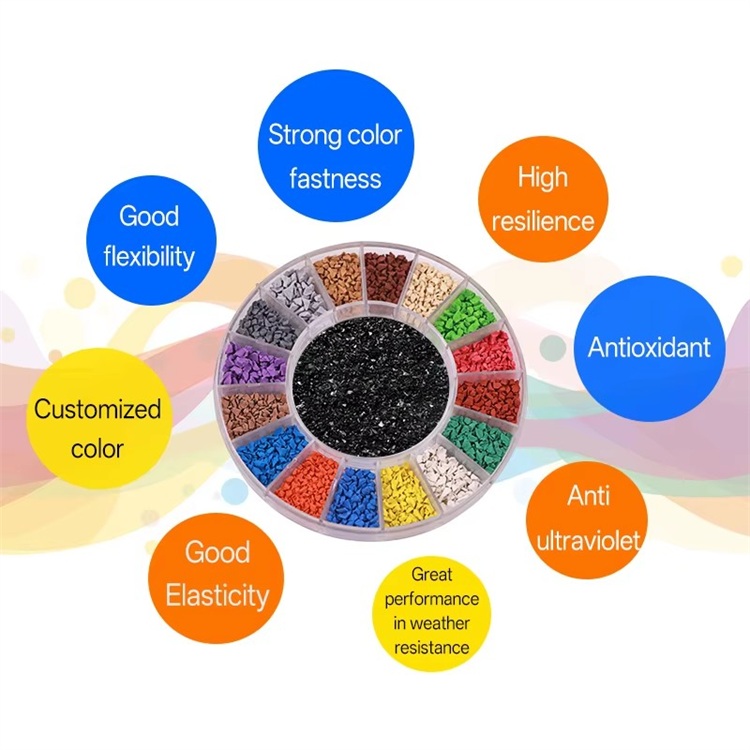
- Excellent UV resistance—colors remain vibrant for years
- Superior weather resistance (ozone, temperature extremes, moisture)
- Higher cost but delivers long-term value
- Available in a wide spectrum of colors and custom blends
SBR Granules (Base Layer):
- Recycled tire rubber (cost-effective)
- Poor UV resistance—fades and degrades with sun exposure
- Limited color options (primarily black)
- Suitable for cushion layers but not for exposed surfaces
The takeaway: Never use SBR as a top wear layer for outdoor applications. Some lower-cost suppliers offer "colored SBR" with flecks, but these will fade rapidly. EPDM is the only appropriate choice for outdoor color retention and UV stability.

The Hidden Problem: What Causes Premature Failure?
Based on industry experience and documented field failures, here are the most common issues contractors and procurement managers face:
Color Fading and Chalking: Low-quality EPDM granules or improper binder selection lead to rapid color degradation. Standard EPDM products may fade within 6-12 months of intense UV exposure. The critical factor is the sulfur content in the rubber formulation.
Odor Issues: Conventional EPDM manufacturing uses sulfur-based vulcanization. Under high heat and UV exposure, sulfur compounds break down, releasing sulfuric gases that create unpleasant odors—particularly problematic for indoor applications or hot climates.
Binder Failure: Using aromatic (vs. aliphatic) polyurethane binders leads to yellowing, cracking, and loss of adhesion. For outdoor poured rubber surfaces, aliphatic binders are mandatory—they resist UV degradation and maintain bond strength.
Poor Granule-Binder Ratio: Inconsistent mixing ratios result in weak surfaces that crumble, develop potholes, or fail to achieve proper density. Professional installers emphasize that the mixing window is typically only 30-40 minutes before the binder begins curing.
Inadequate Substrate Preparation: Installation over improperly prepared surfaces (dirty, damp, uneven concrete or asphalt) leads to delamination and premature failure. Professional installers recommend thorough pressure washing and drying (48+ hours) before priming.

How to Avoid Costly Procurement Mistakes
1. Specify ASTM-Compliant EPDM Granules
Request material certifications showing:
- Tensile Strength: ≥ 3.5 MPa (minimum for durability)
- Elongation at Break: ≥ 450% (flexibility indicator)
- Hardness: 55-65 Shore A (optimal for impact absorption)
- UV Resistance Testing: Proven color fastness under accelerated weathering
For reference, premium EPDM formulations can achieve tensile strengths of 4-7 MPa—significantly exceeding minimum standards and delivering 3-5 times the service life of conventional products.
2. Demand Sulfur-Free EPDM Technology
The most significant advancement in EPDM manufacturing is the elimination of sulfur-based cross-linking agents. Sulfur-free EPDM granules offer:
Zero Odor Generation: No sulfur means no sulfuric gas release under heat or UV exposure—critical for enclosed spaces, hot climates, and sensitive environments.
3-5× Longer Service Life: The molecular structure remains stable without sulfur-based degradation pathways, dramatically extending the product's usable life.
Superior Elasticity and Tensile Strength: Performance metrics reach 4-7 MPa tensile strength vs. 0.7-3.5 MPa for conventional products—providing better impact protection and wear resistance.
Enhanced Color Retention: The absence of sulfur oxidation prevents color shift, chalking, and fading. Products maintain vibrancy 5+ times longer than sulfur-cured alternatives.
Food-Grade Safety: Sulfur-free formulations meet stricter toxicity standards and are suitable for applications where children may contact surfaces.
Lower Density with Better Coverage: Premium granules achieve lower bulk density while maintaining structural integrity, reducing material costs per square meter.
3. Verify Binder Quality
Specify aliphatic polyurethane binders exclusively for outdoor projects. Request documentation confirming:
- UV stability certification
- Proper viscosity for your climate conditions
- Compatibility with your chosen EPDM granules
4. Assess Installer Qualifications
Professional installation is critical. Vetting criteria should include:
Years of Experience: Has the installer completed projects of similar scale and complexity?
References and Site Visits: Request to see completed projects—inspect for cracking, fading, and edge integrity.
Material Knowledge: Can they explain their granule-to-binder ratio, mixing protocols, and curing procedures?
Warranty: A reputable installer offers warranties covering both materials and workmanship.
Red Flags: Avoid contractors who:
- Cannot provide references
- Pressure immediate decisions
- Offer no written contract
- Dodge licensing or insurance questions
- Request full payment upfront
5. Understand Installation Requirements
The installation process directly impacts outcome quality:
Surface Preparation: The substrate must be clean, dry, and properly primed. This is non-negotiable.
Weather Conditions: Ideal installation temperatures range from 10-28°C (50-82°F). Avoid installation in rain, high humidity, or extreme temperatures.
Mixing: Accurate measurement of granules and binder is essential. Use of a mechanical mixer ensures consistency.
Installation Window: Once mixed, the material must be installed within 30-40 minutes before curing begins.
Curing: Allow 24-72 hours of drying time before allowing foot traffic, depending on conditions and binder specifications.
Application Scenarios: Where Poured Rubber Surface Excels
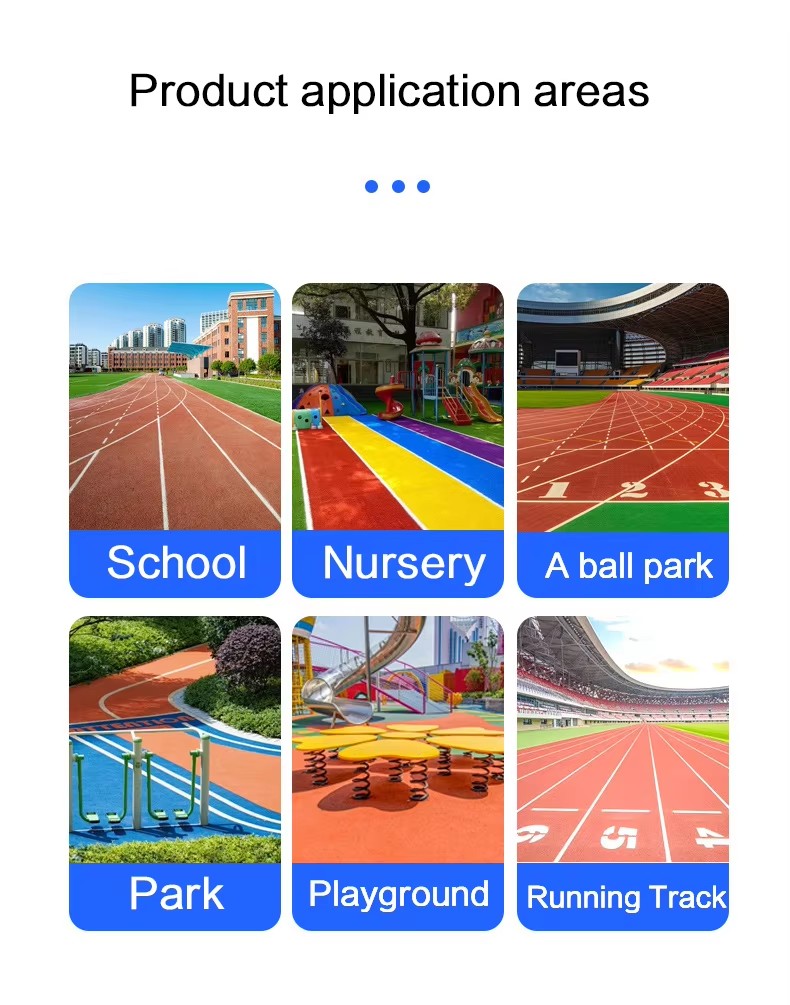
Playgrounds: The primary application—provides certified fall protection, ADA accessibility, and colorful, durable surfacing for parks, schools, and daycare centers.
Sports Facilities: Running tracks, tennis courts, basketball courts, multi-use games areas (MUGAs) benefit from the shock absorption and consistent performance.
Commercial Spaces: Gyms, fitness areas, and retail spaces utilize rubber surfaces for comfort, noise reduction, and durability.
Public Spaces: Water play areas, pathways, and fitness trails leverage the porous, quick-drying properties.
Specialty Applications: Golf walkways, swimming pool surrounds, ship decking, and stadium areas—often requiring custom colors matched to club or brand requirements.
FAQ: Common Contractor and Buyer Questions
Q: What's the difference between poured rubber and rubber tiles?
Poured rubber creates a seamless, monolithic surface on-site. Tiles are prefabricated and installed as interlocking units. Poured rubber offers greater design flexibility and eliminates seam failure points.
Q: How long does a poured rubber surface last?
With high-quality materials (sulfur-free EPDM, aliphatic binder) and professional installation, expect 10-15+ years. Low-quality systems may fail in 3-5 years.
Q: Can poured rubber be installed over existing surfaces?
Yes, over properly prepared asphalt, concrete, wood, and other stable substrates. Surface must be clean, level, and primed.
Q: Is poured rubber porous? Does it drain water?
Yes. The granule structure creates inherent porosity that allows water to drain through—reducing puddling and slip hazards.
Q: What colors are available?
EPDM granules come in virtually any color. Custom matching is available for brand colors, club colors, and design themes.
Q: How much does poured rubber surface cost?
Costs vary by material grade, thickness requirements, site conditions, and install location. Higher upfront investment in sulfur-free EPDM and professional installation yields lower total lifecycle costs through extended service life.
Q: What's the minimum order quantity (MOQ)?
Premium suppliers offer flexible MOQs, accommodating projects from small playgrounds to large municipal installations. Avoid suppliers with rigid high-MOQ requirements that force over-purchasing.
Why Industry Professionals Are Shifting to Advanced EPDM Technology
The trend toward sulfur-free, high-performance EPDM isn't just marketing—it's driven by field-proven performance advantages:
Risk Reduction: Fewer callbacks, warranty claims, and reputation damage from premature failure.
Lifecycle Cost Savings: The 3-5× extended service life translates to significant budget savings over a 15-year horizon.
Health and Safety Compliance: Zero-odor, non-toxic formulations meet stricter indoor air quality and safety standards, increasingly required in public spaces.
Competitive Differentiation: Contractors specifying premium materials differentiate themselves in bidding processes, securing more projects with higher margins.
Sustainability: Longer lifespan reduces material replacement frequency, lowering environmental impact.
Making the Right Decision
For contractors, procurement managers, and engineers, the poured rubber surface decision comes down to material science—not just price per square foot. The lowest bid often conceals the highest long-term cost through premature replacement, fading, and failure.
Critical action items:
1. Require ASTM/EN certifications for all materials
2. Specify sulfur-free EPDM with verified tensile strength ≥ 4.0 MPa
3. Mandate aliphatic binders for outdoor applications
4. Vet installers thoroughly—inspect completed projects, request references
5. Review warranty terms covering both materials and workmanship
6. Discuss installation timeline and curing requirements upfront


With 25+ years of industry experience and advanced sulfur-free production technology, premium EPDM suppliers deliver customizable solutions without MOQ constraints, enabling projects of any scale to achieve superior performance. The investment in quality materials today ensures a surface that performs safely, looks vibrant, and avoids costly replacement for decades.
WOW(LYG) New Material Co Ltd is a manufacturer specializing in the production of EPDM rubber granules. We use sulfur-free vulcanization technology, it increases the service life by more than 3 times than traditional EPDM granules, and enhances the performance, including anti-aging, high-temperature resistance, and colorfastness.
We have over 25 years of production experience and offer customization for colors and granule sizes. NO MOQ.


