 注: 建议图片大小150px*50px
丨
注: 建议图片大小150px*50px Views: 0 Author: Site Editor Publish Time: 2026-07-27 Origin: Site


If you're reading this, you're probably not just casually browsing. You're a playground contractor facing a municipal bid deadline, a sports surfacing installer trying to figure out why last season's job is already fading, or a purchasing manager tasked with finding a reliable EPDM supplier without the runaround.
You've seen the terms—Rubber Surfacing Materials, EPDM, SBR, poured-in-place—but what you really need to know is: how do I get this project done right, on budget, without callbacks?

What Actually Are Rubber Surfacing Materials?
When we talk about rubber surfacing materials in the context of playgrounds, sports fields, and landscape architecture, we're primarily talking about two categories: SBR (Styrene-Butadiene Rubber) made from recycled tires, and EPDM (Ethylene Propylene Diene Monomer) —a synthetic rubber that serves as the premium top-layer material.
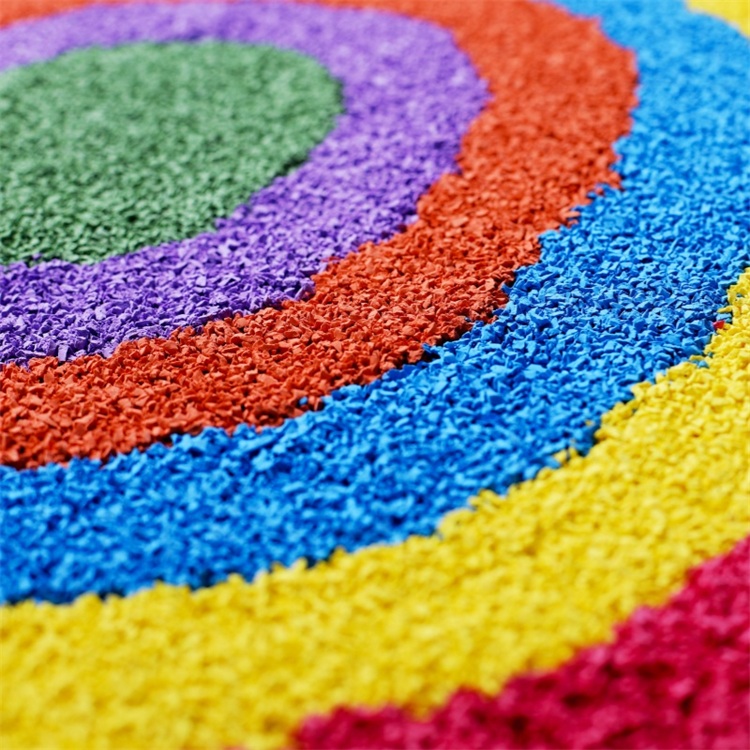
Think of a poured-in-place (PIP) system like a high-performance sandwich. The bottom layer (the base) is typically made of black SBR crumb rubber—it provides the bulk shock absorption. The top layer, the one you actually see and touch, is made of colored EPDM granules, bound together with a polyurethane adhesive .
This top layer isn't just about aesthetics. It's the armor. It takes the UV beating, the foot traffic, and the weather exposure. If you're a contractor spec'ing a job, the EPDM you choose determines whether you get paid and move on, or whether you're coming back in 18 months to fix a faded, crumbling mess.

Why This Matters: Solving Real-World Pain Points
In our 25 years in this industry, we've seen the same problems pop up project after project:
- Color fading: That vibrant red or bright blue looks great on the installation day, but six months of intense UV exposure turns it pastel—or worse, ashy grey.
- Performance loss: The surface starts to harden and lose its bounce, defeating the safety requirements of ASTM F1292 or EN 1177.
- Odor complaints: This is a huge issue with sulfur-cured materials. When the sun hits them, they off-gas, and suddenly you have school administrators or homeowners complaining about a "burnt rubber" smell.
- Inconsistent batches: You order two shipments, but the color doesn't match, or the grain size is wrong, ruining your installation timeline.
- Adhesive failure: The granules don't bond well to the base layer, leading to "delamination" and a rough, splintery surface that causes abrasions.
We've engineered our process specifically to eliminate these issues.

The Fundamental Shift: Sulfur-Free EPDM Technology
Here is the technical distinction that separates high-performance rubber surfacing from the cheap stuff: Sulfur content.
Traditional EPDM uses sulfur as a vulcanizing agent to cross-link the polymer chains. While this is cheap and standard, it introduces major performance bottlenecks. Under heat and UV stress, the sulfur bonds break down, releasing sulfuric acid derivatives. This does three things: it destroys the molecular structure (hardening the material), it causes color fade, and it creates that dreaded odor .
We manufacture our EPDM granules using a sulfur-free curing system. This isn't just a marketing tweak; it's a fundamental shift in polymer chemistry that drives all our performance metrics.
Technical Advantages: The Numbers Contractors Care About
If you are an engineer or procurement specialist, these are the specific KPIs you need to compare against industry standards:
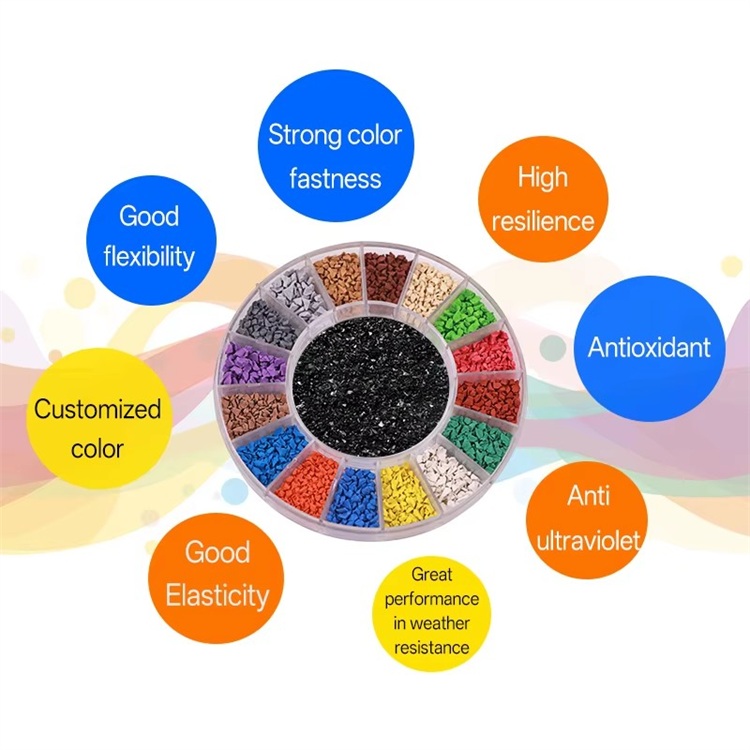
1. Zero Odor & Superior Aging: Because there is zero sulfur in our formulation, no sulfuric compounds degrade under heat or UV. We meet food-grade hygiene standards (EN 71-3 compliant for heavy metal migration), making it safe for the most sensitive applications like daycare centers .
2. 3x Longer Lifespan: Without sulfur-induced degradation, the polymer chain remains stable. We've eliminated the molecular "breakdown" that typically kills a rubber surface in 5-8 years. Our surfaces maintain structural integrity for decades in the field.
3. Superior Tensile Strength (4–7 MPa): Industry standard EPDM typically runs around 3–5 MPa . By optimizing the polymer and filler ratio, we achieve a tensile strength of 4 to 7 MPa with an elongation at break exceeding 800% . This means the material stretches without tearing—critical for impact absorption.
4. Enhanced Elasticity (2-3x improvement): The bonding technology allows for a tighter molecular lattice. This translates to a "springier" surface that provides superior critical fall height protection (tested up to 12+ feet) compared to standard materials.
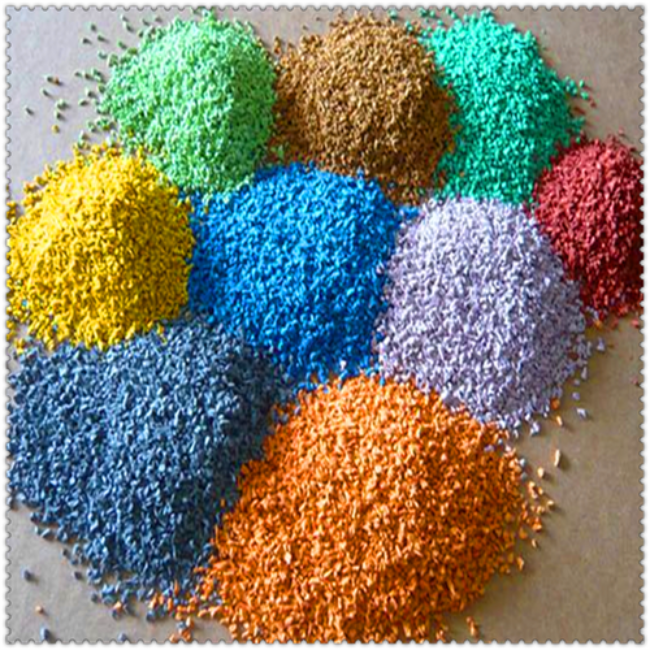
5. Unprecedented Color Retention: Color fade is caused by oxidation and UV attack on the pigment binders. Our antioxidant package and UV stabilizers are engineered to withstand extreme radiation. In accelerated aging tests (UVA exposure beyond 9,600 kJ), our product retains a "4-5" rating on the Grey Scale, far exceeding the standard requirement of "≥3" .
6. Thermal Stability: Our material maintains its structural integrity in extreme heat (up to 140°C working temp) without becoming tacky or soft, and remains flexible in freezing conditions.
Application Guide: Where to Use EPDM
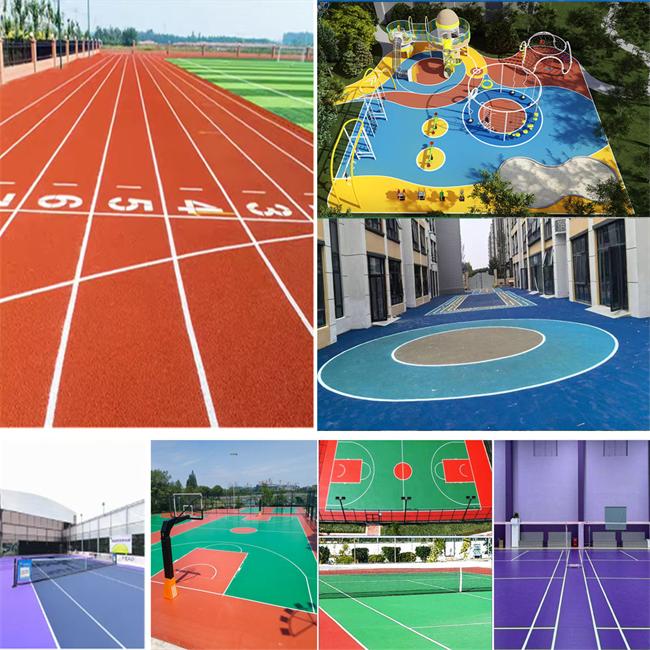
- Playgrounds & Daycares: The obvious application. Required to meet safety standards for fall height protection. Our sulfur-free tech is crucial here because of the close contact with children and the liability of injury.
- Athletic Tracks & Multi-Sport Surfaces: The "spring" and traction are perfect for sprinting and court sports. Requires high wear resistance .
- Gym & Fitness Areas: Used for shock absorption and noise reduction.
- Pool Decks & Water Parks: Impervious to water and resistant to chlorine and chemicals .
- Landscape Architecture (Pathways): Aesthetic integration into parks and green spaces.
- Roof Gardens & Terraces: Lightweight, drainage-friendly, and pleasing to the eye.
How to Avoid Critical Procurement Mistakes
1. The "Sample Trap"
Don't order bulk based on a photo or a single 500-gram sample. Ask the manufacturer if they can produce the actual batch you are ordering. Request a sample from the start of production to confirm color match and UV resistance.
2. Not Checking VOC (Volatile Organic Compounds)
Ensure your material passes GB 36246-2018 or similar local standards . Low-cost materials use cheap oils and accelerators that off-gas in confined spaces or heat. That "new rubber smell" is actually chemicals you don't want in an enclosed gymnasium.
3. Underestimating the Binder
The EPDM granule is only half the equation. You must use a matching PU (Polyurethane) binder. If the binder is brittle, the EPDM peels. We provide technical support to match the binder chemistry to our granule for maximum bond strength.
4. Ignoring Bulk Density
- High bulk density means you get less coverage per kilogram—it's heavy.
- Low bulk density (like ours) means you get more volume per kilogram, lowering shipping costs and making the material easier to trowel. Our engineered "angular" grain shape locks together better than round granules, reducing the amount of resin needed .

Why Sustainability Matters (and Saves Money)
Historically, "green" meant "recycled junk." We don't just use premium virgin materials; we also utilize a closed-loop recycling system for production waste. We don't rely on post-consumer tire waste for our EPDM (which is inconsistent in quality), but rather industrial-grade raw materials. If you are pursuing LEED certification or a municipal "green" project, our manufacturing process aligns with those requirements while delivering superior performance.
Specifications at a Glance
- Hardness: 65 ± 5 Shore A (Optimal balance for safety and durability) .
- Density: ~1.6 g/cm³ (Specifically formulated for optimal binder coating) .
- Grain Shape: Angular/Truncated (High interlocking strength).
- Sizes: Customizable (0.5mm up to 6mm, exact range for specific applications).
- Tensile Strength: 4 - 7 MPa (Standard is usually 2-4 MPa) .

What Our Clients Say (Specifically for Contractors)
> "We switched to this supplier after getting complaints from a school about the rubber smell on a hot day. The sulfur-free granule completely eliminated the odor issue. Plus, the color matching was spot on. It saved our reputation."
> — John M., Playground Installer, Midwest USA
> "We were sourcing from the EU and looking for a backup. This manufacturer matched the EU quality for UV stability but cut the MOQ. We were able to order small batch custom colors for a high-end residential project without being forced to buy a container load."
> — Sarah K., Importer, Australia
Why We Are Your Ideal Partner
We don't just sell granules; we provide engineering solutions.
- 25+ Years Experience: We've seen every failure mode and engineered them out.
- Flexible MOQ (No Minimum Order Quantity): Start small, test the quality, and grow. We don't lock you into massive container loads if you don't want them.
- Customization: Need a specific Pantone color? Need a specific granule size for a specific trowel application? We can do it. Our in-house lab formulates custom pigments and durometers.
- OEM/ODM Support: If you are a distributor who needs white-label packaging (your brand, our quality), we manage that.
- Fast Lead Times: With our advanced production lines, we can scale quickly for large-scale municipal projects while maintaining batch consistency.

Ready to Solve Your Surfacing Problems?
Stop worrying about callbacks, bad press, or failing a test. Whether you are a municipal project contractor tired of hearing complaints from the parks department, or a purchasing manager needing a supplier who actually answers the phone, we speak your language.

Contact us to request free samples, discuss your project specifications, or get a free consultation on which blend works best for your environment.
WOW(LYG) New Material Co Ltd is a manufacturer specializing in the production of EPDM rubber granules. We use sulfur-free vulcanization technology, it increases the service life by more than 3 times than traditional EPDM granules, and enhances the performance, including anti-aging, high-temperature resistance, and colorfastness.
We have over 25 years of production experience and offer customization for colors and granule sizes. NO MOQ.


