 注: 建议图片大小150px*50px
丨
注: 建议图片大小150px*50px Views: 0 Author: Site Editor Publish Time: 2026-07-31 Origin: Site


If you’re reading this, you’re likely facing a critical decision: specifying, sourcing, or installing a shock absorbing surface for a playground, sports facility, or municipal project. This isn’t just about choosing a material—it’s about ensuring safety, meeting stringent regulations, managing long-term costs, and avoiding procurement pitfalls.
Studies show that nearly 70% of playground injuries result from falls, making the choice of impact-attenuating surfacing one of the most critical safety decisions in any project . As a contractor, importer, or government procurement officer, you need answers that go beyond marketing brochures. You need to understand what truly delivers performance, durability, and value.
This guide addresses the real questions, concerns, and pain points that buyers and specifiers face when evaluating shock absorbing surfaces, particularly EPDM-based systems.

What Exactly Is a Shock Absorbing Surface?
A shock absorbing surface is an engineered safety system designed to cushion impacts and reduce the risk of injury from falls. Unlike hard surfaces like concrete or asphalt, these systems absorb kinetic energy during impact, protecting users—whether children on a playground or athletes on a track .
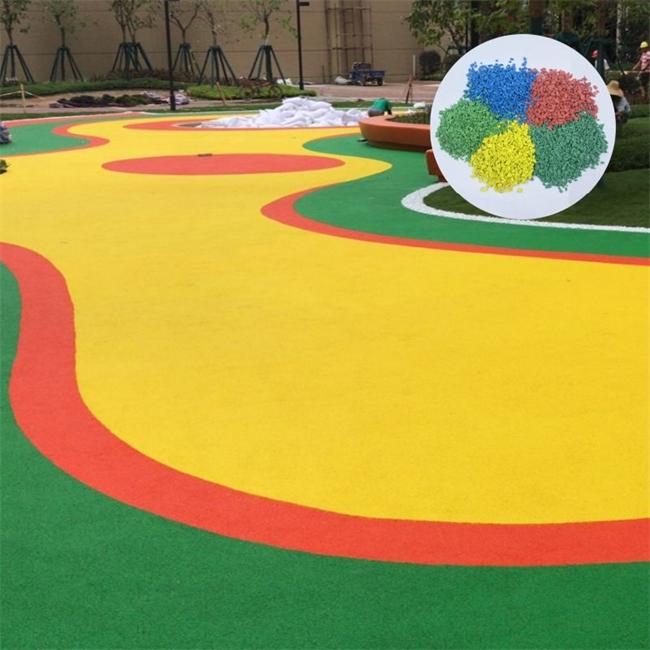
The most advanced shock absorbing surfaces on the market today are unitary systems, specifically poured-in-place (PIP) rubber. These systems typically consist of two layers: a porous, shock-absorbing base layer (often made from recycled SBR rubber) and a durable, weather-resistant top layer made from EPDM (Ethylene Propylene Diene Monomer) granules bound with polyurethane . This combination creates a seamless, permeable surface that offers exceptional fall protection, accessibility (ADA compliance), and design flexibility.
Key Standards to Know
For any professional in this industry, understanding the regulatory landscape is non-negotiable. Shock absorbing surfaces are tested and certified against specific standards:
- ASTM F1292: Standard specification for impact attenuation of playground surfacing. This measures critical fall height—the maximum height from which a surface can protect a child from serious injury .
- ASTM F1951: Standard for accessibility of surface systems, ensuring compliance with ADA requirements for wheelchair maneuverability .
- GB 36246-2018: The Chinese national standard for synthetic surface sports areas, covering shock absorption (25-50%), vertical deformation (0.6-3.0mm), and harmful substance limits .
- EN 1177: The European standard for impact-attenuating playground surfacing.
Any credible supplier should be able to provide third-party test reports confirming compliance with the relevant standards for your project location. For instance, government tenders for projects like the outdoor play area explicitly require materials that meet GB 36246-2018 with CMA/CNAS-accredited test reports .

Applications: Where Are Shock Absorbing Surfaces Used?
Our target audience—playground contractors, landscape companies, and municipal project managers—specify these systems across a diverse range of environments:
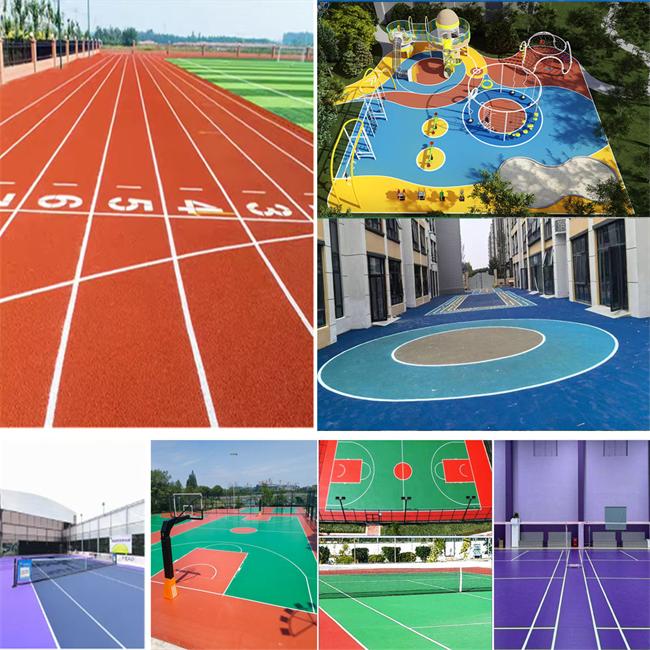
- Playgrounds: The primary application. Seamless EPDM surfaces provide superior fall protection while allowing for creative color and pattern designs .
- Sports Facilities: Running tracks, tennis courts, basketball courts, and multi-use game areas benefit from the consistent shock absorption and energy return that enhance athlete performance and reduce fatigue .
- Fitness and Recreational Areas: Outdoor gyms, jogging trails, and fitness zones in parks require durable, impact-absorbing surfaces for user safety .
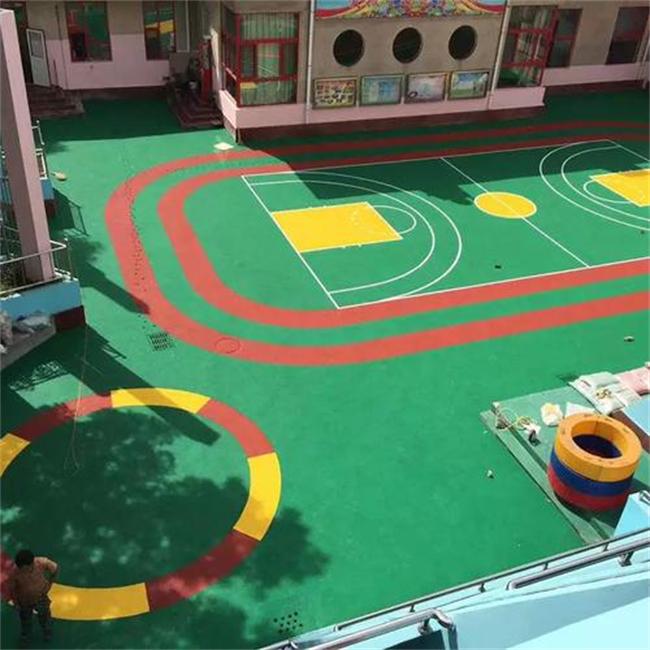
- Educational Institutions: Daycares, preschools, and K-12 schools increasingly require soft, safe, and environmentally friendly surfacing for student play areas, as seen in public procurement documents .
- Municipal and Public Spaces: Plazas, water play areas, and senior fitness zones benefit from the safety and accessibility of seamless rubber surfaces.
- Landscape and Leisure Areas: Theme parks, zoos, and resort play areas use EPDM surfaces to combine safety with aesthetic integration.
Why Choose EPDM? Addressing Core Buyer Concerns
When procurement managers, architects, and contractors evaluate shock absorbing surfaces, they face a host of concerns. Understanding how EPDM systems address these pain points is the key to making an informed, risk-averse decision.
Pain Point 1: Safety and Compliance
You need a surface that genuinely protects users. EPDM surfaces excel in impact attenuation. A properly installed system can achieve impact absorption values of 25-50% and vertical deformation between 0.6-3.0mm, meeting the most stringent safety standards . This is not just about meeting a specification; it's about mitigating liability and ensuring the wellbeing of end-users.
Pain Point 2: Durability and Performance
Many buyers worry about premature failure—fading, cracking, or loss of elasticity. Traditional rubber surfaces often suffer from:
- UV Degradation and Fading: Inorganic pigments and inferior polymers break down under intense sunlight, leading to color loss and surface degradation.
- Reduced Elasticity: Over time, traditional vulcanized rubber loses its bounce and shock-absorbing properties, increasing injury risk.
The Solution: Our advanced EPDM systems are engineered with a sulfur-free curing technology. This is a critical differentiator. Because our EPDM granules contain no sulfur, they do not decompose into sulfuric acid under UV exposure. The result is extraordinary durability. The molecular structure remains stable, increasing the service life by over 300% compared to conventional products . In fact, rigorous testing shows that our EPDM granules maintain their integrity after 5,000 hours of UV fluorescent aging without cracking, peeling, or significant color change (灰卡评级 4-5 级) . This translates to a surface that stays vibrant, elastic, and safe for decades.
Pain Point 3: Odor and VOCs
Off-gassing and unpleasant odors are a significant concern for any enclosed or well-trafficked area. Schools and daycares, in particular, are sensitive to this issue. Our sulfur-free, high-purity EPDM formulation produces no detectable odor and meets stringent VOCs standards, with testing showing harmful compounds (VOCs, aldehydes, ketones) remain ND (Not Detected) at 60 days . This makes it suitable even for indoor applications or areas with strict air quality requirements.
Pain Point 4: Color Stability and Aesthetics
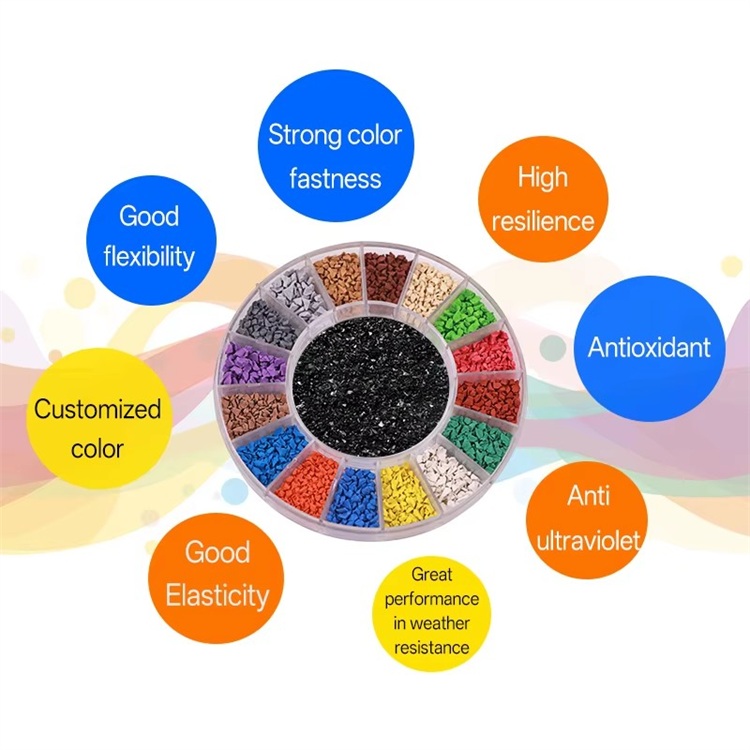
Architects and contractors need the surface to look as good as it performs. Inferior granules fade quickly, leading to a mottled, unprofessional appearance. The advanced formulation used in our granules offers significantly enhanced color stability. Through superior antioxidant packages and UV stabilizers, the material resists fading and maintains its vibrant color for many years, ensuring the project looks pristine long after installation .
Pain Point 5: Lifecycle Costs
While the upfront cost of a high-quality EPDM surface may be higher than loose-fill options like wood fiber or rubber mulch, the total cost of ownership is substantially lower . Loose-fill materials require constant maintenance: raking, topping up, and replacement. In contrast, a properly installed unitary rubber system is virtually maintenance-free, requiring only occasional cleaning with water and mild detergent . The long service life, which can exceed 10 to 20 years, means it does not need to be replaced every few seasons, drastically reducing the lifecycle cost .
How to Choose the Right Shock Absorbing Surface for Your Project
When making your selection, focus on these technical and functional criteria:
1. Critical Fall Height
This is the most important safety parameter. The thickness of your shock absorbing surface must be matched to the height of the equipment. Higher equipment demands a thicker system. Commercial suppliers should provide clear data correlating system thickness with critical fall height ratings.
2. Material Composition
Insist on details about the raw materials. Look for:
- High Polymer Content: The EPDM granules should have a high polymer (EPDM rubber) content—aim for ≥20% .
- High Tensile Strength: This indicates strength and resilience. Our granules achieve a tensile strength of 4-7 MPa, which is significantly higher than industry norms, ensuring the surface can withstand heavy foot traffic and equipment loads without tearing .
- High Elongation at Break: A measure of flexibility. Look for values >400%, indicating the material can absorb impact without cracking .
- Low Density: Our granules have a low bulk density and a three-dimensional, angular shape that interlocks well, creating a stable, porous surface that drains water effectively.
3. Environmental and Health Certifications
Safety goes beyond impact absorption. Demand proof of compliance with chemical safety standards. Ask for test reports confirming low VOC emissions, absence of heavy metals, and, critically, the absence of harmful plasticizers like phthalates and short-chain chlorinated paraffins .
4. Installation Quality
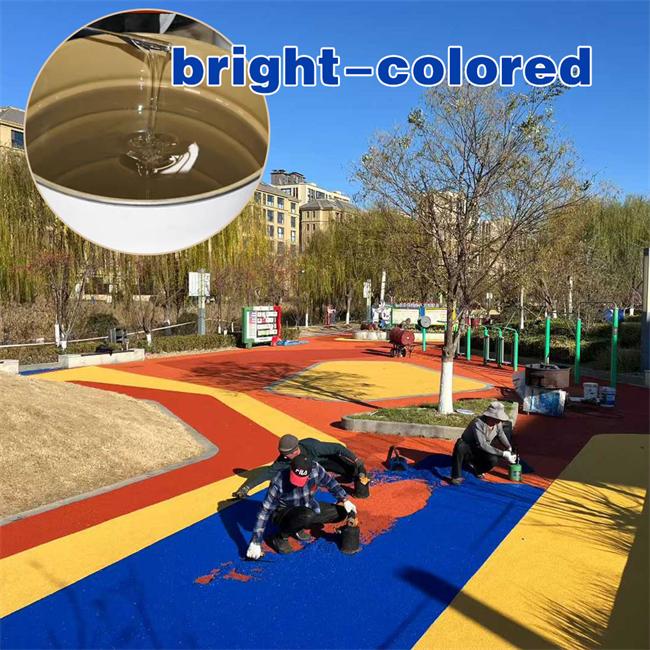
A world-class material will fail if installed poorly. Ensure your installation contractor is experienced. The sub-base must be properly prepared (compacted, graded, and drained). The binding process—mixing EPDM granules with a high-quality polyurethane binder—must be done to exact specifications to prevent delamination, cracking, or poor porosity . The surface should be installed by experienced professionals to ensure the material is mixed, laid, and finished correctly, as poor installation is a leading cause of early failure .
Practical Tips for Contractors and Procurement Managers
- Insist on Samples: Before placing a large order, obtain physical samples to verify color, granule size, and quality. A reputable supplier will provide them free of charge .
- Verify Batch Test Reports: Do not accept generic certificates. Require lab reports specific to your production batch .
- Check for Sulfur-Free Technology: This is a key differentiator. Ask the manufacturer explicitly if their EPDM granules are sulfur-free, as this is the foundation for superior odor-free performance, UV stability, and longevity .
- Negotiate MOQs: Many suppliers impose high minimum order quantities (MOQs) that can be problematic for smaller projects. Seek out suppliers with flexible MOQs .
- Assess Lead Times: In the construction industry, delays are costly. Confirm your supplier’s production capacity and on-time delivery record .
FAQ: 8 Crucial Questions from Buyers Answered
1. What is the difference between EPDM and other rubber materials like SBR?
SBR (Styrene-Butadiene Rubber) is often used as a recycled, lower-cost black base layer. EPDM is a high-performance virgin polymer used for the top layer. EPDM offers significantly superior UV resistance, color stability, and longevity compared to SBR, which is why SBR is usually black and used beneath the EPDM surface, while EPDM is used for the colorful top layer .
2. Do these surfaces meet ADA requirements for accessibility?
Yes, when installed correctly as a unitary system (poured-in-place or tiles), EPDM surfaces are firm, stable, and slip-resistant, meeting ADA standards for wheelchair and mobility device accessibility .
3. How long does a shock absorbing EPDM surface last?
With proper maintenance, a high-quality EPDM surface can last 10 to 20 years or more. Our sulfur-free formulation significantly extends this lifespan, delivering 3 times the service life of standard products .
4. Does the color fade over time?
All colored materials will experience some minor fading over an extended period. However, our EPDM granules use advanced, high-quality pigments and are protected by a highly stable polymer matrix. This minimizes color change, as demonstrated by tests showing no significant change even after 5,000 hours of UV exposure .
5. What about odors, especially in hot weather?
Odors in traditional rubber surfaces often stem from sulfur decomposition. Since our EPDM granules are sulfur-free, they produce no odor, even under intense heat. This makes them a preferred choice for schools and daycares .
6. What maintenance is required?
One of the key advantages is low maintenance. The surface only needs to be periodically cleaned with water and a mild detergent to remove dirt and debris. Routine inspections should be conducted to check the integrity of the surface and the drainage system .
7. What are the typical installation challenges?
The main challenges include sub-base preparation (must be level and well-drained), correct mixing ratio of EPDM granules to binder (e.g., 6:1 ratio is common) , and proper curing time. Incorrect mixing or poor weather conditions (rain, temperatures outside 10-35°C) can ruin the installation .
8. How do I avoid supplier mistakes and protect my project?
Avoid the trap of choosing solely on price. Low-cost suppliers often use inferior recycled materials, less stable pigments, or sulfur-based systems. This leads to early failure, color fading, and potential health issues. Always verify performance via independent test reports, visit the factory if possible, and partner with a supplier with a proven track record of technical expertise and production quality .

Choosing the right shock absorbing surface is a multifaceted decision that impacts safety, aesthetics, project budgets, and long-term liability. For contractors, architects, and procurement professionals, the goal is not just to purchase a material but to deliver a reliable, safe, and enduring asset.
By understanding the technology—from the critical importance of sulfur-free EPDM to the rigorous standards of ASTM and GB 36246—you can make a confident choice that satisfies both the spec and the end-user. At our company, with over 25 years of industry expertise and advanced, proprietary manufacturing processes, we provide the high-performance, durable, and vibrant solutions that leading professionals trust. Our commitment to quality, flexible MOQs, and robust production capacity ensures that we are a reliable partner for projects of any scale, from a local school playground to a major municipal development.

WOW(LYG) New Material Co Ltd is a manufacturer specializing in the production of EPDM rubber granules. We use sulfur-free vulcanization technology, it increases the service life by more than 3 times than traditional EPDM granules, and enhances the performance, including anti-aging, high-temperature resistance, and colorfastness.
We have over 25 years of production experience and offer customization for colors and granule sizes. NO MOQ.


