 注: 建议图片大小150px*50px
丨
注: 建议图片大小150px*50px Views: 0 Author: Site Editor Publish Time: 2026-08-06 Origin: Site


As a playground contractor, sports surfacing installer, or purchasing manager, you’re tasked with selecting a safety surfacing solution that meets stringent safety standards, withstands heavy use, and fits within budget. But with so many options and confusing technical claims, how do you make the right choice?
This guide cuts through the complexity. We’ll provide a deep dive into soft fall rubber surfaces, with a specific focus on EPDM (Ethylene Propylene Diene Monomer) granules, the material of choice for high-performance, visually appealing top layers. You’ll learn how to specify the right product, avoid costly mistakes, and choose a partner who can deliver consistent quality for your global projects.

What is Soft Fall Rubber?
Soft fall rubber refers to impact-absorbing surfaces designed to reduce the risk of injury from falls. It is a mandatory requirement for playgrounds and children’s play areas in many jurisdictions. Standards like the Australian Standard AS 4422:2016 and ASTM F1292 in the US require impact-absorbing surfacing under equipment above a certain height. The “critical fall height” (CFH) of the equipment determines the necessary thickness of the soft fall surface.
How a Soft Fall Rubber System Works
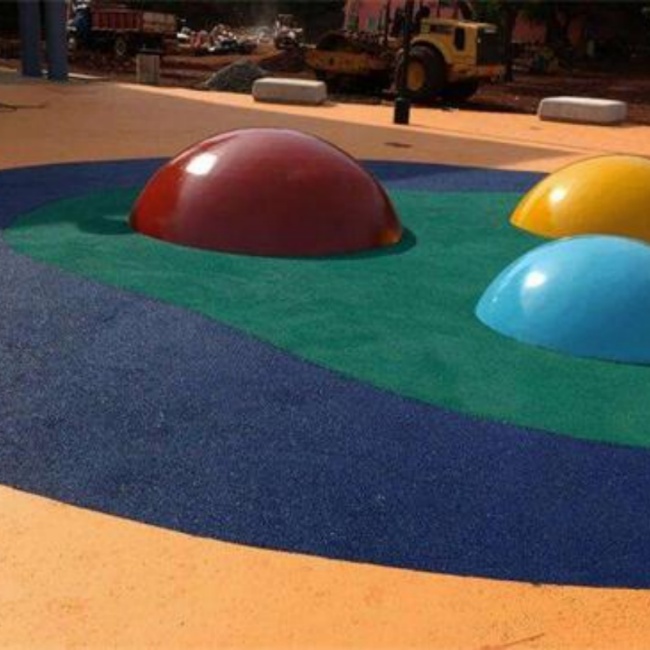
A professional, poured-in-place (PIP) soft fall rubber surface is a two-layer system. The base layer is a shock-absorbing pad, typically made from black SBR (Styrene-Butadiene Rubber) granules. This recycled rubber layer is cost-effective and provides excellent impact absorption and resilience. The top wear layer is the colored, visible layer made from EPDM granules. This layer is bound with a polyurethane (PU) binder. EPDM is a virgin synthetic rubber known for its vibrant, long-lasting colors, UV stability, and resistance to wear.
Wet Pour EPDM Rubber Granules: The Core Application
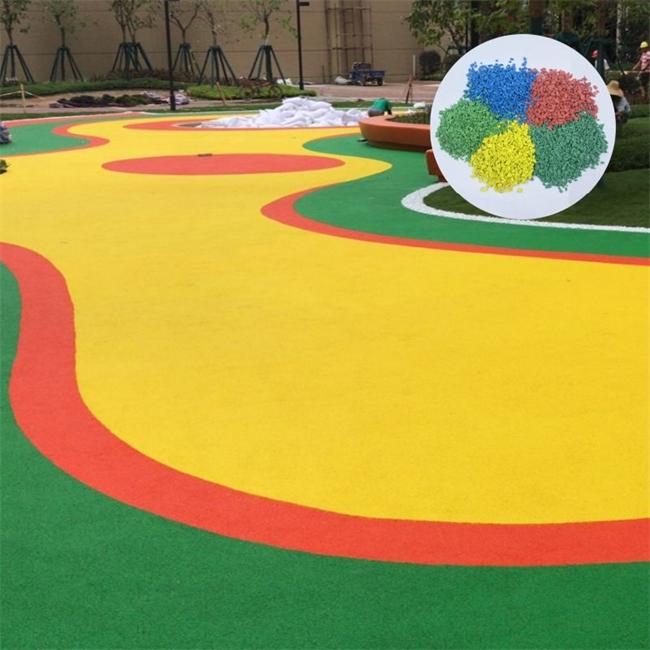
When discussing wet pour EPDM rubber granules, we’re specifically referring to the top layer of this system. These granules are mixed on-site with a PU binder and troweled into place, creating a seamless, permeable, and durable surface. The popularity of EPDM for playgrounds stems from its unmatched combination of safety, aesthetics, and longevity.
The Benefits of Soft Fall Rubber: Why EPDM is the Premium Choice
For high-profile commercial and municipal projects, choosing EPDM granules for playground surfacing over recycled alternatives offers a distinct advantage.
Exceptional UV Stability and Color Retention
One of the most critical concerns is fading. EPDM rubber is inherently UV-stable. High-quality colored EPDM rubber granules are manufactured with inorganic pigments that resist degradation from sunlight. While all colors can fade over an extended period, a top-tier EPDM granule will retain its vibrant color for over eight years under normal conditions, and some advanced formulations can withstand extreme UV exposure for even longer.
Superior Durability and Elasticity
EPDM’s molecular structure provides excellent tensile strength and elongation at break. This means the surface can flex under impact and return to its original shape without cracking. High-quality EPDM granules can offer a tensile strength of ≥ 4.5 MPa, far exceeding basic requirements, leading to a much longer service life and reduced maintenance costs.
Safe and Non-Toxic
Safety isn’t just about fall protection. A premium EPDM granule is non-toxic, free from heavy metals, and meets stringent safety standards for children’s play areas.
Design Flexibility
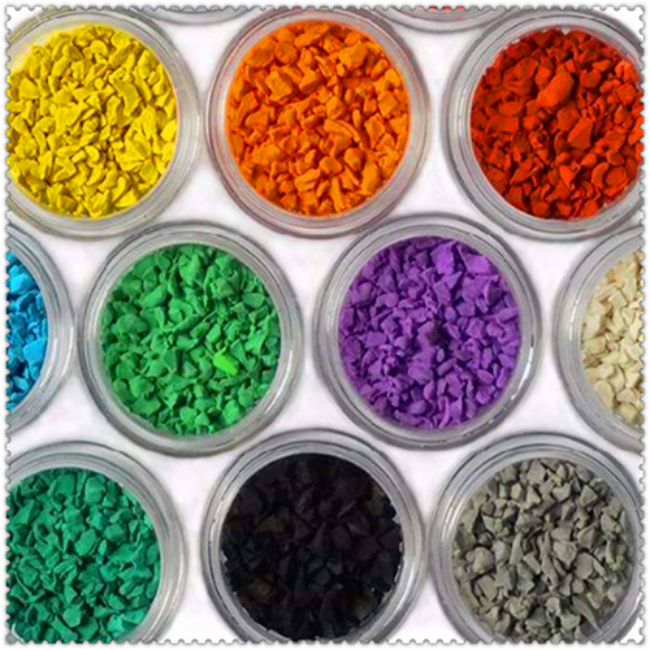
EPDM comes in a vast array of colors, allowing you to create custom designs, incorporate logos, and match corporate or school colors. This makes it an ideal choice for parks, schools, and commercial projects.

EPDM vs. SBR: A Quick Comparison for Specifiers
To make an informed decision, it's essential to understand the difference. EPDM is a virgin synthetic rubber, while SBR is typically made from recycled tire rubber. EPDM's primary use is as the top or wear layer, providing multi-color, UV-stable, and vibrant finishes. In contrast, SBR is predominantly black and used for the shock pad or base layer. While SBR offers good shock absorption at a lower cost, EPDM boasts very high durability and excellent weather resistance. This is why industry experts confirm that EPDM’s superior performance makes it the standard for the top, visible layer on safety surfaces.
How to Choose the Right EPDM Granules
Selecting the right material is vital for project success. Here’s what you need to specify:
1. What Size EPDM Granules Should I Choose?
The optimal size depends on the application. The most common all-purpose size for playground and sports surfaces is 1 to 3 millimeters, offering a good balance of texture and durability. For a finer, more refined finish, such as on textured surfaces, you might opt for a smaller size like 0.5 to 1.5 millimeters. Conversely, for areas requiring a coarser texture and enhanced slip resistance—like running tracks—a larger granule size, such as 1 to 4 millimeters or 2 to 4 millimeters, is often preferred.
2. What is the Right Polymer Content?
High-quality EPDM typically has an EPDM polymer content exceeding 20 percent. A higher polymer content usually translates to better performance, elasticity, and longevity. Always request the Technical Data Sheet (TDS) which lists the polymer content and physical properties.
3. Can the Color Be Customized?
Yes. A key advantage of using a professional manufacturer is the ability to customize. Whether you need to match a specific Pantone or RAL color, or require a custom blend to meet a unique design brief, a quality supplier can make it happen. It is crucial to produce a sample or a “color chip” for approval before full-scale production to guarantee color consistency on your project.
4. What Technical Documents and Certifications Are Required?
Always ask your supplier for a comprehensive set of documents. This includes the TDS (Technical Data Sheet) , which outlines mechanical properties like tensile strength, elongation, and density; the MSDS (Material Safety Data Sheet) , which details the product's chemical composition and safety information; and a COA (Certificate of Analysis) , which confirms a specific batch meets quality specifications. Additionally, third-party certifications like SGS or EN71-3 are vital as they verify the product is non-toxic and safe for children.

Manufacturer Insights: Expert Advice on Specifying and Sourcing EPDM
Drawing from over 25 years of experience as a dedicated EPDM rubber granules manufacturer, we’ve compiled critical advice to help you avoid common project pitfalls.
How to Avoid “Fading Fiasco”: The Role of Binders
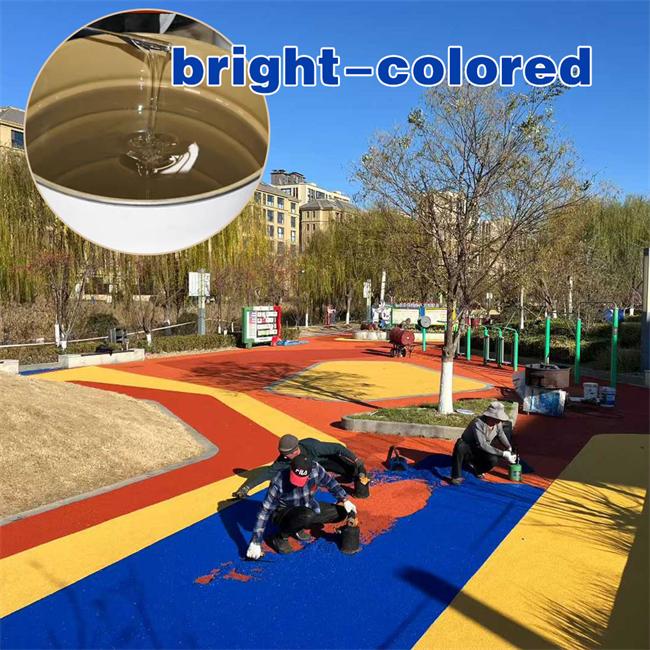
A common misconception is that fading is only due to the granule quality. While crucial, the binder used is equally important. Aromatic (non-UV-stable) polyurethane binders will yellow over time when exposed to sunlight, drastically altering the final color, especially for light-colored granules. Our expert advice is to always specify an aliphatic (UV-stable) binder for light-colored EPDM surfaces like white, yellow, or bright blue. This prevents yellowing and ensures your surface retains its intended color throughout its lifespan.
What Impacts the Cost of a Project?
Several factors influence the final cost of a soft fall rubber surface. As a manufacturer, we see that the granule's polymer content is a major factor; higher EPDM content means superior performance but comes at a higher cost. Color also plays a role, as custom colors or blends can have a higher raw material cost than standard stock colors. Furthermore, the total quantity ordered typically benefits from economies of scale, and the required fall height dictates the total thickness of the system, directly impacting material volume.
How to Choose a Reliable Supplier
Selecting a supplier goes beyond price. We recommend evaluating them on their commitment to quality control—do they have rigorous in-house testing and provide a COA? Transparency is also key; are they upfront about product origin (virgin vs. recycled) and polymer content? Finally, assess their capacity and logistics—can they handle your project size and deliver within your timeline? A reliable partner should be able to answer questions about their order capacity, delivery time, and ability to handle different shipping arrangements like LCL (Less than Container Load) and FCL (Full Container Load). Their support is also vital; can they provide comprehensive technical documentation like TDS and MSDS?
EPDM Supplier Selection Checklist for Importers
When evaluating suppliers, especially for international procurement, consider a few critical points. First, confirm the technical requirements by requesting TDS and MSDS before ordering and confirming the polymer content. It's wise to provide a physical sample or color chip for approval and request third-party safety certifications like EN71-3 or SGS. For quality control, ask about their COA process and if third-party lab testing is included. You should require a pre-production sample for color and quality verification and discuss the UV stability testing standards they follow. Regarding order and logistics, confirm minimum order quantities (MOQ), discuss packaging options like 25kg bags, 1,000kg jumbo bags, or custom solutions, and request information on lead times for production and shipping.
Why Global Buyers Choose Our EPDM Granules
As a specialized EPDM colored rubber granules manufacturer and exporter, our expertise is singularly focused. We understand that your project’s success depends on the quality of the materials you choose.
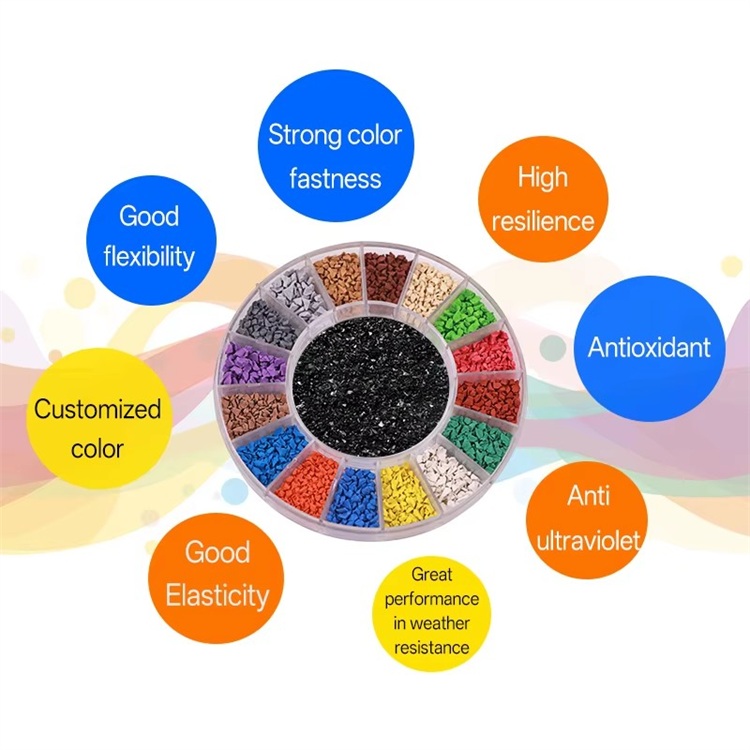
- Uncompromising Quality: We utilize advanced, sulfur-free production technology. The result is granules with zero odor, as no sulfur means no unpleasant smell, even under high heat and strong UV. Our unique process enhances molecular stability, resulting in a service life that is 3 times longer than standard EPDM. Furthermore, we achieve high tensile strength of 4 to 7 megapascals and excellent elasticity for a superior, durable playing surface. Our granules also feature advanced anti-oxidation and UV resistance, keeping your surface looking new for years.
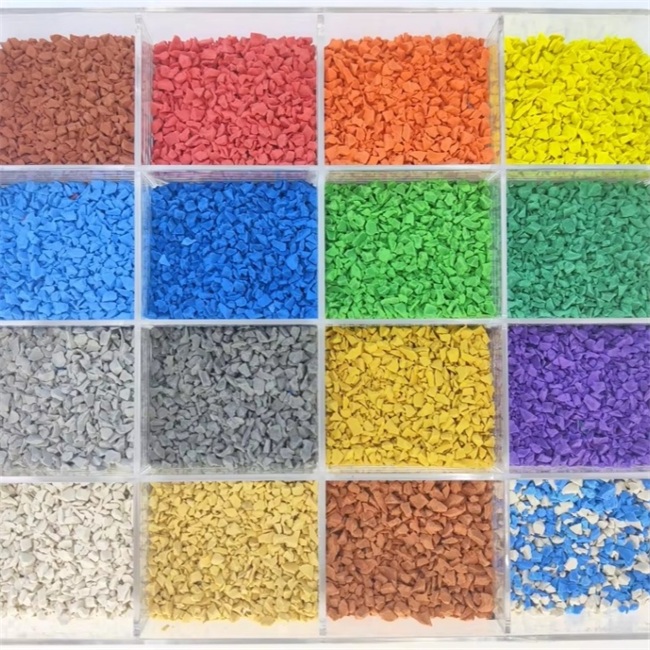
- Unmatched Customization: We don’t just sell standard products. We support color matching for any RAL, Pantone, or custom color requirement. We can produce various size specifications, from 0.5-1.5mm to 2-4mm and beyond. Our packaging options range from standard to private label, and with no minimum order quantity (No MOQ), we’re a perfect partner for both large-scale municipal projects and smaller, specialized jobs.
- Global Experience: With decades of experience exporting to clients in Europe, North America, Australia, and the Middle East, we are equipped to handle the logistical and regulatory demands of international projects.

Frequently Asked Questions (FAQ) About Soft Fall Rubber
1. What size EPDM granules should I choose for my project?
The standard, versatile size for most playgrounds and sports surfaces is 1-3mm. However, for a finer, more textured finish, 0.5-1.5mm is often used, while 2-4mm provides a coarser, more slip-resistant surface, commonly used for running tracks.
2. How long does EPDM soft fall rubber last?
A professionally installed high-quality EPDM surface can last 10 to 15 years or more. The longevity depends on the initial quality of the EPDM granules, the PU binder used, and the level of maintenance and use the surface receives.
3. Can EPDM rubber granules fade in the sun?
High-quality EPDM is inherently UV-stable and will not fade significantly for many years. Under normal conditions, high-quality granules retain their vibrant color for over 8 years. It is important to remember that aromatic (non-UV-stable) binders can yellow and affect the color, so specifiers should request aliphatic binders for light-colored surfaces.
4. How much PU binder is required for wet-pour EPDM?
The amount depends on the specific binder formulation and the granule size. The ratio is usually defined by the binder manufacturer's technical data. Generally, the binder is mixed at a predetermined percentage by weight to the granules. You will receive precise mixing instructions from your binder supplier.
5. Do you provide TDS and MSDS for your EPDM granules?
Yes, absolutely. As a professional manufacturer and exporter, we provide comprehensive Technical Data Sheets (TDS), Material Safety Data Sheets (MSDS), Certificates of Analysis (COA), and can provide third-party safety certifications like SGS to meet your project's technical and safety requirements.
6. Can you customize the color of EPDM granules?
Yes, we specialize in color customization. We can match any RAL or Pantone color code or create a custom blend. We strongly recommend approving a physical sample before full-scale production to guarantee the final color matches your design expectations.
7. What is the difference between EPDM and TPV?
While EPDM is a thermoset rubber, TPV is a thermoplastic vulcanizate. TPV is a premium option that offers superior colorfastness and durability over EPDM, often at a higher cost. Both are suitable as top layers, but EPDM remains the industry standard for most applications.
8. What certifications are available for EPDM granules?
Our granules can be certified to meet a variety of international safety standards. Commonly requested certifications include EN71-3 for toy safety (heavy metal migration), REACH compliance, and SGS testing for non-toxicity and other parameters.
9. How do I avoid buying inferior, recycled material?
Always request the Technical Data Sheet (TDS) that states the polymer content. Look for an EPDM content of over 20%. Additionally, request a Certificate of Analysis (COA) with every batch. A reputable manufacturer using virgin EPDM will be transparent about its composition.
10. Is soft fall rubber suitable for all climates?
Yes. EPDM is renowned for its weather resistance and performance across a wide range of temperatures. Its UV and ozone resistance make it suitable for hot, sunny climates, while its elasticity is maintained even at low temperatures, making it an excellent choice for global projects.
A safe, long-lasting, and visually stunning soft fall rubber surface is a major investment. The key to success is not just in the installation, but in the foundational choices you make as a specifier or buyer.
Choosing high-quality EPDM granules is the single most important decision you can make for the top layer of your surface. It guarantees years of vibrant color, exceptional safety, and reliable performance, protecting both the user and your investment. By understanding the critical differences between materials, like EPDM vs SBR, and the importance of choosing a reliable manufacturer who can provide technical support, custom color matching, and strict quality control, you can ensure your next project is a success.
If you are planning a project and need a reliable partner for your EPDM requirements, we invite you to contact our team. We can provide samples and discuss your specific needs.

WOW(LYG) New Material Co Ltd is a manufacturer specializing in the production of EPDM rubber granules. We use sulfur-free vulcanization technology, it increases the service life by more than 3 times than traditional EPDM granules, and enhances the performance, including anti-aging, high-temperature resistance, and colorfastness.
We have over 25 years of production experience and offer customization for colors and granule sizes. NO MOQ.


