 注: 建议图片大小150px*50px
丨
注: 建议图片大小150px*50px Views: 0 Author: Site Editor Publish Time: 2026-08-03 Origin: Site


If you are reading this, you are likely not just looking for a bag of rubber granules. You are a playground contractor facing a city council inspection, a distributor worried about your next shipment failing quality control, or a project manager trying to explain to a client why the “cheap” option will actually cost more in the long run.
The market for colored EPDM rubber granules has grown significantly, driven by increasing global demand for safe, durable, and aesthetically pleasing surfacing solutions. However, with this growth comes a flood of suppliers offering vastly different levels of quality. For every reliable manufacturer, there are multiple traders selling low-quality granules that fade within months or emit unpleasant odors under the summer sun .
This guide cuts through the marketing noise. Written from the perspective of a technical sales engineer with over two decades in the industry, it addresses the real questions and concerns of procurement professionals, contractors, and engineers who need to get this decision right—the first time.

What Are Colored EPDM Rubber Granules?
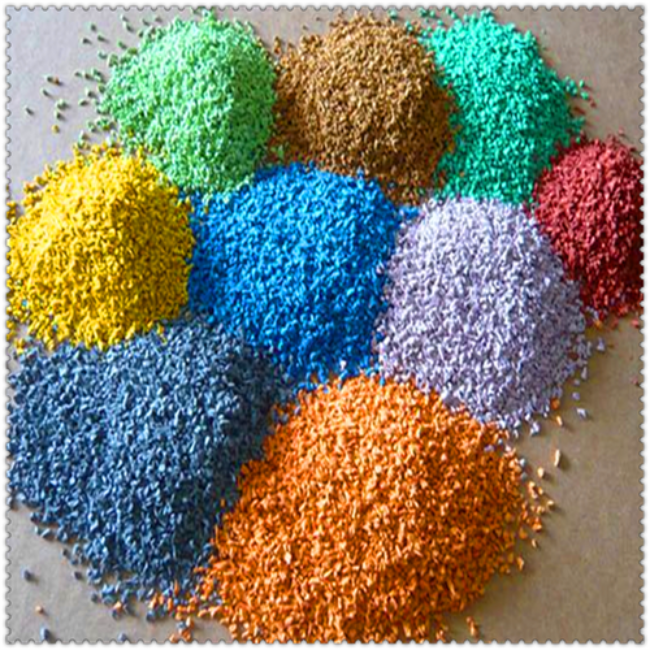
EPDM (Ethylene Propylene Diene Monomer) is a synthetic rubber known for its exceptional resistance to weathering, ozone, and UV radiation. When manufactured into colored granules, it becomes a versatile surfacing material used worldwide. Unlike basic black rubber from recycled tires, high-quality colored EPDM granules are produced through a controlled manufacturing process where pigments are integrated into the rubber compound itself, ensuring deep, long-lasting color .

Why EPDM? Understanding the Core Value Proposition
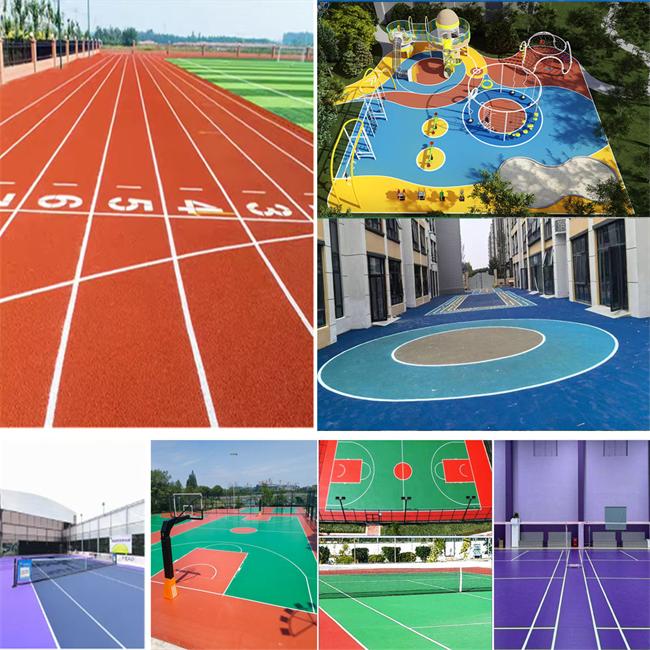
Colored EPDM rubber granules are the material of choice for professional surfacing because they solve a fundamental problem: how do you create a surface that is safe, durable, and visually appealing under extreme outdoor conditions? They outperform materials like SBR (recycled tire rubber) significantly in UV resistance, color retention, and lifespan—lasting over 12 years compared to SBR’s typical 5-7 years .
For contractors, this translates to fewer callbacks and warranty claims. For importers and distributors, it means a product with consistent quality and satisfied repeat customers.
The Hidden Costs of Choosing the Wrong Supplier: Addressing Common Pain Points
Before we dive into what makes a good product, let’s address the anxieties that keep procurement managers up at night.
1. Color Fading and Poor UV Performance
One of the most common complaints is that a newly installed playground or running track looks dull and patchy after just one summer. This is usually due to low-quality pigments or an improper formulation that lacks sufficient UV stabilizers .
2. Unpleasant Odors
Have you ever walked past a playground on a hot day and smelled a pungent, chemical-like odor? This is often caused by the breakdown of sulfur-based curing agents used in cheap granules. Under high temperatures and UV exposure, these granules decompose, releasing sulfur compounds and causing the characteristic “rubber burning” smell .
3. Short Lifespan and Premature Failure
Field reports consistently show that the primary cause of surface degradation is low EPDM rubber content. To cut costs, some manufacturers load their products with cheap fillers like calcium carbonate. These granules appear similar at first but lack the elasticity and resilience of high-quality material, leading to crumbling, cracking, and a loss of shock absorption within a few years .
4. Inconsistent Quality and Batch Variation
A supplier sends a perfect sample, but the bulk order is a completely different color or size. This is a significant risk for installers. Inconsistent granule sizing makes it difficult to achieve a smooth, level surface, increasing labor costs and potentially causing project delays .
5. Supply Chain Volatility
Distributors and large-scale contractors often face challenges with Minimum Order Quantities (MOQ) that are too high and lead times that are too long. A supplier that cannot be flexible or communicate clearly about production capacity can derail a project schedule.
6. High Shipping and Logistics Costs
While not often discussed upfront, shipping costs can significantly impact the total project budget. Reliable suppliers with efficient logistics infrastructure can provide cost-effective FOB or CIF pricing .

How to Select the Right Colored EPDM Rubber Granules Supplier
Choosing a supplier requires moving beyond price-per-kilogram and evaluating their technical and operational capabilities. For procurement experts, you should establish an evaluation framework centered on the following pillars:
1. The Technology: Look Beyond “EPDM”
A reputable supplier should provide clear technical data. Key indicators include tensile strength (target >3 MPa), elongation at break (target >450%), and ash content (lower is better, as it indicates less filler). These figures are non-negotiable for projects requiring long-term warranty and performance .
The most advanced products on the market are moving towards “sulfur-free” or “peroxide-cured” technology. This is a game changer. Removing sulfur from the curing process stabilizes the molecular structure, boosting lifespan by up to three times and eliminating the chemical breakdown that causes odor. This also improves elasticity and tensile strength, often reaching 4 to 7 MPa, which is critical for high-impact sports surfaces .
2. Verify Customization Capabilities
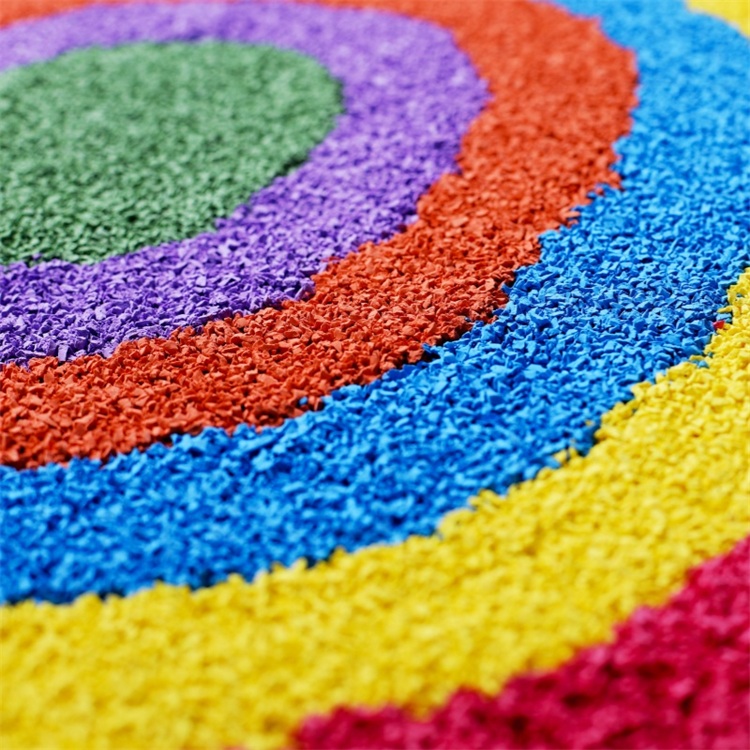
No two projects are the same. The ability to customize is paramount. A high-caliber supplier offers a full spectrum of customization options, including rubber content (from 10% to 33% depending on performance requirements), color matching via RAL or Pantone numbers, and precision sizing (such as 1 to 3.5mm) . A supplier that can accommodate these requirements will almost certainly have the technical experience and flexible manufacturing processes that mark a premium manufacturer.
3. Assess Operational Reliability
For international buyers, order fulfillment is as important as product quality. Alibaba’s sourcing guides highlight the importance of metrics like on-time delivery rates (aim for ≥95%), response times (≤7 hours is a strong signal of dedicated support), and reorder rates (>20% indicates sustained buyer satisfaction) .
4. Demand Transparency in Quality Assurance
Ask for third-party test reports, such as those from SGS. Confirm compliance with international standards like EU EN71-3 for children’s products or the GB 36246-2018 standard for sports surfaces. A supplier should be able to provide evidence of batch traceability, ensuring that in the event of an issue, you can trace the product back to its source .
5. Lower Your Risk: Look for Flexible MOQs
Many traditional suppliers require containers of orders. However, this creates a barrier for smaller projects or pilot runs. Modern, agile manufacturers now offer low or no Minimum Order Quantity (MOQ) to facilitate testing and customization, reducing the financial risk for buyers .
Practical Tips for Procurement and Installation
- The Sample Test: Order samples from at least 3 suppliers. But don’t just look at them. Test them. Place them under a UV lamp for 500 hours and compare them to your reference sample. If a supplier quotes a price that seems too good to be true, it likely is.
- The “Sniff Test” for Quality: Good EPDM should have a faint, clean rubber smell, not a strong chemical odor. This is a surprisingly reliable indicator of purity and sulfur-free manufacturing.
- Ask About Lead Times: June, July, and August are peak production seasons. If you have a project during this period, book your supplier early to guarantee your spot on the production line .
- Establish a Quality Verification Plan: When materials arrive, verify them. Compare the delivered stock with the approved sample. For large contracts, consider on-site or third-party laboratory testing to confirm material properties before installation begins .
Frequently Asked Questions (FAQs)
1. What is the difference between SBR and EPDM granules?
SBR (Styrene-Butadiene Rubber) is a recycled rubber product that is cheaper but degrades quickly under UV exposure. It is typically suitable for low-use indoor applications. EPDM is a virgin synthetic rubber designed for outdoor durability. It maintains its color and structure for over a decade, whereas SBR can start to fail in 5-7 years .
2. How can I tell if EPDM granules have a high rubber content?
You can assess this through visual inspection and by reviewing technical data sheets. High-quality granules have a clean, consistent color and a slightly textured surface. Check the technical data for ash content; low ash content (under 50-60%) generally indicates less filler and a higher percentage of actual rubber .
3. Why do some EPDM granules have an unpleasant smell?
This is usually caused by residual sulfur compounds from the manufacturing process. Many older or lower-grade EPDM products use sulfur as a curing agent. When exposed to high temperatures, these compounds degrade, releasing volatile sulfur gases. A high-performance supplier will use “sulfur-free” technology, which eliminates this odor and significantly improves the material’s stability and lifespan .
4. What is a safe MOQ for a trial order for a colored EPDM product?
A truly flexible supplier will accept a trial order as low as 500 kg. This allows you to test the product in your specific application without a massive capital commitment. For standard colors or colors in stock, a 1-ton lot is often the standard, while custom colors typically require 1-2 tons to set up the production line .
5. How does humidity affect installation?
EPDM installation, which involves bonding the granules with polyurethane adhesive, is sensitive to high humidity. It is generally recommended to apply when ground temperatures are above 5°C and relative humidity is below 85%. High humidity can cause the adhesive to foam or fail to cure properly, leading to a weak bond and early failure .
6. What makes the UV resistance of EPDM better than other rubbers?
EPDM’s chemical structure is inherently saturated, meaning it has fewer weak points that can be attacked by oxygen and UV light. This is why it has excellent resistance to ozone, ultraviolet radiation, and weathering. High-quality EPDM formulations enhance this natural property with specific additives to ensure color stability and prevent cracking even after years of outdoor exposure .
7. Is EPDM safe for use in children’s playgrounds and schools?
Yes, high-quality EPDM granules are non-toxic and are often compliant with stringent international safety standards (e.g., EU EN71-3, GB 36246-2018). The primary concern comes from lower-quality recycled products that may contain heavy metals or polycyclic aromatic hydrocarbons (PAHs). Always request verification of compliance from your supplier .
8. How should I handle color matching for a multi-phase project?
When ordering for projects with multiple phases, request that all granules come from the same production batch. If this is not possible, ask the supplier to reserve the same masterbatch formula to ensure batch-to-batch consistency. A professional supplier will provide detailed records of each batch to ensure traceability and color uniformity .
Why Are More and More Projects Choosing High-End EPDM?
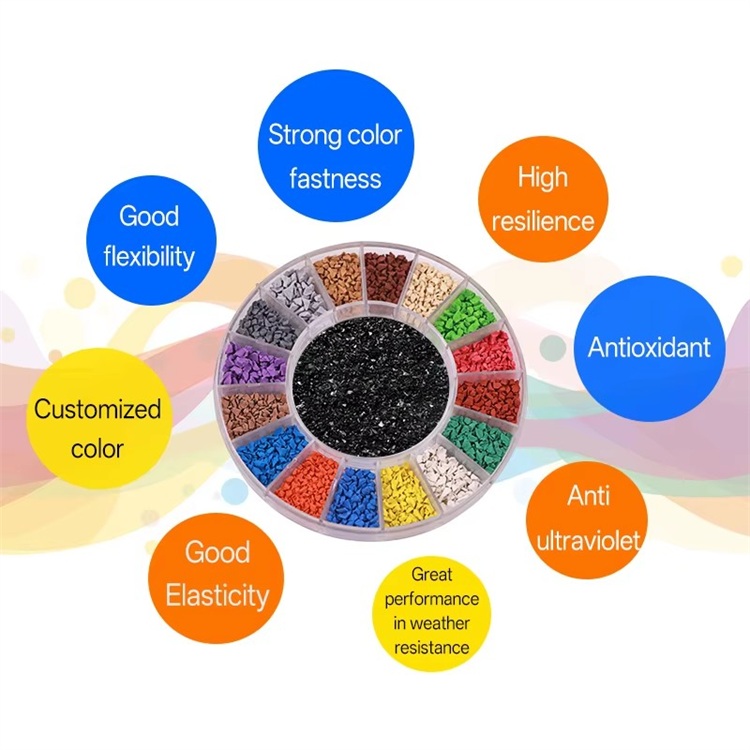
The construction and surfacing industry is moving away from a “lowest cost” mindset toward a “lowest lifecycle cost” mindset. While the upfront cost of superior EPDM granules is higher, the benefits are immediate and tangible. It eliminates odor issues and offers an unparalleled ability to customize color and size. This durability ensures that the surface remains safe and functional for over a decade, with virtually no maintenance required .

Selecting a colored EPDM rubber granules supplier is a strategic decision with long-term implications for safety, performance, and cost. By shifting your focus from simply finding a supplier to finding a partner who understands the technology—with a clear commitment to quality, flexibility, and reliability—you protect your project, your clients, and your reputation.
For the most demanding projects, the technical and commercial advantages offered by advanced, sulfur-free EPDM manufacturing processes simply cannot be ignored. This isn’t just a material choice; it’s an investment in quality. When looking for a supplier, prioritize those with a proven track record, transparent testing, and a genuine willingness to help solve your specific challenges. By doing so, you ensure that your surface will stand the test of time, weather, and use.

WOW(LYG) New Material Co Ltd is a manufacturer specializing in the production of EPDM rubber granules. We use sulfur-free vulcanization technology, it increases the service life by more than 3 times than traditional EPDM granules, and enhances the performance, including anti-aging, high-temperature resistance, and colorfastness.
We have over 25 years of production experience and offer customization for colors and granule sizes. NO MOQ.


