 注: 建议图片大小150px*50px
丨
注: 建议图片大小150px*50px Views: 0 Author: Site Editor Publish Time: 2026-08-11 Origin: Site


For playground contractors, sports surfacing specialists, and purchasing managers, the EPDM color chart is far more than a simple palette of reds, greens, and blues. It is a critical decision-making tool that directly impacts project aesthetics, material durability, and long-term client satisfaction.
Choosing the right color from the EPDM color chart involves understanding the relationship between pigments, UV stability, and the binders used during installation. A poor choice can lead to premature fading, discoloration, and costly client complaints within months of installation.
This guide provides a comprehensive overview of the EPDM color chart, the technical factors that influence color performance, and practical advice on selecting a reliable EPDM granules manufacturer for your next project.
What Is an EPDM Color Chart?
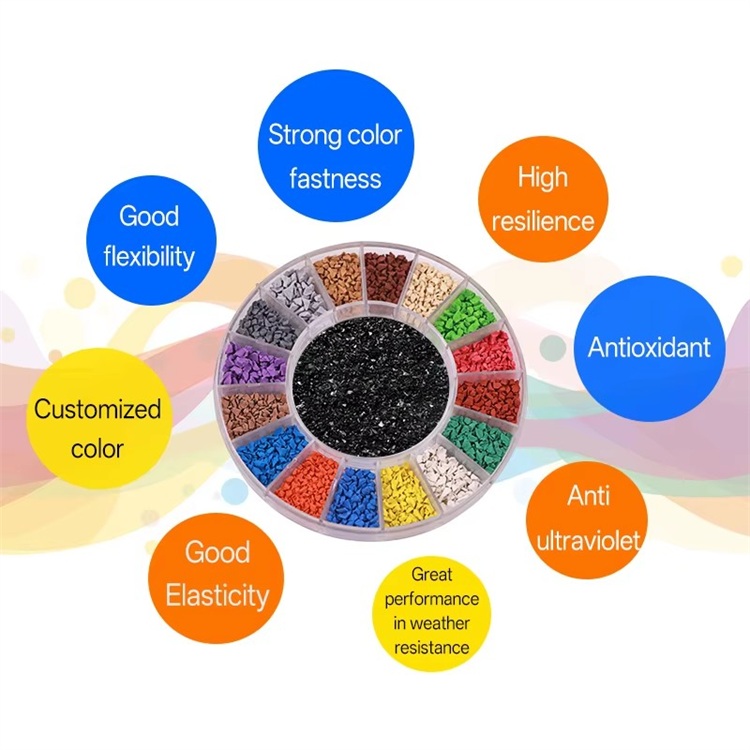
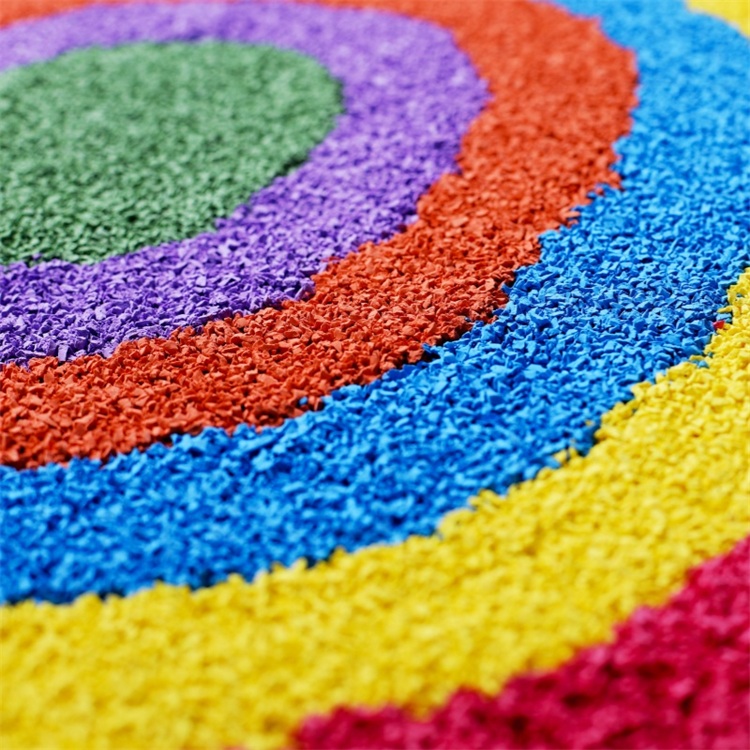
An EPDM color chart is a reference guide provided by manufacturers to showcase the range of available colors for EPDM (Ethylene Propylene Diene Monomer) rubber granules. These granules are the top wearing course in systems like wet pour rubber playgrounds and running tracks .
The most reliable color charts are linked to standardized color systems like RAL or Pantone, ensuring color consistency across batches and enabling accurate communication between contractors and material suppliers .

Applications of Colored EPDM Granules
Understanding the application is key to selecting the correct colors from the EPDM color chart. Different environments demand different color properties.
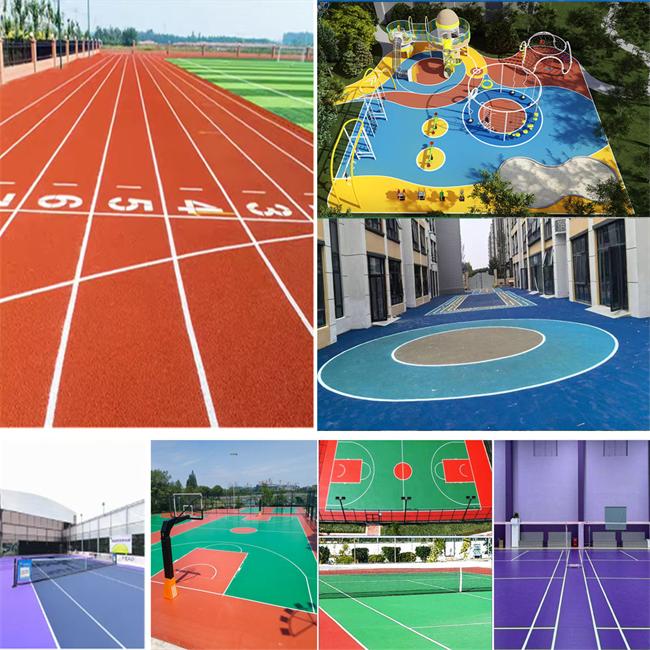
Playground Safety Surfacing
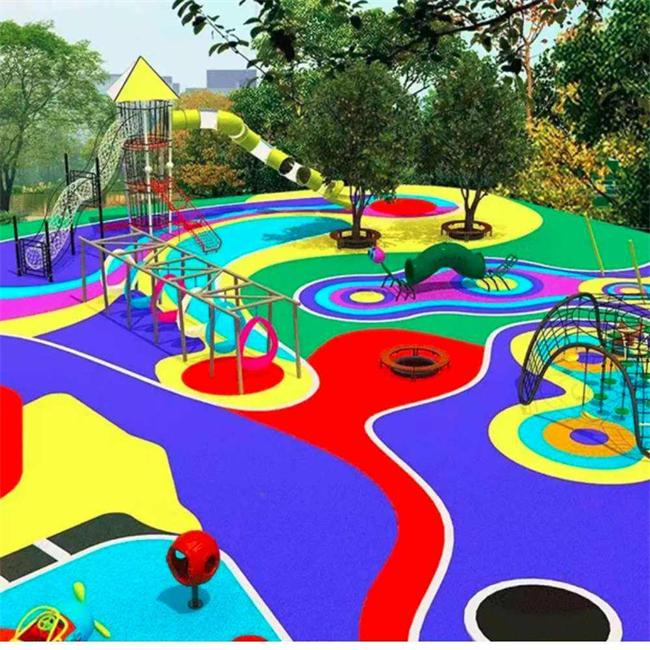
Colorful, impact-absorbing surfaces are standard for modern playgrounds. Colors are often used to create vibrant, engaging play areas.
Sports Tracks and Athletic Surfaces
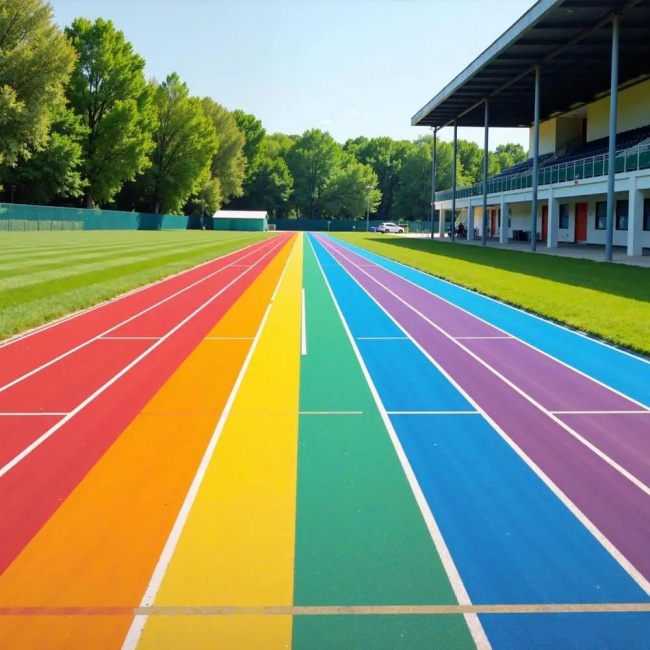
Running tracks often use classic colors like red or blue, which must resist heavy foot traffic and UV exposure.
Walking Paths and Recreational Areas
Pathways use a mix of natural and vibrant colors to blend with the landscape.
Splash Pads and Water Play Areas
Surfaces here require excellent color stability and slip resistance in wet conditions.
Benefits of Choosing the Right Color
Selecting the right color from the EPDM color chart affects more than just aesthetics.
- Aesthetics and Design: Colors from the EPDM color chart allow you to match school logos, create themed playgrounds, or design safe, visually appealing spaces for children. Graphics, letters, and numbers can be incorporated into the wet pour surface using different EPDM colors .
- UV Stability and Weathering: The primary challenge with colored EPDM is maintaining vibrancy under prolonged sun exposure. Quality EPDM granules use UV-stable pigments to resist fading and maintain appearance over years of outdoor use.
- Heat Absorption: Color selection impacts surface temperature. Lighter colors reflect heat and stay cooler underfoot, while darker colors absorb heat. This is a critical consideration for playgrounds in warm climates to ensure a safe and comfortable surface for children.
Common Challenges with EPDM Color Selection
Even with the best EPDM color chart, issues can arise. Understanding these risks is the first step to avoiding them.
Challenge 1: The "Yellowing Effect" from Binders
The polyurethane binders used to set EPDM granules can affect the final color. Aromatic binders are not UV-stable and can yellow over time when exposed to sunlight .
While this yellowing is often reversible and does not affect the material's physical properties, it can be visually undesirable, especially on lighter or bright colors .
Challenge 2: Batch-to-Batch Color Inconsistency
When a project requires multiple shipments of granules, color inconsistency between batches becomes a significant risk. This creates a patchy, unprofessional finish. The issue typically arises from a manufacturer lacking rigorous quality control and color calibration processes.
Challenge 3: Fading and Loss of Vibrancy
Even without binder yellowing, the EPDM granules themselves can fade over time if low-quality pigments are used. This results in a dull, washed-out appearance that ages the surface prematurely.
Challenge 4: Reclaimed or Low-Quality Materials
Some suppliers offer cheaper "EPDM" that is actually a blend of recycled rubber and pigments. These products may look acceptable initially but will rapidly fade, crumble, or release odors. Truly high-quality EPDM uses virgin rubber and durable, lightfast pigments to ensure color longevity.
How to Choose Colors from the EPDM Color Chart
Selecting from an EPDM color chart requires a systematic approach.
Step 1: Reference Standardized Color Codes
Always reference international color standards when specifying colors. RAL is the most common, with many charts providing the RAL number for each sample . Using RAL or Pantone eliminates ambiguity and ensures both you and the manufacturer are aligned.
Step 2: Confirm UV Stability for the Application Environment
Consider the UV index of the project location. In high-sun regions, light and bright colors are more prone to yellowing if installed with an aromatic binder . For these colors, specify an aliphatic (UV-stable) binder to maintain visual integrity.
Our EPDM color chart includes fade-resistant options suitable for high-UV environments, with our advanced binder-free manufacturing process and UV-stable pigments ensuring long-term color retention.
Step 3: Consider the Binder Recommendation
The binder choice is as important as the granules. If you are using an aromatic (non-UV-stable) binder, darker colors like brown, dark green, and dark blue are better choices . For bright colors like pink, lilac, white, bright blue, and turquoise, a UV-stable aliphatic binder is essential .
In contrast, our no-sulfur EPDM formulation eliminates the risk of UV-induced breakdown and odor, simplifying the selection process. You can use our material with a wider range of binder systems without compromising color stability.
Step 4: Request Physical Samples
Never rely entirely on a digital representation. Always request physical samples from the manufacturer to see the actual color and texture. This is the only way to verify the color’s vibrancy, consistency, and quality.
Step 5: Understand the granule Size
Color charts usually show the color but not the granule size. The granule size range (e.g., 0.5-1.5mm, 1-3mm, 2-4mm) affects the texture and look of the finished surface. Ensure the supplier offers your chosen color in the correct granule size for your project.

Technical Specifications: What to Look for in a Quality EPDM Granule
When evaluating products from an EPDM color chart, consider the following technical aspects.
UV Stability & Weathering
The material must be engineered to withstand UV radiation and weathering. Our EPDM granules are produced with no sulfur content, which means they do not break down under UV exposure, extending the material's lifespan by over three times compared to conventional alternatives.
Tensile Strength and Elasticity
A high tensile strength rating (e.g., 4–7 MPa) ensures the surface can handle heavy foot traffic, play, and sports activities without cracking or breaking down. Our products offer tensile strength 2-3 times higher than standard granules.
Color Consistency
Manufacturers should provide samples and clear color codes (e.g., RAL, Pantone) for each color in their chart. This ensures you can specify and verify the color accurately. As a manufacturer supporting both OEM and ODM, we can match any RAL or Pantone color or develop custom colors to your specification.
Environmental Compliance
Look for evidence of compliance with environmental and safety standards. Our EPDM is manufactured using a sulfur-free technology that meets food-grade hygiene standards, making it suitable for use in projects with strict environmental and health requirements.

Manufacturer Insights: How to Select Your EPDM Color
With over two decades of experience as a specialized EPDM granules manufacturer and exporter to markets across Europe, North America, and Australia, we have compiled key insights to help you navigate the EPDM color chart and avoid common mistakes.
Choose the Right granule Size for Your Color
While this is not strictly a color chart issue, color appearance is affected by granule size. Finer granules (e.g., 0.5-1.5mm) create a smoother, denser surface with more precise color definition, while larger granules offer more texture and slip resistance. Consider how your chosen color will appear in different granule sizes.
Balance Aesthetics with Functionality
The color you choose will affect surface temperature. For hot climates, lighter colors are more comfortable for users. For areas with heavy use and potential staining, darker colors may hide wear and dirt better.
When to Customize a Color
If your project is tied to a specific brand, school, or corporate identity, an exact match is crucial. As an expert in color customization, we can match any RAL or Pantone color or develop a unique color from a physical sample, ensuring the final surface perfectly reflects your client’s branding and vision.
Audit Your Supplier’s Manufacturing Process
When evaluating a supplier, ask about their manufacturing capabilities. Do they have a dedicated color laboratory? Can they provide UV stability test reports? Do they have a reliable quality control process to ensure batch-to-batch consistency?
With our rigorous quality control, 25+ years of industry expertise, and advanced production lines, we ensure all our EPDM granules meet the highest standards of color stability, durability, and environmental compliance.

Why Global Buyers Choose Our EPDM Granules
As a specialist EPDM manufacturer and exporter, we provide:
Sulfur-Free, Odorless EPDM
Our innovative sulfur-free formula means no sulfuric breakdown under heat or UV, which eliminates the unpleasant odor often associated with rubber surfaces.
Superior Color Stability
Our EPDM color chart offers colors that are exceptionally UV-stable and resistant to fading. The enhanced anti-oxidation properties keep the surface looking vibrant for years.
High Elasticity and Durability
Our EPDM granules demonstrate up to 3 times the elasticity of standard EPDM, with a tensile strength of 4–7 MPa, ensuring excellent performance in sports and playground surfacing.
Full Customization Capabilities
We support custom colors (RAL, Pantone, or physical samples), granule sizes (including 0.5-1.5mm, 1-3mm, 1-4mm, 2-4mm), and packaging. There is no minimum order quantity (no MOQ), allowing flexible procurement for projects of all scales.
Reliable Export Supply Chain
With extensive global export experience, we ensure on-time delivery and stable supply, whether you require full container loads or LCL shipping.
Frequently Asked Questions (FAQ)
1. What do the numbers on an EPDM color chart mean?
The numbers on a professional EPDM color chart are often RAL or Pantone codes. These international color standards provide an objective reference for specifying the exact color you require, ensuring consistency from order to order.
2. Does color affect the durability of EPDM?
Color itself does not affect durability, but the pigments used to create the color do. High-quality, UV-stable pigments are essential for colorfastness, while poor-quality pigments will fade. The manufacturing process, particularly sulfur-free technology, also significantly impacts material longevity.
3. How long does EPDM color last before fading?
With high-quality, UV-stable granules and a suitable binder, an EPDM surface can retain its color vibrancy for over 10 years. Low-quality materials may begin to fade within the first year.
4. Can you customize colors beyond the standard EPDM color chart?
Yes, professional manufacturers offer custom color matching. You can provide a RAL number, Pantone code, or a physical sample for them to create a custom color that fits your specific project requirements.
5. Which binder should I use with my chosen EPDM color?
If you are using bright, light, or pastel colors, an aliphatic (UV-stable) binder is recommended to prevent the "yellowing effect" . For darker colors, you may have the option of using a standard aromatic binder, but aliphatic binders are still the premium choice for long-term aesthetics.
6. What granule sizes are available for colored EPDM granules?
Common granule size ranges include 0.5-1.5mm, 1-3mm, 1-4mm, and 2-4mm. The correct size depends on the application, with finer sizes used for detail work and larger sizes for general surfacing.

The EPDM color chart is a powerful tool that should guide your technical and aesthetic decisions. The next time you view a color chart, remember that the choice of pigment, binder, and manufacturer quality will determine the project’s long-term success.
By focusing on standardized color codes, understanding binder interactions, and demanding physical samples, you can make an informed decision. When you partner with a specialized manufacturer like us, you benefit from exceptional color stability, superior durability, and full customization flexibility.
Contact us today to receive a detailed EPDM color chart, technical data sheets (TDS/MSDS), and sample kits to confidently specify your next project.

WOW(LYG) New Material Co Ltd is a manufacturer specializing in the production of EPDM rubber granules. We use sulfur-free vulcanization technology, it increases the service life by more than 3 times than traditional EPDM granules, and enhances the performance, including anti-aging, high-temperature resistance, and colorfastness.
We have over 25 years of production experience and offer customization for colors and granule sizes. NO MOQ.


