 注: 建议图片大小150px*50px
丨
注: 建议图片大小150px*50px Views: 0 Author: Site Editor Publish Time: 2026-07-21 Origin: Site


The Real Cost of Choosing the Wrong EPDM
You’ve won the bid. The project timeline is tight. The client expects a safe, vibrant playground that will hold up for years. You specify EPDM, order the material, and lay it down.
Six months later, the color has faded to a washed-out pastel. Within a year, the surface is showing signs of wear. Within three years, the playground looks worn and tired, and the client is calling, asking why.
This scenario plays out too often. For playground contractors, sports surfacing contractors, and procurement professionals, the choice of EPDM for playground surfaces is not just about material specifications on paper. It is about real-world performance, client satisfaction, and the long-term reputation of your business.
This guide addresses what you actually need to know—the questions you should be asking, the red flags to watch for, and the technical details that separate a great playground surface from a costly mistake.
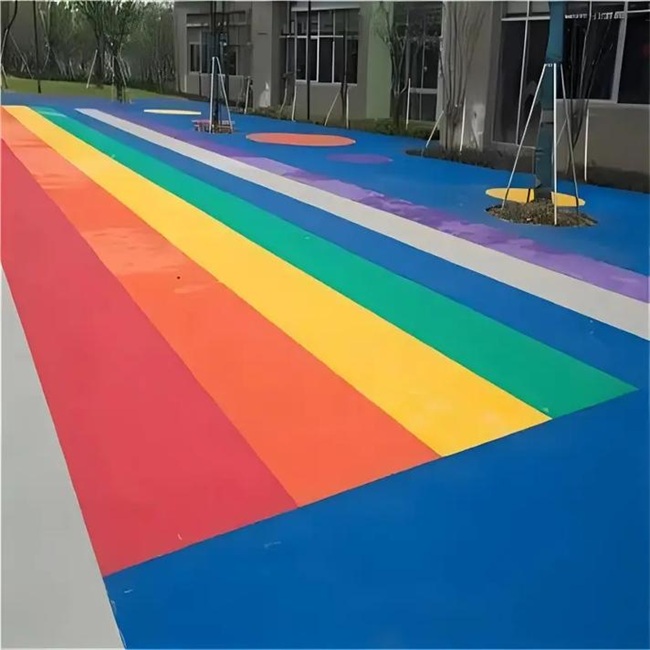
What Exactly is EPDM for Playgrounds?
EPDM stands for Ethylene Propylene Diene Monomer—a synthetic rubber widely used for its exceptional weather resistance and flexibility. In playground applications, EPDM granules are mixed with a polyurethane binder and applied as a seamless, shock-absorbing surface.
The material’s saturated molecular structure gives it inherent stability. Unlike natural rubber or some synthetic alternatives, EPDM resists degradation from UV radiation, ozone, and moisture. This is what makes it suitable for outdoor play areas exposed to sun, rain, and temperature swings.

Why Playgrounds Increasingly Specify EPDM
More municipalities, schools, and commercial developers are choosing EPDM for safety surfacing because:
- Safety Performance: EPDM offers impact absorption that can reduce injury risk from falls. The material’s cushioning properties make it compliant with critical fall height requirements when properly installed.
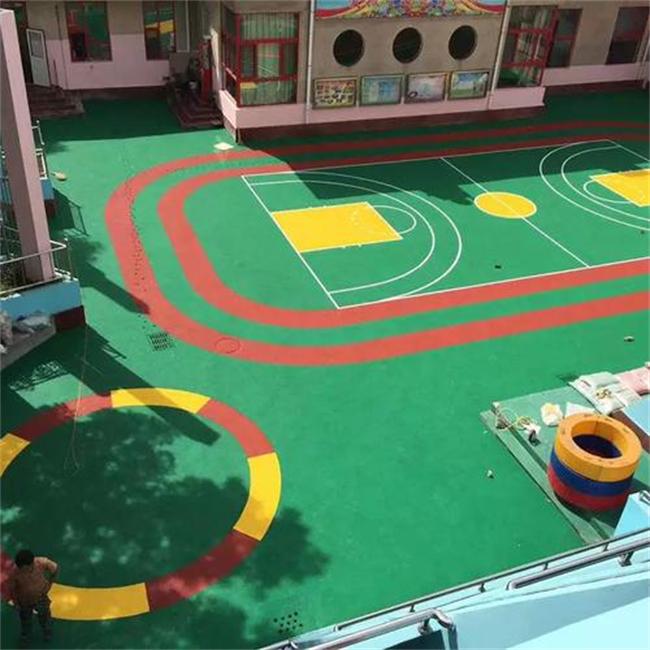
- Design Flexibility: Available in countless colors, EPDM allows for creative designs, themed play areas, and zone differentiation without compromising performance.
- Durability Outdoors: EPDM’s resistance to UV degradation and weathering means it can outlast alternatives like recycled rubber mulch or pour-in-place systems using inferior materials.
- Low Maintenance: Properly installed EPDM surfaces can be cleaned with simple water and require minimal ongoing upkeep.

Critical Pain Points: What Keeps Playground Contractors Up at Night
The Fading Problem (and Why It Happens)
The concern: “Will the color hold up in my climate? I’ve seen EPDM turn dull within a year.”
What you need to know: Color stability is not just about pigment; it’s about the chemistry of the rubber itself. Traditional EPDM produced with sulfur-based vulcanization can release sulfur compounds under UV exposure. This leads not only to odor but also to accelerated degradation of the color and material structure. In high-UV climates, the performance gap between sulfur-cured and advanced-cured EPDM becomes visible within months.
The Odor Issue: A Regulatory and Client Concern
The concern: “This material has a chemical smell. Will it be safe for children?”
What you need to know: Some EPDM products use sulfur-based curing systems that, under high-temperature or prolonged UV exposure, degrade and release sulfuric compounds. This produces the rubbery odor often associated with lower-quality playground surfaces. For projects near schools, hospitals, or residential areas, this is a significant concern—especially with increasingly strict VOC and air quality regulations.
Batch-to-Batch Inconsistency
The concern: “My last order was fine, but this batch looks different and seems to perform worse.”
What you need to know: Inconsistent manufacturing processes—particularly in facilities without automated color and batch control—lead to material variations that are visible in the finished surface. Even with high-quality installation, variation in granule size, density, or pigment load can produce a patchy, unprofessional appearance and inconsistent performance.
The Installation-Integration Challenge
The concern: “Even if I buy good material, I need to know it will work with my adhesive system and application methods.”
What you need to know: EPDM performance in the field depends on compatibility between the granules and the polyurethane binder. If the supplier cannot provide guidance on ideal mix ratios or binder compatibility, the risk of delamination, poor adhesion, or binder migration increases significantly.
The Real Technical Differentiators in EPDM Quality
Beyond the basic specifications, these are the factors that determine whether an EPDM for playground surfacing will last 3 years or 15 years.
1. Sulfur-Free vs. Sulfur-Cured Chemistry
EPDM can be cured using sulfur or using peroxide-based systems. The difference is significant.
Sulfur-cured EPDM has become less common as manufacturers move to non-sulfur systems. Advanced sulfur-free formulations eliminate the sulfur compounds that can degrade under UV, preventing the breakdown that leads to odor, color loss, and material embrittlement.
When a manufacturer specifies sulfur-free EPDM, they are indicating improved chemical stability. This directly translates to extended service life in outdoor applications, sometimes cited as 3 to 5 times greater longevity compared to sulfur-cured alternatives.
2. Tensile Strength and Elongation
Industry references suggest that advanced-chemistry EPDM products can achieve tensile strengths ranging from 4 to 7 MPa—significantly higher than baseline requirements. This matters because higher tensile strength means better resistance to tearing, abrasion, and granule loss during heavy use. Higher elongation means the material can flex under load without breaking, maintaining its integrity through freeze-thaw cycles and heavy foot traffic.
3. Density and granule Shape
Not all EPDM granules are equal.
Low bulk density with distinct, angular granules creates better mechanical interlock with the binder system. This leads to:
- Better compaction during installation
- Reduced binder usage per square meter
- Improved surface evenness
- Better drainage
granules with irregular shapes and sharp angles interlock better than smooth, rounded granules, which tend to settle or separate during the mixing and troweling process.
4. UV Stability and Color Retention
EPDM’s UV stability is the factor most closely tied to visible performance.
Premium EPDM formulations incorporate stabilizers and pigments that resist fading even after prolonged UV exposure. Some advanced products are designed to withstand exposure levels significantly beyond standard requirements, maintaining color stability even after extended outdoor exposure. This is not an optional upgrade for most outdoor playground projects—it is a necessity.

How to Avoid Costly Procurement Mistakes
Mistake 1: Prioritizing Price Over Chemistry
The trap: A supplier offers EPDM at 30% below market average. The project budget looks better.
The risk: Lower-cost EPDM often comes with sulfur-based systems, lower polymer content, or recycled content that degrades faster, fades, and may produce odors. The short-term savings are consumed within months by repair costs or, worse, client dissatisfaction.
The solution: Request independent test reports verifying UV stability, tensile strength, and VOC emissions. Question any supplier who cannot provide current data that meets GB 36246-2018 standards for school playground installations.
Mistake 2: Overlooking the Supplier’s Manufacturing Consistency
The trap: The supplier provides a sample that looks and performs well—but the production batch looks and performs differently.
The risk: Color mismatches between batches produce a patchy finished surface. Inconsistent granule size distribution leads to variable compaction and thickness.
The solution: Work with manufacturers who operate automated production lines with color-control systems and batch-tracking protocols. Suppliers with established quality management systems, such as ISO 9001 certification, maintain consistency across production runs.
Mistake 3: Not Accounting for Climate
The trap: “This EPDM works fine in coastal areas—the specs say it should be fine here too.”
The risk: EPDM formulations suitable for moderate climates may underperform in areas with extreme UV exposure, freeze-thaw cycles, or high humidity.
The solution: Ask suppliers about specific performance data in climate conditions similar to your project. Look for products formulated with UV stabilizers, thermal stability additives, and moisture-resistant binder systems. Some advanced products are engineered to perform across a wide temperature range, from -40°C to 70°C.
Mistake 4: Ignoring MOQ and Lead Time Realities
The trap: The supplier offers great pricing but requires a high minimum order quantity (MOQ) that doesn’t match your project size—or cannot guarantee timely delivery.
The risk: You over-order material you cannot use, or you order from a secondary supplier with shorter lead times but inferior quality.
The solution: Work with suppliers who offer flexible MOQ terms and have documented production capacity. Suppliers with modern manufacturing facilities and proven supply chain reliability are better positioned to meet project deadlines without compromising quality.

How to Evaluate an EPDM Supplier
When assessing potential suppliers, consider these practical evaluation criteria:
Verify the production capability—is the company a manufacturer with direct production control, or a trading company with limited oversight of quality? Manufacturers with on-site production have more control over batch consistency and quality assurance.
Examine the technical documentation—ask for quality control data, independent test reports, and compliance certifications with applicable standards like GB 36246-2018 or international equivalents.
Test physical samples—request samples and conduct simple comparative assessments. Low-density EPDM with good granule definition typically performs better than products with high density or rounded granules.
Evaluate support and compatibility—does the supplier understand binder compatibility and installation requirements? Suppliers who can offer mixing ratios and installation guidance are likely to have more integrated product knowledge.

Frequently Asked Questions by Procurement Professionals
Q: How can I quickly tell if EPDM is sulfur-based or sulfur-free?
A: Ask the supplier directly for the cure system used in their formulation. Experienced manufacturers will specify whether they use sulfur-based or advanced curing systems. For verification, request a current test report that shows VOC emissions and thermal stability data.
Q: How long should EPDM playground surfacing last?
A: With high-quality materials and proper installation, EPDM can last 8-10 years or more. The factors affecting lifespan are UV exposure, climate, maintenance practices, and the quality of the EPDM. Sulfur-free EPDM with good UV stability is engineered to maintain color and structural integrity longer than standard alternatives.
Q: What minimum thickness is required for safety?
A: The required thickness depends on the critical fall height requirement of the playground equipment. However, many projects specify a minimum EPDM layer thickness of 13mm for general impact protection. Manufacturers can advise on appropriate thickness based on the specific equipment and intended use of the playground.
Q: Can EPDM be installed over concrete?
A: Yes, with proper surface preparation. The concrete base must be clean, dry, and free of oils or contaminants. A primer or adhesive layer is typically applied before the EPDM mixture is troweled on.
Q: Is EPDM environmentally safe?
A: Premium EPDM products are formulated to meet strict VOC, heavy metal, and PAH limits, making them suitable for schools and public play areas. The use of sulfur-free, non-toxic formulations can meet food-grade safety standards for children’s products.

The Investment in Quality Pays Off
Choosing EPDM for playground surfaces is not just about finding the cheapest product that meets a specification. It is about selecting materials that will perform in your specific climate, with your installation methods, for the expected service life of the project.
When evaluating suppliers and products, focus on:
1. Chemistry—sulfur-free systems perform better outdoors
2. Physical properties—tensile strength, elongation, and density matter
3. Manufacturing consistency—quality control and batch tracking prevent surprises
4. Technical support—suppliers should understand compatibility with binder systems
The right EPDM for playground applications will provide color retention, durability, and safety performance that satisfies clients and protects your reputation. The wrong choice will create problems that no warranty can fully address.
For playground contractors, sports surfacing professionals, and procurement managers, the time invested in understanding these technical distinctions is an investment in project success and long-term client relationships.

WOW(LYG) New Material Co Ltd is a manufacturer specializing in the production of EPDM rubber granules. We use sulfur-free vulcanization technology, it increases the service life by more than 3 times than traditional EPDM granules, and enhances the performance, including anti-aging, high-temperature resistance, and colorfastness.
We have over 25 years of production experience and offer customization for colors and granule sizes. NO MOQ.


