 注: 建议图片大小150px*50px
丨
注: 建议图片大小150px*50px 


Why UV Resistance is the #1 Priority in EPDM Selection
For playground contractors, sports surfacing installers, and global importers, the longevity of a rubber surface is the ultimate measure of success. The most common failure point in outdoor rubber surfacing is not the impact absorption or the texture, but the degradation caused by the sun. When UV rays break down the molecular structure of standard rubber, the result is fading, chalking, and a brittle surface that cracks within a few years.
This is where high-performance UV Resistant EPDM (Ethylene Propylene Diene Monomer) becomes critical. Unlike standard rubber, premium EPDM is engineered with a saturated molecular backbone, making it inherently resistant to ozone, oxidation, and ultraviolet radiation. For purchasing managers and engineers, understanding the technical difference between "standard" and "UV Resistant" EPDM is the key to securing long-term project warranties and reducing maintenance costs.

What is UV Resistant EPDM and How Does It Work?
UV Resistant EPDM is a synthetic rubber granule designed specifically for outdoor applications where direct sunlight is constant. While standard EPDM offers good weatherability, UV-resistant grades are formulated with advanced anti-aging technologies.
The core mechanism lies in the material's chemical stability. High-quality UV Resistant EPDM utilizes a sulfur-free vulcanization process. In traditional rubber manufacturing, sulfur is used to cure the rubber, but sulfur can decompose under high heat and strong UV exposure, releasing sulfuric compounds that accelerate degradation and cause unpleasant odors. By eliminating sulfur, the molecular structure becomes significantly more stable, ensuring that the granules do not break down or emit odors even after years of intense sun exposure.

Why More Projects Are Switching to Advanced UV Resistant EPDM
Engineers and municipal contractors are increasingly specifying advanced EPDM formulations because they solve the "3-year fade" problem common in the industry. The shift is driven by three main factors:
Superior Color Fastness: Using high-grade inorganic pigments and food-grade colorants, these granules resist photodegradation. While standard granules might fade by 20% in a single season, UV-resistant variants maintain their vibrancy, with color decay rates often staying below 3% even after 180 days of continuous (sun exposure).
Extended Lifecycle: The absence of sulfur and the addition of nano-anti-aging agents mean the material resists cracking and hardening. This extends the functional lifespan of a playground or track by 3 to 5 years compared to conventional options.
Structural Integrity: The tensile strength of premium UV-resistant EPDM is significantly higher, often reaching 4-7 MPa. This elasticity ensures the surface remains soft and impact-absorbing, crucial for safety certifications in school and kindergarten projects.
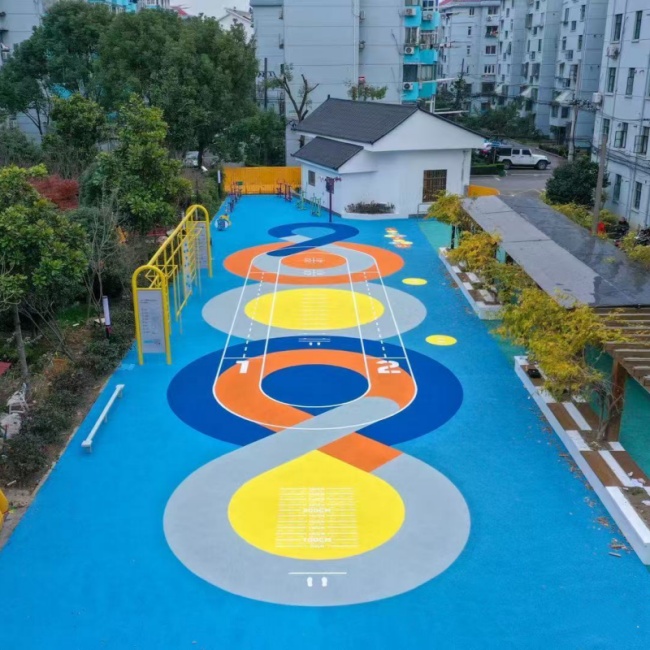
Key Technical Advantages for Contractors and Importers
When sourcing materials for international projects, technical specifications dictate success. Here is why high-performance UV Resistant EPDM stands out in technical evaluations:
Odor-Free Performance: Because the granules contain no sulfur, they do not decompose into sulfuric acid under high temperatures. This ensures the playground remains odorless, meeting strict environmental standards like the New National Standard (GB 36246-2018) and European EN71 toy safety standards.
Enhanced Elasticity and Tensile Strength: The material boasts an elongation and tensile strength 2-3 times higher than standard rubber. This prevents the surface from becoming brittle in cold climates or soft and sticky in extreme heat.
Oxidation Resistance: The granules are formulated with potent antioxidants. This prevents the surface from "chalking" (turning into a powder), which is a primary cause of color loss and texture degradation in older rubber surface.
Customization and Flexibility: Whether a project requires specific granule sizes ranging from 0.5mm to 4mm for different layers, or custom Pantone colors for branding, advanced manufacturers offer full customization without the barrier of high Minimum Order Quantities (MOQ).

How to Choose the Right UV Resistant EPDM Supplier
For importers and wholesalers, selecting the right partner is about risk mitigation. Do not just look at the price per kilogram; look at the technical data sheet.
Verify the "Sulfur-Free" Claim: Ask the supplier if their EPDM is sulfur-free. This is the hallmark of modern, high-end UV resistance. It guarantees the material won't smell or degrade chemically under UV stress.
Check the Rubber Content: High-quality UV-resistant EPDM typically has a rubber content of 18% to 22% or higher. Lower rubber content means more fillers, which leads to faster UV degradation and fading.
Request Third-Party Testing: Reliable suppliers will provide test reports for UV aging (e.g., 1000h Xenon arc lamp testing), heavy metal content (RoHS compliance), and tensile strength.
Assess Production Capability: Ensure the manufacturer has advanced production lines capable of consistent batch-to-batch quality. Inconsistent granule size or color batches can cause nightmares for installation teams.

Practical Tips for Installation and Maintenance
Even the best UV Resistant EPDM requires proper installation to maximize its lifespan.
Binder Selection: Always use high-quality aliphatic polyurethane glue. Aromatic glues tend to yellow over time, which can distort the color of the EPDM surface, making it look faded even if the rubber itself is intact.
Mixing Ratios: Adhere strictly to the manufacturer's recommended mixing ratios. A common ratio is 1:8 (glue to granules), but this can vary based on the specific density and porosity of the granules.
Curing Time: Allow sufficient curing time, especially in humid or cold weather. Rushing the curing process can trap moisture, leading to bubbling and delamination later.

FAQ: Questions Purchasers and Engineers Ask
Q1: How long does UV Resistant EPDM last compared to standard rubber?
A: Standard EPDM typically lasts 3-5 years before significant fading or hardening occurs. High-quality UV Resistant EPDM, especially sulfur-free variants, can last 8-10 years or more while maintaining over 85% of its original tensile strength and color vibrancy.
Q2: Will the EPDM granules smell in hot weather?
A: No. Premium UV Resistant EPDM is manufactured using a sulfur-free process. Unlike traditional rubber that releases sulfuric odors when heated by the sun, these granules remain completely odorless, making them safe for schools and indoor-outdoor transitions.
Q3: Can I order custom colors and specific granule sizes?
A: Yes. Professional manufacturers support full customization. You can order specific granule sizes (e.g., 1-3mm for the top layer, 2-4mm for the base) and custom colors to match your project's design requirements.
Q4: Is there a Minimum Order Quantity (MOQ) for importers?
A: Flexible suppliers understand the needs of contractors and distributors. Many advanced manufacturers offer "No MOQ" policies, allowing you to order exactly what you need for a specific project without being forced to fill a container.
Q5: How do I verify the UV resistance of the product?
A: You should request a UV aging test report (such as a 1000-hour Xenon test). This report will show the color change value (Delta E) and the retention rate of physical properties after simulated years of sun exposure.
Q6: Why is the tensile strength important for EPDM?
A: Tensile strength determines how well the rubber stretches and recovers. A higher tensile strength (4-7 MPa) means the surface is more durable, resists tearing from heavy use, and maintains its shock-absorbing properties longer.

In the competitive world of construction and facility management, the quality of materials defines your reputation. UV Resistant EPDM is not just a building material; it is an investment in safety, aesthetics, and longevity. By choosing sulfur-free, high-tensile, and eco-friendly EPDM granules, contractors and importers can deliver projects that stand the test of time, ensuring satisfied clients and fewer maintenance callbacks. When sourcing your next batch, prioritize technical performance over the lowest initial cost—the long-term value is undeniable.

WOW(LYG) New Material Co Ltd is a manufacturer specializing in the production of EPDM rubber granules. We use sulfur-free vulcanization technology, it increases the service life by more than 3 times than traditional EPDM granules, and enhances the performance, including anti-aging, high-temperature resistance, and colorfastness.
We have over 25 years of production experience and offer customization for colors and granule sizes. NO MOQ.


