 注: 建议图片大小150px*50px
丨
注: 建议图片大小150px*50px Views: 0 Author: Site Editor Publish Time: 2026-07-24 Origin: Site


Why Weather Resistant EPDM Matters Now
If you are a playground contractor, sports surfacing installer, or procurement manager reading this, you have likely experienced the frustration of a once-vibrant rubber surface turning dull, brittle, or cracked within two years of installation. You have dealt with customer complaints, costly repairs, and damage to your reputation.
Traditional EPDM formulations, particularly those relying on sulfur-based vulcanization, face a fundamental chemical vulnerability: under prolonged UV exposure and high temperatures, sulfur cross-links break down, releasing sulfuric compounds that accelerate color fading, surface cracking, and material degradation. This is not merely an aesthetic issue—it is a structural failure mode that compromises safety, performance, and service life.
This guide addresses the precise concerns of industry professionals: how to select EPDM that genuinely withstands weather, how to avoid costly procurement mistakes, and how to ensure your projects deliver long-term value.
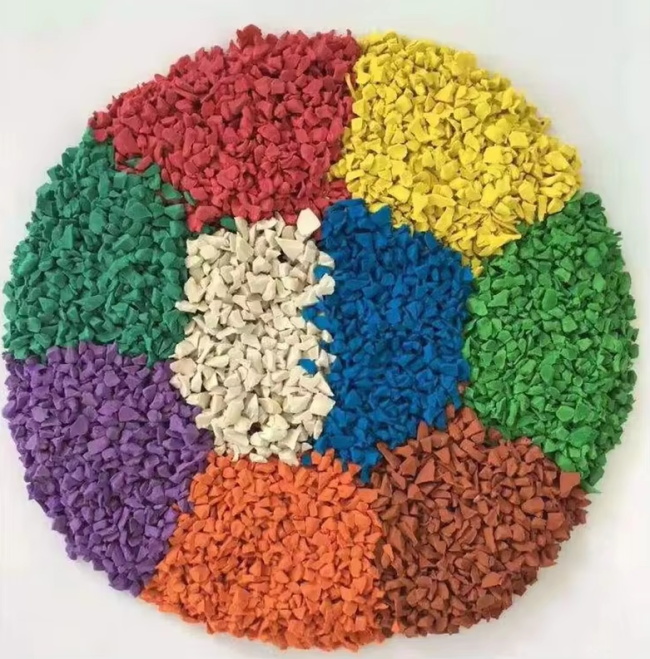
What is Weather Resistant EPDM?
EPDM (Ethylene Propylene Diene Monomer) is a synthetic rubber engineered for outdoor exposure. Its molecular structure—a saturated polymer backbone with unsaturated side chains—gives it inherent resistance to ozone, UV radiation, and extreme temperatures. EPDM granules are the visible, wear-resistant top layer in playground safety surfacing, sports tracks, and recreational surfacing systems.
But not all EPDM is created equal. The critical differentiator lies in the cross-linking chemistry used during manufacturing. Conventional EPDM uses sulfur-based vulcanization. This method is cost-effective but introduces a fundamental weakness: sulfur bonds are vulnerable to UV degradation. When exposed to sunlight and heat, these bonds break down, releasing sulfuric acid byproducts that accelerate the material's aging and generate unpleasant odors.
Advanced Weather Resistant EPDM eliminates sulfur from the cross-linking process entirely. This "sulfur-free" technology delivers a molecular structure that is inherently more stable, resulting in dramatically improved UV resistance, color retention, and mechanical longevity.

Applications: Where Weather Resistant EPDM is Essential
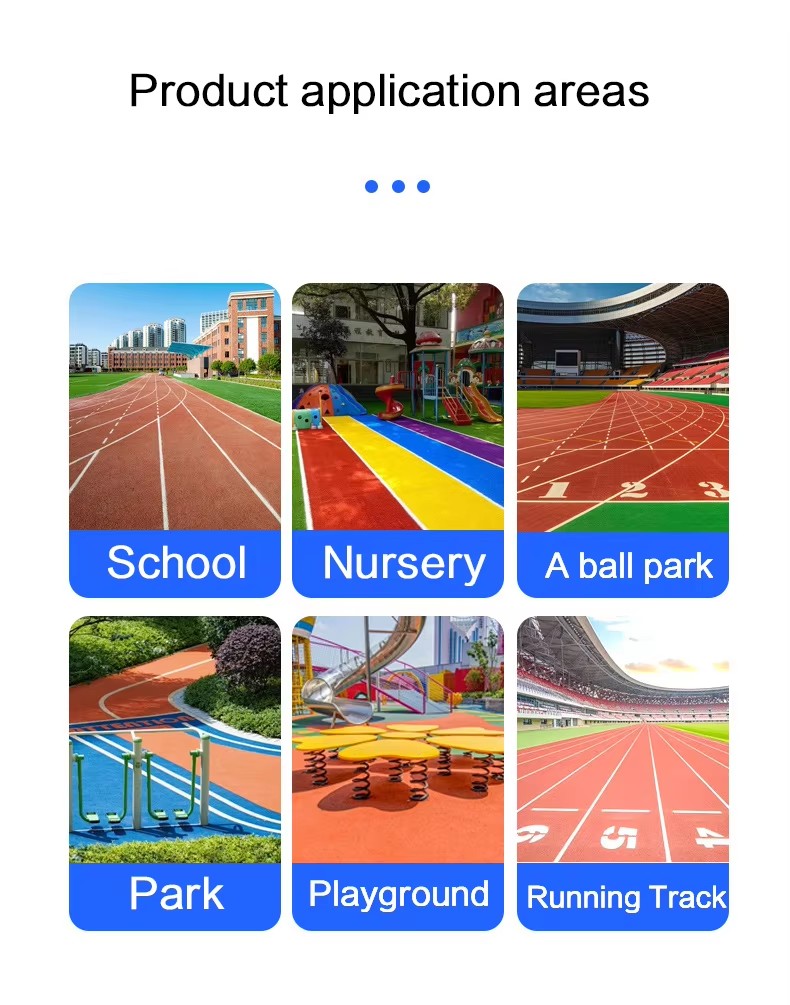
Weather resistant EPDM granules are the material of choice for:
Outdoor Sports Facilities
Running tracks, tennis courts, basketball courts, and multi-sport surfaces require surfaces that withstand intense UV exposure, temperature fluctuations, and heavy foot traffic while maintaining consistent performance characteristics and visual appeal.
Playground Safety Surfacing
Critical safety surfacing for children's play areas requires impact absorption compliant with EN 1177 and ASTM F1292 standards, combined with long-term color vibrancy and zero toxicity. These surfaces must perform safely for 8+ years in direct sunlight.
Municipal and Landscape Projects
Parks, public plazas, walking trails, and recreational areas increasingly specify colored rubber surfacing for aesthetic, safety, and accessibility requirements. These projects are subject to public scrutiny and require materials that maintain their appearance throughout their service life.
Prefabricated Surfacing Systems
EPDM granules are incorporated into interlocking tiles, rolled goods, and prefabricated slabs for applications ranging from gym surfacing to outdoor decking systems.
The Real Cost of Inadequate Weather Resistance
Industry professionals consistently report the following issues with inferior EPDM products:
Premature Color Fading. Color degradation is the most visible indicator of UV damage. Conventional EPDM surfaces often show significant fading within 12-24 months of installation. Research demonstrates that UV energy breaks the carbon-carbon and carbon-hydrogen bonds in EPDM materials, leading to surface cracks and color changes. Leading manufacturers now set benchmarks exceeding standard requirements—the industry baseline requires a gray scale value of ≥3 after 2,550 hours of UVA exposure, while premium UV-stable products maintain performance after nearly double that duration (4,960 kJ–5,000 hours).
Surface Cracking and Granule Loss. When UV radiation degrades the EPDM surface, micro-cracks form that expand through thermal cycling. As the binder-to-granule bond fails under mechanical stress—children running, athletes pivoting, equipment rolling—granules detach, creating unsafe surfaces and generating ongoing maintenance costs.
Odor Issues. Sulfur-based EPDM releases sulfuric compounds when exposed to high temperatures and UV radiation. This creates odors that are especially problematic for indoor applications or enclosed outdoor spaces and raises concerns for schools and municipal facilities where public health perception is critical.
Shortened Service Life. A typical sulfur-cured EPDM surface may require replacement every 4-6 years. In contrast, sulfur-free formulations extend service life to 12-15 years or more, delivering a 3x increase in longevity while reducing lifecycle costs.

How to Select the Right Weather Resistant EPDM
Technical Specifications to Verify
Tensile Strength. Industry standards for high-quality EPDM granules typically range from 2.2 MPa to over 5 MPa, with advanced formulations reaching 5-7 MPa. Higher tensile strength directly correlates with resistance to mechanical wear, impact, and surface fatigue.
Elongation at Break. Premium products demonstrate elongation values of 160% to over 500%. Higher elongation indicates greater flexibility and ability to absorb impact without fracturing.
Bulk Density. Quality EPDM granules typically exhibit bulk density of 630-750 g/l. Lower bulk density with angular granule morphology provides better interlocking and reduced binder consumption, translating to more efficient installation.
Hardness. The standard range of 55-65 Shore A provides the optimal balance of impact absorption and structural integrity for sports and play surfaces.
UV Stability Certification. Request third-party weathering test results. The gold standard is independent laboratory testing that simulates years of real-world UV exposure. Premium products will provide documentation of performance after 5,000+ hours of accelerated weathering.

The Yellowing Effect: Resin Compatibility Matters
A frequently overlooked factor is the interaction between EPDM granules and the polyurethane binder used in installation. Aromatic PU resins, while cost-effective, are not UV-stable and will yellow under sunlight—a phenomenon known as the "yellowing effect." This is particularly problematic for light colors: whites, greys, pinks, and bright blues.
For optimal UV stability, specify aliphatic PU resins with your EPDM system. While these resins carry a premium, they ensure the visual integrity of the surface over its entire service life. For dark colors (browns, dark greens, reds), aromatic resins may be acceptable as yellowing is less visually apparent.

Common Procurement Mistakes and How to Avoid Them
Mistake 1: Focusing Only on Price
The least expensive EPDM is almost always sulfur-cured with high filler content and inadequate UV stabilizers. While the initial material cost may be 30-50% lower, the total cost of ownership is dramatically higher when factoring in early failure, repairs, and premature replacement.
What to do: Calculate lifecycle cost, not initial cost. A surface that lasts 12 years versus one that fails in 4 years delivers superior value even at 2-3x the initial price.
Mistake 2: Accepting Generic Data Sheets
Many suppliers provide generic technical data sheets (TDS) that do not reflect actual product performance. A TDS is a promise, not proof. Top-tier manufacturers provide batch-specific test results and are transparent about their quality control processes.
What to do: Request batch-specific test reports, including tensile strength, elongation, and UV weathering data for the exact lot you are purchasing. Verify that test methods conform to recognized standards (ASTM, DIN, ISO).
Mistake 3: Ignoring the Binder-Granule System
Selecting high-quality granules while using an incompatible or inferior PU binder compromises the entire surface. The binder is the structural component that holds the system together.
What to do: Specify the complete system—granules plus compatible, UV-stable aliphatic PU binder—from suppliers who understand the interaction between these components.
Mistake 4: Overlooking Batch Consistency
Color variation and performance inconsistency between batches create visible seams and performance irregularities in large installations. This is particularly problematic for large-scale projects where multiple pallets are required.
What to do: Select suppliers with documented quality management systems (ISO 9001) and rigorous batch consistency protocols. Request color consistency certification for each batch.
Mistake 5: Falling for "No MOQ" Traps
Some suppliers offer no minimum order quantity (MOQ) but provide little transparency about whether they maintain stable production lines. Small-batch production from non-dedicated lines often results in inconsistent color matching and quality variation.
What to do: While no-MOX flexibility is valuable, verify that the supplier operates dedicated EPDM production lines with consistent quality control protocols. Ask how they manage color consistency across small and large orders.

Why Sulfur-Free Technology Transforms Performance
The proprietary sulfur-free EPDM technology offers measurable performance advantages that address every major concern of industry professionals:
Zero Odor. No sulfur in the cross-linking system means no sulfuric compounds can be released during heat or UV exposure. This is critical for indoor applications and enclosed outdoor areas where odor complaints are common.
3x Extended Lifespan. The molecular stability of sulfur-free EPDM prevents the degradation pathways that cause conventional EPDM to fail. Field performance demonstrates service life extending to 12-15 years, compared to 4-6 years for conventional products.
Superior Mechanical Properties. Tensile strength of 4-7 MPa represents a 2-3x improvement over industry minimum standards. This translates to superior wear resistance, impact absorption, and structural integrity.
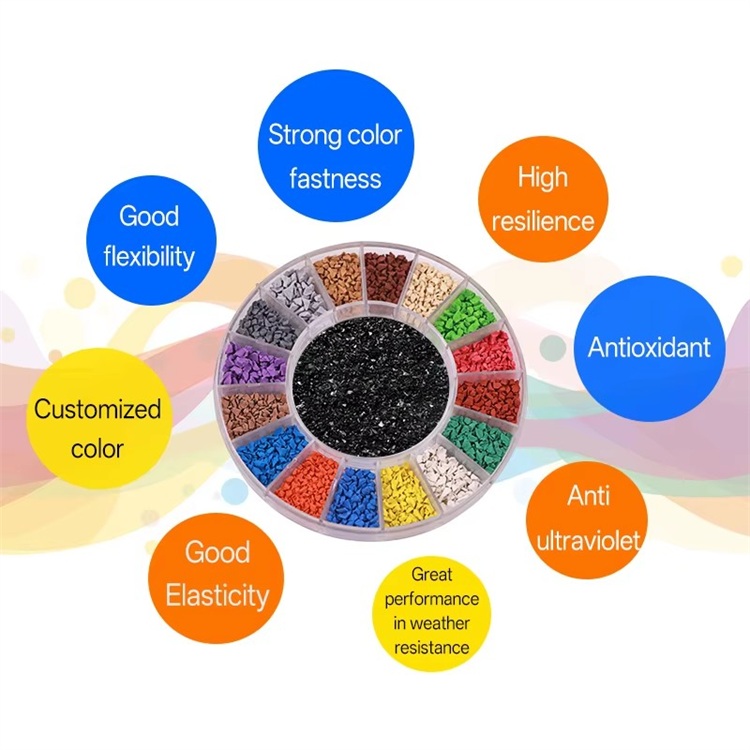
Exceptional Color Retention. The stable polymer structure protects the pigment matrix, maintaining color vibrancy even under intense UV exposure. The system provides superior resistance to oxidation, the primary cause of color fading.
5x Better Performance Retention. While conventional EPDM loses significant performance properties within 2-3 years, sulfur-free formulations maintain their physical properties over 80% longer, ensuring consistent safety and performance throughout the surface's service life.
Food-Grade Safety Standards. With no hazardous additives or heavy metals, the material meets the most stringent safety standards, including EN 71-3 (Toy Safety) and AfPS GS 2019:01. This is essential for playground applications where children have direct contact with the surface.
Customizable Flexibility. The advanced formulation supports full customization: any RAL or custom color, granule sizes from powder to 6mm, and no minimum order quantity restrictions. This allows contractors and distributors to specify exactly what their projects require without being constrained by manufacturer limitations.
The Procurement Checklist
When sourcing Weather Resistant EPDM, verify:
Product Certification
- Tensile strength ≥4 MPa (premium ≥5 MPa)
- Elongation at break ≥160% (premium ≥500%)
- UV stability documentation (5,000+ hours weathering data preferred)
- EN 71-3, AfPS GS 2019:01, and REACH compliance
- ISO 9001:2015 quality management certification
Supplier Qualification
- Dedicated EPDM production lines (not repurposed SBR lines)
- Batch-specific test reports available
- Color consistency documented across production
- Technical support and application engineering available
- 25+ years of industry experience
Commercial Terms
- No minimum order quantity (flexibility for project-specific needs)
- Custom color and granule size available
- Transparent pricing with volume breaks
- Reliable delivery timelines (20-35 days typical for global sourcing)

The Business Case for Specifying Sulfur-Free Weather Resistant EPDM
For playground contractors, sports surfacing installers, distributors, and procurement professionals, the decision to specify sulfur-free weather resistant EPDM is a strategic one. It reduces liability from premature failure, eliminates odor complaints, satisfies demanding municipal and school safety requirements, and builds a reputation for delivering projects that stand the test of time.
The true measure of weather resistance is not what the product looks like on day one, but what it looks like on day 3,000. With sulfur-free EPDM technology, the surface you install today will still be vibrant, safe, and structurally sound a decade from now—and that is how you build a lasting business.

WOW(LYG) New Material Co Ltd is a manufacturer specializing in the production of EPDM rubber granules. We use sulfur-free vulcanization technology, it increases the service life by more than 3 times than traditional EPDM granules, and enhances the performance, including anti-aging, high-temperature resistance, and colorfastness.
We have over 25 years of production experience and offer customization for colors and granule sizes. NO MOQ.


