 注: 建议图片大小150px*50px
丨
注: 建议图片大小150px*50px Views: 0 Author: Site Editor Publish Time: 2026-08-14 Origin: Site


How to Choose the Right EPDM Granules for Durable, Safe Playgrounds and Sports Surfaces
If you are a playground contractor, sports surfacing installer, or municipal buyer planning a wet pour rubber surfacing project, you have likely encountered a critical question: Which wet pour rubber surfacing materials deliver the best balance of safety, durability, and value?
The success of any poured-in-place (PIP) rubber surface depends almost entirely on two factors: the quality of the EPDM rubber granules used for the wearing course and the expertise behind their formulation. Choosing the wrong materials can lead to premature fading, surface cracking, reduced shock absorption, and costly repairs within just a few years.
This guide draws on over 20 years of manufacturing experience and insights from technical standards to help you evaluate EPDM granules, avoid common purchasing mistakes, and select a supplier that ensures long-term performance for your projects. Whether you are sourcing for a kindergarten in Europe, a municipal park in Australia, or a running track in the Middle East, the principles outlined here will help you make a confident, informed decision.
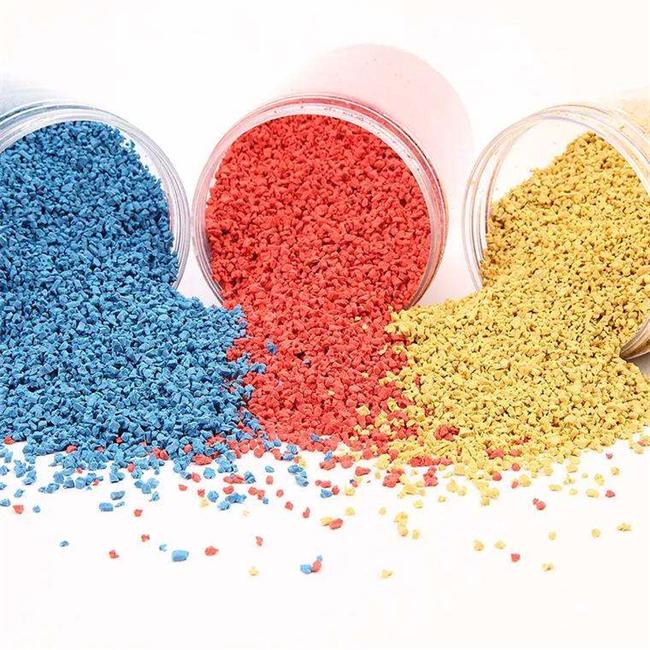
What Are Wet Pour Rubber Surfacing Materials?
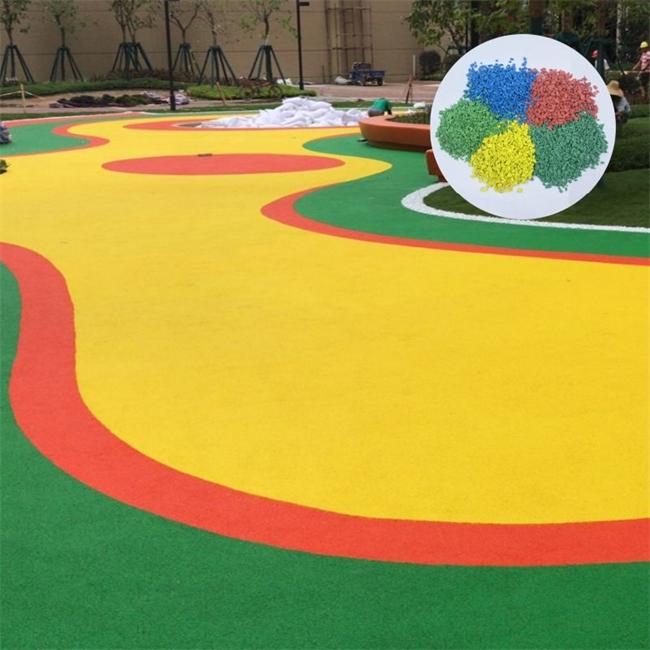
Wet pour rubber surfacing, also known as poured-in-place (PIP) rubber, is a seamless, porous safety surface system commonly used in playgrounds, running tracks, and recreational areas . The system consists of two layers:
- Base Layer: A shock-absorbing layer made of recycled SBR rubber granules bound with a polyurethane binder. This layer provides the critical fall-height protection and impact absorption required for safety certifications like EN1177.
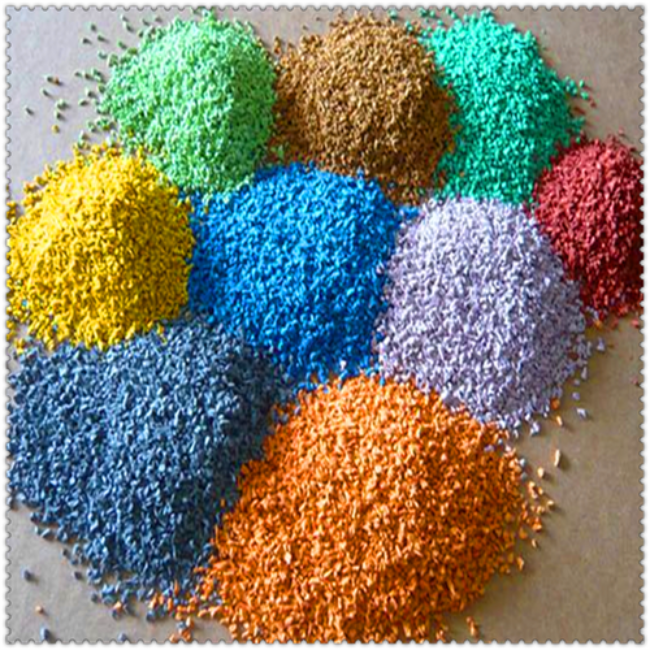
- Wearing Course (Top Layer): A decorative, UV-stable, and wear-resistant layer made of Colored EPDM Rubber Granules . This layer provides the surface texture, color, traction, and long-term durability.
EPDM (Ethylene Propylene Diene Monomer) is a synthetic rubber chosen specifically for its outstanding resistance to weathering, UV radiation, and aging . The quality of the EPDM granules dictates the lifespan of the entire surface, making material selection the most important decision in any wet pour project.
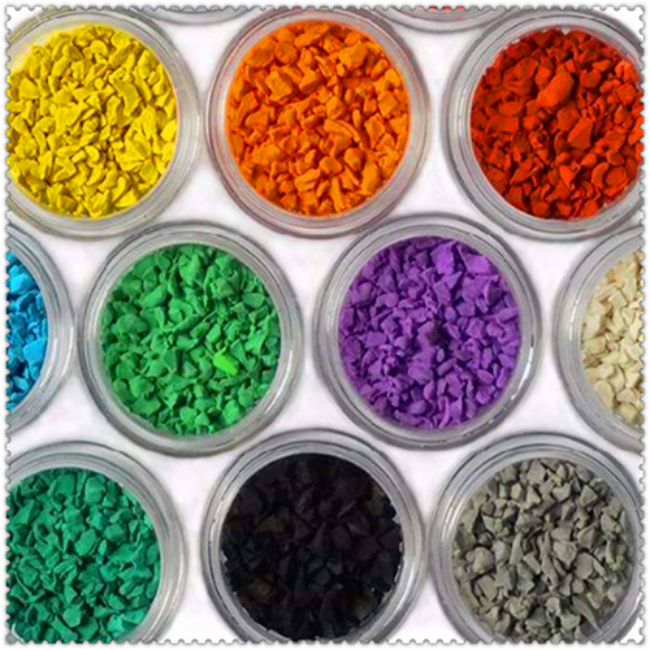
Applications of EPDM Wet Pour Rubber Surfacing
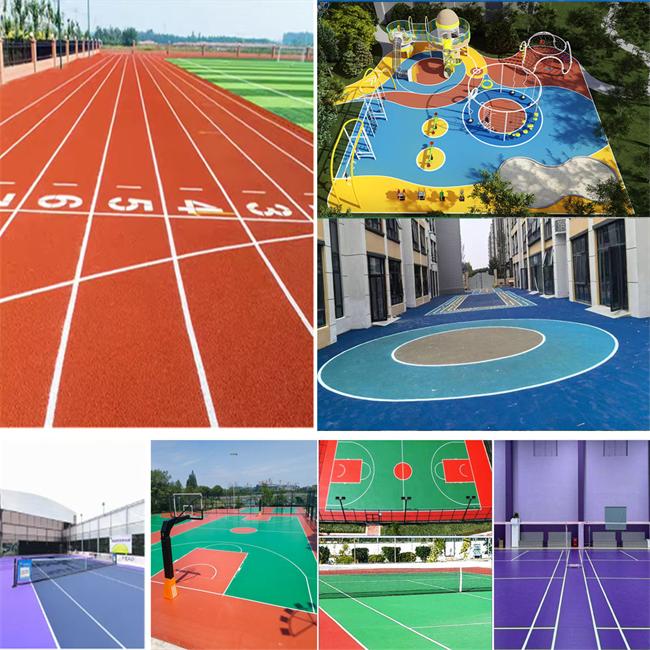
EPDM wet pour surfacing is specified for environments where safety, aesthetics, and durability are non-negotiable . Common applications include:
- Playgrounds and Kindergartens: Provides critical fall protection with a soft, colorful, and non-slip surface suitable for children.
- Running Tracks and Sports Facilities: Offers consistent shock absorption, energy return, and traction for athletes .
- Public Parks and Walking Paths: Durable and aesthetically pleasing surface that integrates with natural landscapes.
- Splash Pads and Pool Surrounds: Slip-resistant and water-permeable, reducing the risk of accidents in wet areas.
- Commercial and Municipal Projects: Preferred for its low maintenance requirements and ability to meet safety standards.
Benefits of High-Quality EPDM Wet Pour Materials
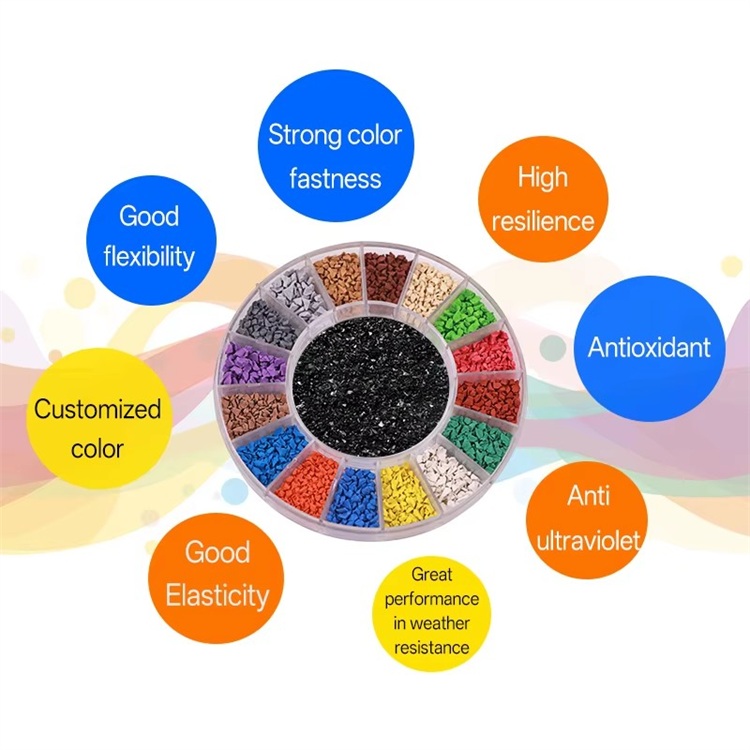
The performance of a wet pour surface is directly tied to the EPDM granules used in the top layer. High-quality granules provide:
- Safety: Critical impact absorption reduces injury risk during falls .
- Durability: High tensile strength (≥3.5 MPa) and elongation (>550%) ensure the surface withstands heavy foot traffic and extreme weather without cracking .
- UV Stability and Color Retention: UV-resistant pigments prevent fading and maintain vibrant colors for years .
- Permeability: Porous structure allows water to drain through, eliminating puddles and ensuring all-weather usability .
- Aesthetics: Angular granules and available in RAL/Pantone colors enable attractive, custom designs .
Common Challenges and How to Avoid Them
Before we dive into how to select materials, it is essential to understand the most common failures we see in the field. Based on our experience, these challenges often stem from material quality issues rather than installation errors.
1. Premature Fading and Color Inconsistency: Many low-cost EPDM granules fade within 12-18 months due to poor-quality pigments or sulfur-based vulcanization systems. This leads to patchy, unattractive surfaces that can result in project disputes and costly repairs.
2. Loss of Elasticity and Hardening: Granules that contain sulfur are prone to degradation under UV and heat, causing the surface to harden and lose its shock-absorbing properties.
3. Surface Cracking: This is often caused by low tensile strength or using granules with poor compatibility with the PU binder, resulting in a brittle wearing course.
4. Inconsistent Granule Size: Variation in granule size leads to uneven surfaces, affecting both aesthetics and safety.

How to Choose the Right EPDM Granules for Wet Pour Surfacing
To ensure a successful project, evaluate EPDM granules against these technical criteria.
1. Understand the Importance of Sulfur-Free EPDM
This is the most critical technical factor. Traditional EPDM vulcanization uses sulfur as a cross-linking agent. However, sulfur-based compounds degrade under UV and heat, releasing sulfuric acid and causing the material to become brittle, fade, and emit unpleasant odors.
High-performance wet pour surfacing materials use sulfur-free technology. By eliminating sulfur, the molecular structure of the rubber stabilizes, preventing degradation . This results in:
- 3x+ Longer Service Life compared to sulfur-cured EPDM.
- Improved Elasticity and Tensile Strength: Typically achieving 4-7 MPa.
- Enhanced Color Stability: Significant reduction in fading and discoloration.
- Odor-Free: No sulfuric acid emissions, critical for indoor applications and sensitive environments.
- Environmental Safety: Meets strict environmental standards, including REACH and RoHS.
If a supplier cannot confirm their EPDM is sulfur-free, you should consider it a red flag.
2. Choose the Right granule Size
EPDM granules are available in various sizes, which affect the surface's texture, porosity, and feel .
- 0.5-1.5 mm: Ideal for dense, smooth surfaces requiring a fine finish, often used in high-end playgrounds where a softer texture is desired.
- 1-3 mm: The most versatile and commonly used size for playground surfacing and running tracks.
- 2-4 mm: Used for heavy-duty applications such as sports fields, running tracks, and areas expecting high impact.
- 1-4 mm: A standard multi-purpose size often chosen by contractors for its balance of texture and durability.
3. Verify Critical Technical Specifications
Always ask the manufacturer for a Technical Data Sheet (TDS). Key specifications to look for include:
- Tensile Strength (MPa): Indicates the material's resistance to tearing and cracking. Standards like GB/T 14833-93 set a minimum of 0.7 MPa for a plastic track, but premium EPDM often exceeds 3.0 MPa . Our sulfur-free granules achieve 4-7 MPa, significantly exceeding this baseline, providing a much more robust surface that resists damage from heavy use and temperature fluctuations.
- Elongation at Break (%): Measures flexibility. A higher number means the surface can expand and contract with temperature changes without cracking. A range of >400% to >650% is typical for quality EPDM .
- Density (g/cm³): Lower density provides better coverage (more square meters per kilogram) and indicates a higher-quality, more porous granule. Look for ≤1.60 g/cm³ .
- EPDM Content (%): Higher rubber content correlates with better durability and performance. Quality products start at >20% .

Manufacturer Insights: Practical Advice from the Factory Surface
With over two decades in the EPDM manufacturing industry, we have seen what works and what fails. Here are our actionable insights for contractors and procurement professionals.
How to Get the Best Price Without Sacrificing Quality
The EPDM market is price-competitive, but the cheapest material is almost never the most cost-effective. When a supplier offers a price significantly below the market average, it is almost certainly achieved by using recycled rubber content or sulfur-cured virgin rubber. These "bargain" materials will fail prematurely. A better approach is to:
- Focus on Coverage: A high-quality, low-density granule covers more area per kilogram than a denser, low-quality one. Calculate the cost per square meter, not per kilogram.
- Ask for a Sample: Always test a sample. Roll it in your hands. Does it feel light and angular, or heavy and rounded? The former indicates high EPDM content and good quality.
The Hidden Cost of Non-Compliant Binders
Some suppliers sell matching PU binders for their EPDM. We recommend using high-quality aliphatic or aromatic polyurethane binders from reputable chemical companies. Aliphatic binders offer superior UV stability and color retention . Using a substandard binder with high-quality EPDM will compromise the entire system. Always test the compatibility of your chosen binder with the EPDM granules.
How Long Should a Wet Pour Surface Last?
This is a question we frequently hear from government buyers and facility managers. The lifespan of a wet pour surface depends on the quality of its components:
- Premium Sulfur-Free EPDM + UV-Stable Binder: 10-15 years. The surface will maintain its color, elasticity, and safety properties throughout this period.
- Standard EPDM + Standard Binder: 5-8 years. The surface will perform adequately but will show signs of fading and hardening towards the end of its life.
- Low-Grade EPDM + Standard Binder: 2-3 years. The surface will degrade quickly, requiring early replacement and generating significant waste and cost.
Why Global Contractors Choose Our EPDM Granules
We are a specialized manufacturer of EPDM colored rubber granules, not a generalist surfacing company. This singular focus means every part of our production process—from raw material selection to final quality control—is optimized for EPDM excellence.
Our sulfur-free EPDM granules are engineered for the specific demands of wet pour surfacing. With over 25 years of industry experience and a global export footprint, we combine deep technical knowledge with reliable supply chain capabilities. We support projects of all scales, from small kindergartens to large municipal parks, with flexible logistics and no minimum order quantity (MOQ).

FAQ
Q1: What size EPDM granules should I choose for a playground?
The most common and versatile size for playgrounds is 1-3 mm. For a softer, more refined surface, you may consider 0.5-1.5 mm. For high-traffic areas requiring extra durability, 2-4 mm is a good choice.
Q2: Can EPDM granules fade or change color?
Yes, low-quality EPDM can fade within a year. However, high-quality EPDM formulated with UV-stable pigments and sulfur-free technology is designed to maintain its color for 8-10 years or more.
Q3: How much PU binder is required for EPDM granules?
The typical ratio is 14% to 25% PU binder by weight of the EPDM granules. The exact amount depends on the granule size and the specific binder used. You should always follow the binder manufacturer’s technical guidelines.
Q4: How long does an EPDM wet pour surface last?
A surface using premium, sulfur-free EPDM and a high-quality binder can last 10-15 years. Lower-grade materials will have a much shorter lifespan.
Q5: Can you customize colors beyond the standard red and green?
Yes. We support custom color matching via RAL, Pantone, or customer-supplied samples. This ensures you can achieve any design requirement.
Q6: Is the EPDM material environmentally friendly?
Our sulfur-free EPDM granules are manufactured without sulfur, making them non-toxic, odor-free, and safe for use in sensitive environments like schools and kindergartens. They meet stringent international standards such as REACH, RoHS, and EN71.
Q7: What technical documents do you provide?
We can provide comprehensive Technical Data Sheets (TDS), Material Safety Data Sheets (MSDS), and test reports from accredited laboratories to verify quality and compliance.
Q8: What is your production capacity for large projects?
We operate multiple full-scale production lines with a robust supply chain, ensuring we can meet the demands of large-scale projects and maintain consistent quality across all batches.
Q9: What is the difference between virgin and recycled EPDM granules?
Virgin EPDM granules are manufactured from new raw materials, ensuring consistent and predictable performance. Recycled granules are derived from waste, which is often inconsistent in color, size, and purity. For projects requiring strict safety and performance standards, virgin EPDM is the recommended choice. Our production focuses on high-quality virgin-based granules.
Q10: How can I verify the quality before placing a large order?
We strongly recommend requesting a sample for physical inspection and testing. You can also request third-party certifications or arrange for a factory audit. This ensures transparency and builds confidence in the material's performance.

The selection of wet pour rubber surfacing materials is a critical decision that impacts the safety, aesthetics, and long-term cost of your project. By prioritizing sulfur-free EPDM granules with high tensile strength, UV stability, and verified technical specifications, you can deliver a surface that performs for over a decade.
Your project deserves materials that offer safety, durability, and color consistency. Our sulfur-free EPDM granules are engineered to meet these demands, backed by over 25 years of manufacturing expertise and a proven track record of global exports.
Are you ready to specify the right EPDM granule for your next project? [Contact our technical team] for a free sample, TDS/MSDS documentation, or a customized quote. Let's build surfaces that last.

WOW(LYG) New Material Co Ltd is a manufacturer specializing in the production of EPDM rubber granules. We use sulfur-free vulcanization technology, it increases the service life by more than 3 times than traditional EPDM granules, and enhances the performance, including anti-aging, high-temperature resistance, and colorfastness.
We have over 25 years of production experience and offer customization for colors and granule sizes. NO MOQ.


