 注: 建议图片大小150px*50px
丨
注: 建议图片大小150px*50px Views: 0 Author: Site Editor Publish Time: 2026-08-27 Origin: Site


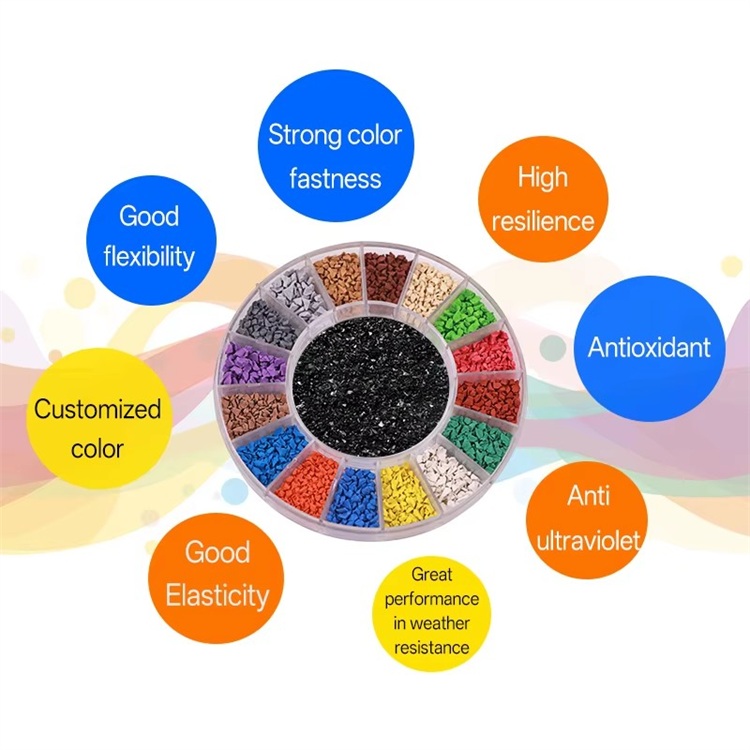
EPDM granules are colored rubber particles used primarily to create durable, weather-resistant, and safe surfaces for outdoor and indoor sports and recreational flooring. They are the top layer material in running tracks, playground safety surfacing, tennis courts, and multi-sport fields, valued for their excellent UV resistance, color retention, and elasticity. Unlike recycled rubber granules, EPDM granules are manufactured from virgin EPDM compound and are colored throughout, so they maintain their appearance even with wear.

Detailed Explanation
To understand what EPDM granules are used for, it helps to know what they actually are. EPDM stands for ethylene propylene diene rubber—a synthetic elastomer made from ethylene, propylene, and a diene. The material has a saturated hydrocarbon main chain, which gives it exceptional resistance to ozone, UV radiation, oxygen, and temperature extremes.
EPDM granules are not 100% EPDM. They are compounds containing EPDM as the base polymer along with fillers (typically calcium carbonate), cross-linking agents (usually sulfur), plasticizers, and color pigments. This compounding process is essential—pure EPDM would lack the properties needed for flooring applications and would be prohibitively expensive. The EPDM content in granules typically ranges from 14% to 40%, depending on the quality grade and intended application.

Primary Applications
Running Tracks and Athletic Surfaces
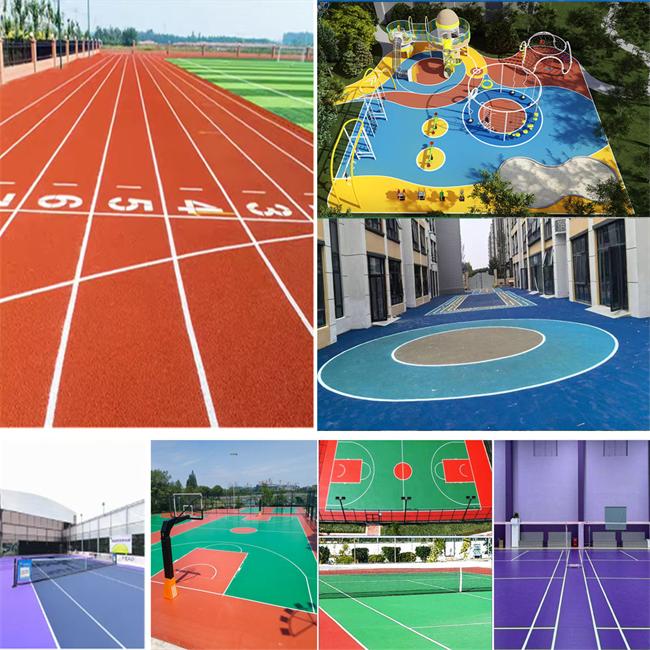
EPDM granules form the wear layer of most high-quality synthetic running tracks. The particle size typically used for tracks is 3–4 mm, with red being the most common color. The granules provide consistent shock absorption, energy return, and grip for athletes.
Playground Safety Surfacing
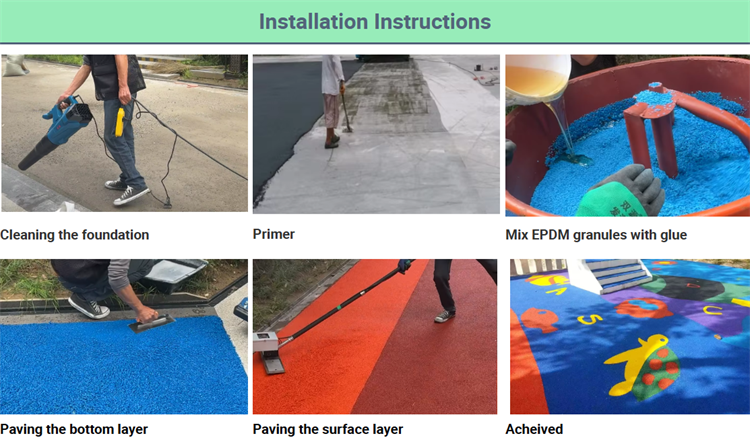
In wet-pour rubber systems, EPDM granules are mixed with a polyurethane binder and applied as a seamless, impact-absorbing surface. This application uses a wider range of colors (green, blue, yellow, purple) and particle sizes around 2–3 mm. The resilience of EPDM helps meet fall-height safety standards.
Multi-Sport Courts and Recreational Areas
Tennis courts, basketball courts, and general sports flooring systems use EPDM granules for their durability and color stability. Different sports may require different granule sizes and hardness levels.
Artificial Turf Infill
Smaller EPDM granules (0.5–1.5 mm) are sometimes used as infill for artificial grass systems, providing cushioning and helping to keep turf fibers upright.
Practical Considerations
When selecting EPDM granules for a project, professionals should consider several factors:
Particle Size
Granule size directly affects surface texture, drainage, and performance. Fine granules in the 0.5–1.5 mm range are used for tennis courts and infill applications where a smoother texture is desired. The 2–4 mm range is the general-purpose choice for playgrounds and recreational surfacing. Coarser granules in the 3–5 mm range are preferred for running tracks and high-wear areas where durability and traction are paramount.
UV Stability and Color Retention
EPDM's resistance to UV degradation is one of its key advantages. However, not all granules are equal. In high-sun environments like the Middle East, manufacturers recommend applying additional UV-resistant top coatings to protect bright colors such as blue, rose, orange, and grey from fading. High-quality EPDM granules maintain color stability because the pigment is throughout each granule, not just on the surface.
Cross-Linking Quality
The vulcanization process—typically using sulfur—determines the durability and elasticity of the granules. Inferior granules may use insufficient cross-linking or substitute cheaper polymers for EPDM, resulting in premature aging and failure.
Impact of Binder and Installation
The performance of an EPDM surface depends not only on the granules but also on the polyurethane binder and the installation quality. Minor color variations between batches can be compensated for by mixing material from different batches during installation.
EPDM Granules Selection
Choosing the right EPDM granules involves understanding the specific demands of your project. For running tracks and athletic surfaces, 3–4 mm granules with high wear resistance and consistent texture are the standard choice. For playground safety surfacing, 2–3 mm granules with good impact absorption properties and a wider variety of colors are typically preferred. Tennis courts and finer sports surfaces generally call for 1–2 mm granules to achieve a smooth surface with consistent ball bounce. Artificial turf infill applications use the smallest granules, typically 0.5–1.5 mm, where proper drainage and turf fiber support are the main considerations. Rubber tile manufacturing often uses 2–3 mm granules with particular attention to compression set and long-term durability.
What to Look for in a Supplier
Rather than relying on generic claims, ask potential suppliers about the EPDM content percentage—higher EPDM content generally means better performance and longevity, though it increases cost. Request tensile strength data; quality EPDM granules typically show 4–7 MPa, while lower values may indicate inferior materials. Ask whether the color is through-colored and how batch-to-batch variation is managed. Also consider packaging—low-dust packaging reduces waste and simplifies installation.
FAQ
Are EPDM granules the same as recycled rubber granules?
No. EPDM granules are manufactured from virgin EPDM compound, while recycled rubber granules come from ground-up tires. EPDM granules are through-colored and offer superior UV resistance and color stability.
How long do EPDM surfaces last?
Lifespan depends on the quality of the granules, the installation, and the level of use. High-quality EPDM surfaces with proper installation can last 10–15 years or more. UV exposure is the primary aging factor, which is why high-UV environments require careful material selection.
Can EPDM granules be used indoors?
Yes. EPDM granules are used in indoor sports flooring, gym surfaces, and even some commercial and residential applications where a durable, resilient floor is needed.
Are EPDM granules environmentally friendly?
EPDM is a synthetic rubber. Some manufacturers have developed more sustainable versions, but traditional EPDM is not biodegradable. It is, however, durable and long-lasting, reducing replacement frequency. The material itself can be formulated to meet food-grade safety standards when manufactured with appropriate raw materials.
Why do some EPDM granules have an odor?
Odor typically comes from the sulfur cross-linking process. Sulfur can decompose under high heat and UV exposure, releasing sulfuric compounds. Sulfur-free or low-sulfur formulations significantly reduce or eliminate this issue while potentially improving aging characteristics.
What colors are available for EPDM granules?
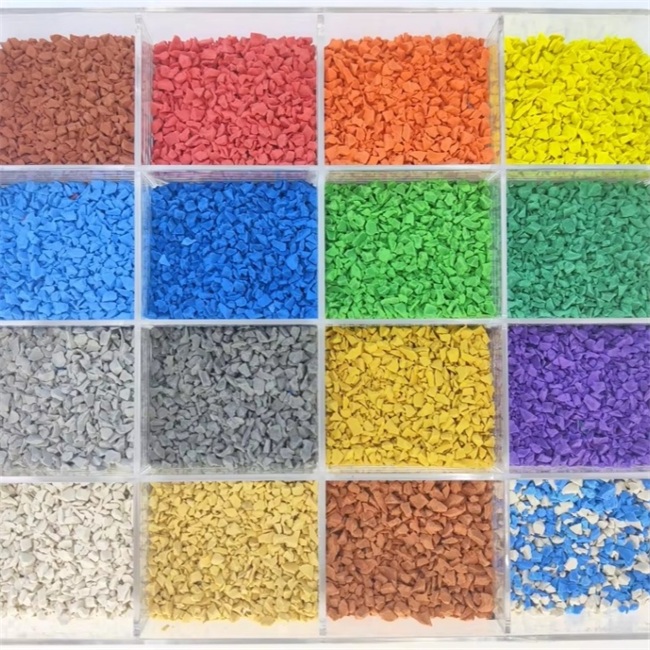
EPDM granules are available in a wide range of colors, including red, green, blue, yellow, orange, purple, grey, and many more. High-volume orders often allow for custom color matching.
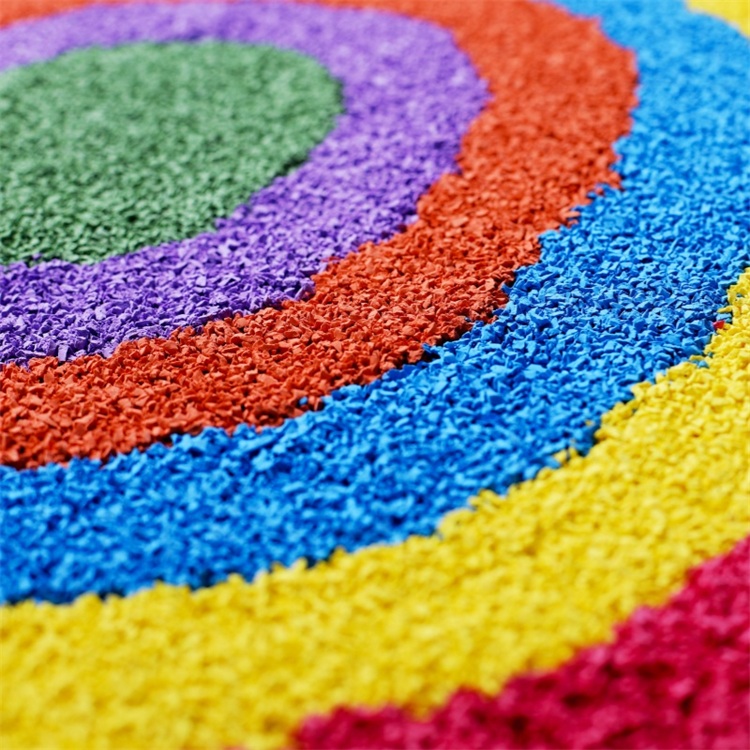
EPDM granules are used to create durable, safe, and colorful surfaces for sports and recreation—from Olympic running tracks to neighborhood playgrounds. Their value lies in their UV resistance, color stability, and resilience, but not all EPDM granules deliver the same performance. Particle size, EPDM content, cross-linking quality, and color formulation all affect the final surface.
If you are selecting EPDM rubber granules for a specific application and need guidance on granule size, color, or specifications, contact us to discuss your project requirements.

WOW(LYG) New Material Co Ltd is a manufacturer specializing in the production of EPDM rubber granules. We use sulfur-free vulcanization technology, it increases the service life by more than 3 times than traditional EPDM granules, and enhances the performance, including anti-aging, high-temperature resistance, and colorfastness.
We have over 25 years of production experience and offer customization for colors and granule sizes. NO MOQ.


