 注: 建议图片大小150px*50px
丨
注: 建议图片大小150px*50px Views: 0 Author: Site Editor Publish Time: 2026-09-02 Origin: Site


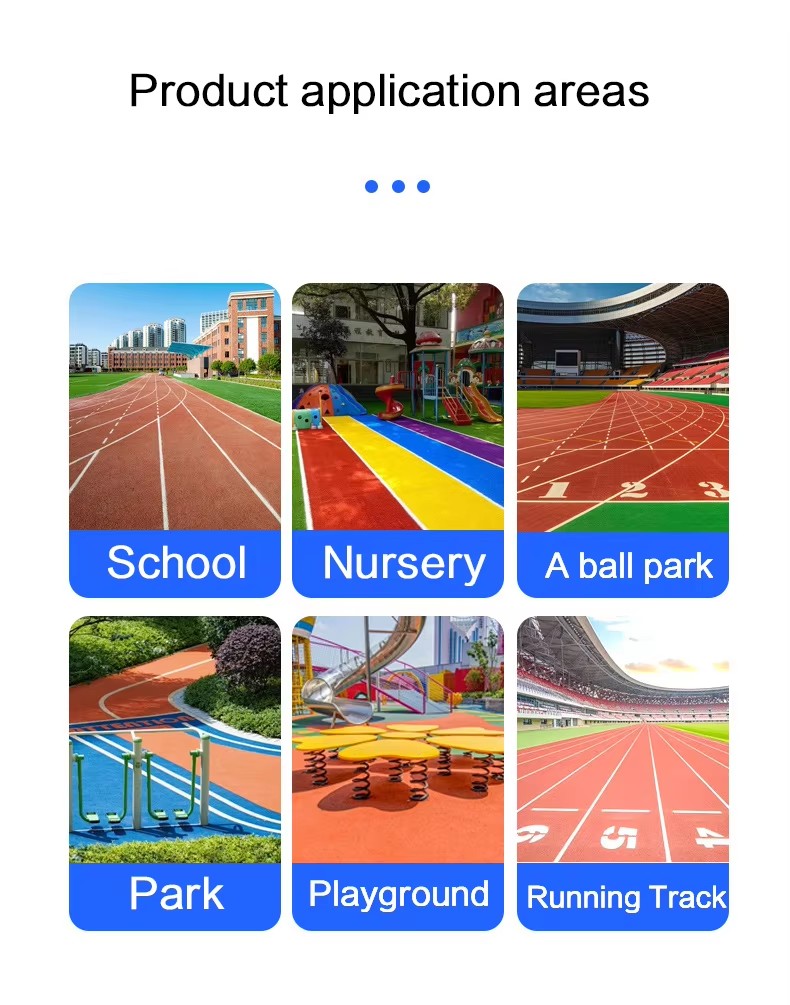
When buying EPDM granules, the right choice depends on the project application, expected performance, particle size, color requirements, installation method, and the consistency of the material you receive. For playgrounds, running tracks, sports surfacing, and wet pour rubber surfaces, EPDM rubber granules should be evaluated not only by price, but also by durability, UV resistance, color stability, elasticity, safety requirements, and long-term appearance.
A practical way to approach the purchase is to start with the application, then confirm the required granule size and color, check the material’s performance under outdoor or high-use conditions, and finally verify that the supplier can deliver consistent specifications across batches.

Why Application Matters More Than Price Alone
EPDM granules are used in many different environments, and each environment places different demands on the material. A playground surface needs good shock absorption, color retention, and resistance to frequent foot traffic. A running track requires consistent elasticity, wear resistance, and stable performance under weather exposure. A wet pour rubber surface depends on proper bonding with binder and uniform granule behavior during installation.
If you choose EPDM rubber granules only based on the lowest price, you may face problems later, such as uneven color, poor elasticity, faster fading, inconsistent particle size, or reduced surface performance. The real cost of a project is not only the material cost, but also installation quality, maintenance needs, and how long the surface remains functional and visually acceptable.
Key Factors to Check Before Buying EPDM Granules
Application and Installation System
Before selecting EPDM granules, confirm where and how they will be used. Different applications may require different particle sizes, colors, densities, and performance characteristics.
Common applications include:
Playground safety surfaces
Running tracks
Sports surfacing
Wet pour rubber surfaces
Recreational areas
Outdoor fitness and leisure spaces
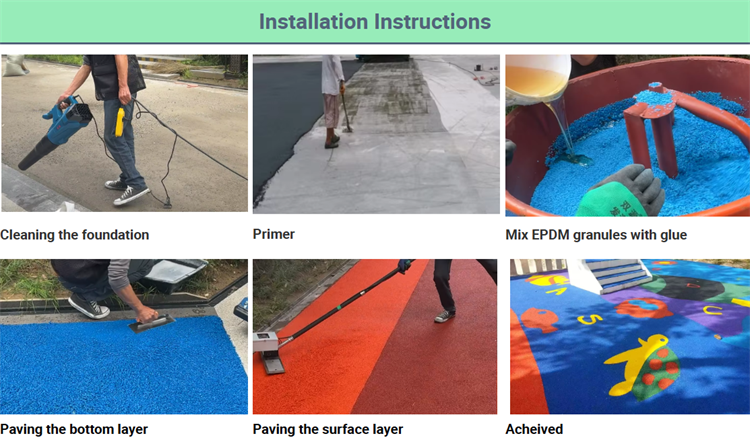
The installation system also matters. EPDM granules are typically mixed with a binder and applied as a poured or troweled surface. If the granule size, shape, or surface texture is not suitable for the binder system, it can affect workability, bonding, and final appearance.
Particle Size and Gradation
Particle size affects surface texture, compaction, binder consumption, and visual finish. Smaller granules may create a smoother surface, while larger granules can influence texture, drainage behavior, and overall appearance.
When buying EPDM granules, check:
Whether the particle size matches the project specification
Whether the size range is consistent
Whether oversized or undersized particles are controlled
Whether the granule gradation suits the installation method
Consistent particle size helps reduce installation variation and supports a more uniform finished surface.
Color Stability and UV Resistance
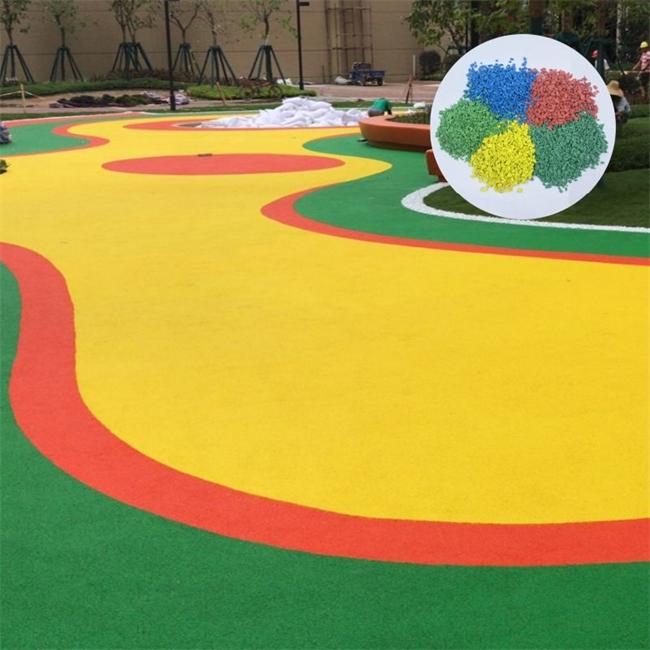
For outdoor projects, color stability is one of the most visible performance factors. EPDM rubber granules are often chosen for their ability to maintain appearance over time, but not all EPDM granules perform the same under sunlight, heat, rain, and temperature changes.
UV resistance matters because prolonged exposure can affect color fading. If color consistency is important for branding, school playgrounds, sports areas, or decorative surfaces, it is worth checking how the material performs under long-term outdoor exposure.
When evaluating color, consider:
Whether the color remains stable after installation
Whether different batches match visually
Whether the supplier can provide consistent color across orders
Whether the chosen color suits the project environment and safety requirements
Elasticity and Mechanical Performance
EPDM rubber granules are valued for their elasticity, resilience, and ability to support impact-absorbing surfaces. However, elasticity, tensile strength, and compression behavior can vary depending on formulation, particle size, binder compatibility, and installation conditions.
For playgrounds and sports surfaces, elasticity affects comfort, shock absorption, and surface feel. For high-traffic areas, mechanical performance influences wear resistance and long-term durability.
Important note: exact performance values depend on the specific formulation, particle size, binder system, and project conditions. Buyers should confirm performance expectations with the supplier rather than assuming one figure applies to all EPDM granules.
Weather Resistance and Outdoor Durability
EPDM granules used outdoors must resist common environmental factors such as sunlight, rain, temperature changes, and repeated use. Weather resistance is especially important for projects exposed to strong UV radiation, high temperatures, or frequent cleaning.
A durable EPDM surface should maintain its functional and visual performance over time. This includes resistance to fading, surface wear, and loss of elasticity. The actual service life depends on installation quality, maintenance, climate, and usage intensity.
Odor and Environmental Suitability
For schools, playgrounds, indoor-outdoor recreational areas, and sensitive environments, odor can be an important consideration. EPDM granules with low odor are often preferred because they reduce concerns during and after installation.
In addition, environmental suitability matters for projects where material safety, cleanliness, and user comfort are priorities. Buyers should confirm whether the EPDM granules meet the requirements of their specific project environment.
Batch Consistency and Supply Reliability
For large projects, batch consistency is critical. If different batches vary in color, particle size, or performance, the finished surface may show visible differences or behave differently during installation.
Reliable supply also matters. Projects often require materials delivered on schedule, with consistent specifications across multiple batches. When buying EPDM granules, it is practical to confirm:
Whether the supplier can maintain consistent specifications
Whether custom colors or particle sizes are available
Whether sample approval is possible before bulk delivery
Whether the supplier has production capacity for the required order
Whether technical support is available for product selection
Practical Considerations for Engineers, Contractors, and Buyers
For Engineers and Designers
Engineers should focus on performance requirements first. This includes impact absorption, elasticity, drainage, surface thickness, particle size compatibility, and environmental exposure. The selected EPDM granules should align with the design intent and installation system.
For Contractors and Installers
Contractors should pay attention to workability. Consistent granule size, clean material, and predictable mixing behavior help reduce installation issues. It is also helpful to test a small area before full application, especially when using a new color or particle size.
For Procurement Teams
Procurement teams should balance material cost with specification consistency. The lowest unit price may not be the most economical choice if it leads to higher waste, rework, color mismatch, or earlier replacement. Clear specifications, sample approval, and batch consistency checks help reduce purchasing risk.
For Project Owners
Project owners should consider the full lifecycle of the surface. A well-chosen EPDM rubber surface should remain safe, functional, and visually acceptable over time. Early decisions about granule size, color, and material performance can affect long-term maintenance and replacement costs.
How to Choose EPDM Granules for Different Applications
Playground Surfaces
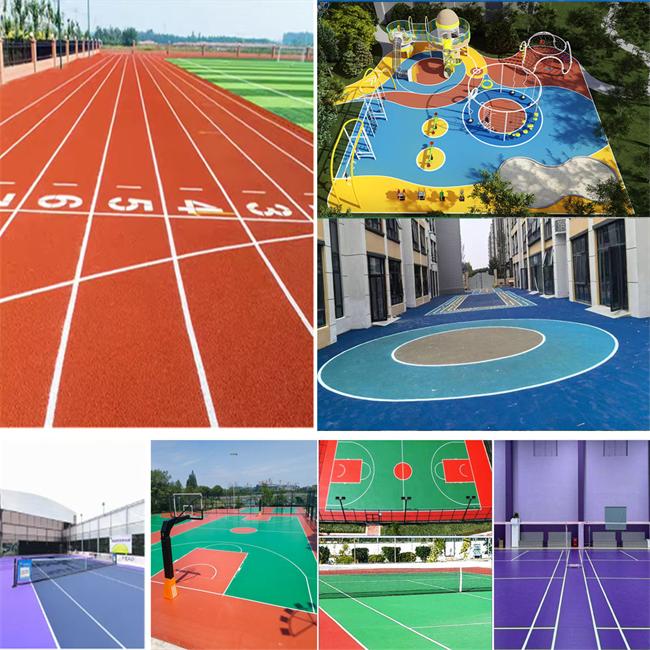
For playgrounds, safety, color retention, and impact absorption are usually priorities. Choose EPDM granules that support a stable wet pour surface and match the required safety and design standards. Color consistency is especially important for themed playgrounds, school areas, and public recreation spaces.
Running Tracks
Running tracks require consistent elasticity, wear resistance, and surface uniformity. Particle size and granule consistency should be checked carefully, as they can affect installation smoothness and performance.
Sports surfacing
Sports surfacing often needs a balance between elasticity, durability, and appearance. The choice of EPDM granules should support the intended sport or activity while maintaining a stable surface under regular use.
Wet Pour Rubber Surfaces
Wet pour systems depend heavily on the compatibility between EPDM granules and binder. Uniform granule size, clean material, and consistent color help achieve a better finished appearance and more predictable installation results.
Decorative and Landscape Areas
For decorative applications, color stability and visual appeal are often more important than heavy impact performance. EPDM granules can be selected based on color design, particle size, and resistance to outdoor weathering.
EPDM Granules Selection Checklist
Before placing an order, use this checklist to reduce the risk of choosing the wrong material.
Confirm the application: playground, running track, sports surfacing, wet pour surface, or decorative area
Define the required particle size and gradation
Confirm color requirements and whether batch-to-batch color matching is needed
Check UV resistance and outdoor durability expectations
Confirm elasticity, compression, and performance requirements with the supplier
Consider odor, environmental suitability, and user safety requirements
Verify installation method and binder compatibility
Request samples before bulk purchase
Confirm minimum order quantity, lead time, and delivery schedule
Ensure the supplier can provide consistent specifications across batches

FAQ
Are all EPDM rubber granules the same?
No. EPDM rubber granules can differ in particle size, color stability, elasticity, density, formulation, and suitability for different installation systems. The right choice depends on the application, environment, and performance requirements.
How do I choose the right EPDM granule size?
Granule size should be selected based on the surface type, installation method, desired texture, and binder compatibility. Smaller granules may produce a finer finish, while larger granules can affect texture and surface structure. Always confirm the recommended size with the supplier for your specific system.
Will EPDM granules fade over time?
Color fading depends on UV exposure, climate, material formulation, installation quality, and maintenance. EPDM granules with good UV resistance and color stability are usually preferred for outdoor playgrounds, running tracks, and sports surfaces.
Can EPDM granules be used for playgrounds?
Yes, EPDM granules are commonly used in playground safety surfaces, especially in wet pour rubber systems. The final performance depends on granule selection, binder compatibility, surface thickness, installation quality, and compliance with applicable safety requirements.
What is the difference between EPDM granules and rubber mulch?
EPDM granules are typically used in bound wet pour surfaces, where they are mixed with binder to form a continuous rubber layer. Rubber mulch is usually loose-fill material. The two products serve different installation methods and performance needs.
How can I check EPDM granule quality before buying?
A practical approach is to request samples, check particle size consistency, confirm color matching, review technical information, and test compatibility with your binder and installation method. For large projects, batch approval before delivery helps reduce inconsistency risks.
Does EPDM granule color affect project appearance?
Yes. Color affects visual design, safety zoning, branding, and long-term appearance. For outdoor projects, color stability is especially important because sunlight and weather exposure can influence how the surface looks over time.
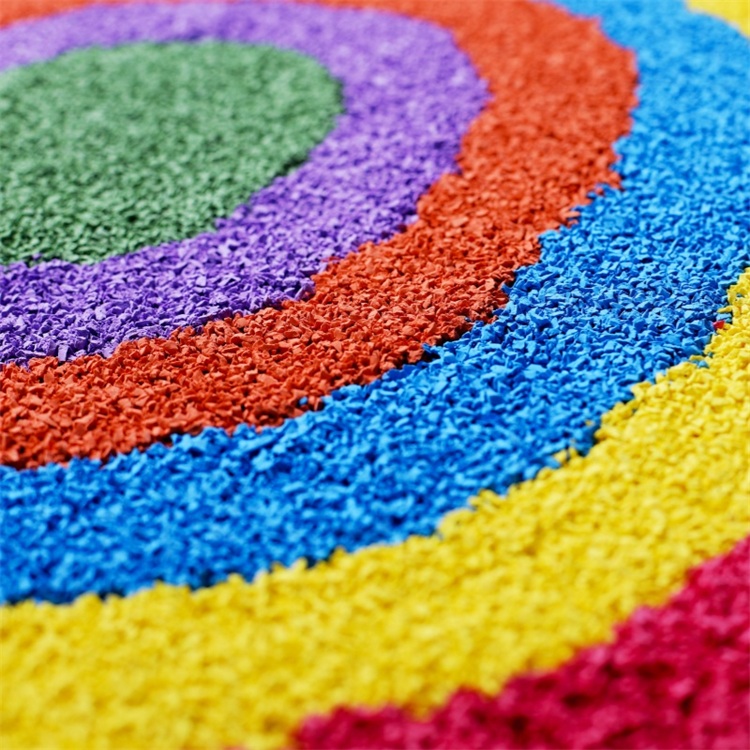
When buying EPDM granules, the best approach is to match the material to the project, not just to a price list. Start by defining the application, then check particle size, color stability, elasticity, weather resistance, odor, installation compatibility, and batch consistency. For projects where appearance, safety, and long-term performance matter, these factors are often more important than small differences in unit price.
If you are selecting EPDM rubber granules for a playground, running track, sports surfacing, wet pour surface, or custom-color project, the right granule size, color, and specification should be confirmed before bulk ordering. Contact us with your application, required particle size, color, and order quantity, and we can help you choose a suitable EPDM granule specification for your project.

WOW(LYG) New Material Co Ltd is a manufacturer specializing in the production of EPDM granules. We use sulfur-free vulcanization technology, it increases the service life by more than 3 times than traditional EPDM granules, and enhances the performance, including anti-aging, high-temperature resistance, and colorfastness.
We have over 25 years of production experience and offer customization for colors and granule sizes. NO MOQ.


