 注: 建议图片大小150px*50px
丨
注: 建议图片大小150px*50px Views: 0 Author: Site Editor Publish Time: 2026-07-15 Origin: Site


You're not here for a basic product introduction. You're here because you have a playground to build, a sports surface to specify, or a shipment to procure, and you need to know exactly how to design with wet-poured colored EPDM granules to get it right the first time.
As a contractor, importer, or engineer, you face a common set of worries. Will the color fade within a year? Will the surface hold up under heavy use? Will the binder fail, leaving a costly mess? Will the supplier deliver inconsistent quality, or worse, a product that off-gasses harmful odors in the summer heat?
This guide is designed to address those pain points directly. It cuts through the marketing fluff and provides a technical, engineering-focused perspective on designing with EPDM wet-pour systems, ensuring your project—whether a municipal playground or a high-end sports facility—meets safety standards, budget targets, and longevity expectations.
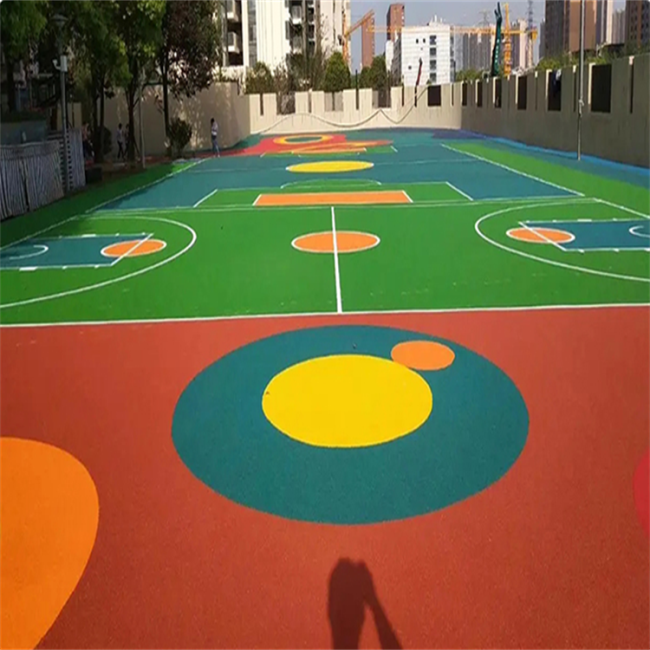
Understanding the Foundation: What is Wet-Poured Colored EPDM?
At its core, a wet-pour system is a seamless, impact-absorbing safety surface applied directly on-site. It is the industry standard for playgrounds, sports areas, and recreational spaces because of its combination of safety, durability, and design flexibility.
The system isn't a single layer; it's a two-part engineered structure:
1. The Base Layer (Sub-base): This is the unsung hero of the system. Typically made of recycled black Styrene-Butadiene Rubber (SBR) granules, this layer is mixed with a binder and laid to a specific thickness to absorb impact. The thicker this layer, the higher the "Critical Fall Height" (CFH) rating the surface will achieve, which is crucial for playground safety.
2. The Wearing Course (Top Layer): This is the colored EPDM layer. EPDM (Ethylene Propylene Diene Monomer) is a synthetic rubber chosen for its outstanding weather resistance and color retention. This top layer provides the aesthetic finish, UV protection, and resistance to wear and tear. It's mixed with a clear or colored binder and troweled to a smooth, seamless finish.
A common mistake is to think you can just pour the top layer. Without that black SBR base, you lose the essential shock absorption, and the entire system becomes rigid and prone to failure.
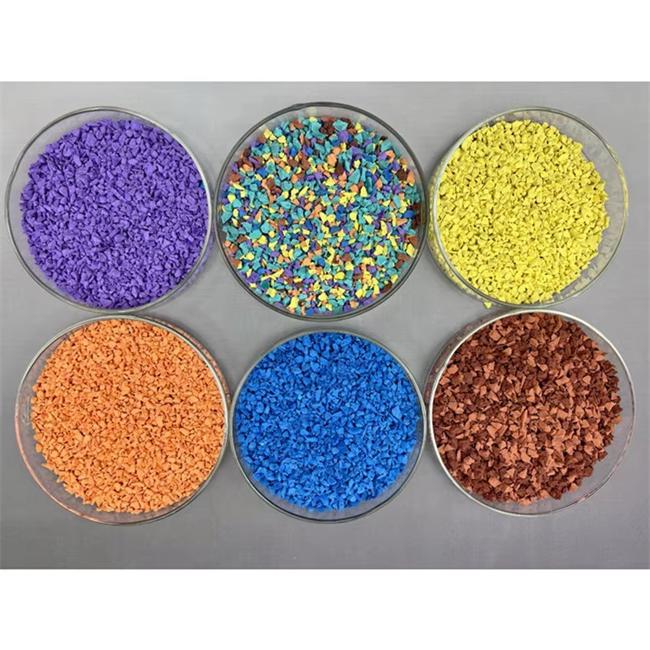
Key Design Considerations for Specifiers and Installers
When designing a wet-pour EPDM surface, you are making critical decisions that affect cost, safety, and performance.
Critical Fall Height (CFH) & System Thickness
Safety is non-negotiable, especially in playgrounds. The total thickness of the system (SBR base + EPDM top) must correspond to the highest point from which a child could fall.
Safety Standard: In Europe, this is governed by EN 1177. In other regions, similar standards apply, requiring specific CFH ratings.
Typical Thickness: A standard system with a minimum 20mm SBR base and a 15mm EPDM top layer (35mm total) can generally achieve a CFH of over 1.4 meters. For high play structures requiring a CFH of 3 meters or more, the base layer may need to be 60mm to 100mm or even thicker.
Design Advice: You don't have to use a uniform thickness across the entire area. A strategic design approach involves using a thicker pad directly under high equipment and tapering down to a thinner, more economical layer in open walking zones.

Color, Aesthetics, and UV Stability
This is often where projects go wrong. A beautiful blue playground turning green after a few months is a nightmare scenario.
The "Ambering" Effect: This is caused by using an aromatic polyurethane binder. This type of glue is cheaper but has a yellow tint that is activated by UV light. When paired with light-colored EPDM (like blue, grey, or white), it creates a greenish or yellowish discoloration. Always specify an aliphatic binder for light or bright colors to prevent this.
Mass Pigmentation: High-quality EPDM granules have color pigments infused throughout the entire polymer matrix, not just coated on the surface. This means that even as the surface wears down from foot traffic, the color remains brilliant and doesn't fade or chalk.
Aesthetic Design: To hide dirt and footprints, design professionals often recommend a "speckled" finish. This involves blending a vibrant accent color with a dominant darker base, creating visual texture that camouflages dirt and reduces visible maintenance. Using high-contrast colors is also vital for inclusive design, helping visually impaired users navigate the space safely.

Avoiding Common Procurement & Installation Errors
Your design can be perfect, but it will fail if you don't carefully manage the procurement and installation phases.
Mistake 1: Ignoring the Sub-Base
Installing wet-pour directly over concrete without addressing drainage is a recipe for disaster. Moisture trapped beneath the surface can turn to steam in the sun, causing massive blisters and causing the entire surface to lift. Ensure the sub-base has adequate drainage slopes or is made of a permeable material like compacted stone.
Mistake 2: Incorrect Binder Ratio
The binder is the glue that holds it all together, and using the wrong ratio is a classic cost-cutting measure that leads to failure.
Base Layer (SBR): Requires 6-8% binder by weight.
Top Layer (EPDM): Needs a much higher ratio, typically 18-20% by weight. Using too little binder on the top layer results in loose granules sweeping away, a premature "gravelly" surface, and a host of complaints.
Mistake 3: Choosing the Wrong Supplier Based Solely on Price
The cheapest quote is almost always the most expensive in the long run. Here are the risks:
Inconsistent Quality: Batch-to-batch color variation or unpredictable granule size will ruin your installation.
UV and Odor Issues: Low-quality EPDM, particularly those with high sulfur content, will degrade faster, fade, and release an unpleasant, rubbery smell, especially in hot weather.
Supplier Instability: A supplier with poor financial standing might offer a low price but go out of business before honoring a warranty or guaranteeing your order.
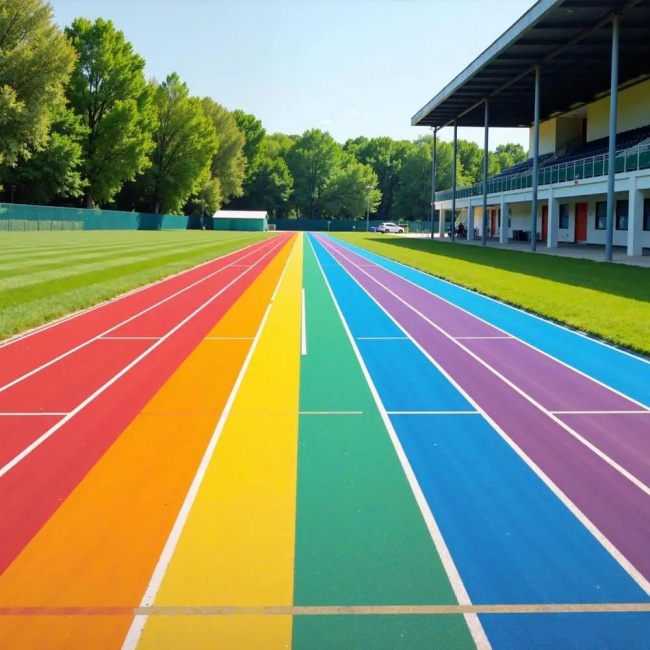
The Need for No-Sulfur, High-Performance EPDM
The quality of the EPDM granules themselves is paramount. As a specifier or procurer, you should be looking for "next-generation" EPDM.
The industry standard has traditionally involved sulfur in the vulcanization process. However, no-sulfur EPDM technology, which uses peroxide curing, represents a significant leap forward. Here is why it matters for your projects:
Zero Odor: No-sulfur EPDM does not break down under heat and UV exposure to release sulfuric compounds. This means the surface remains odor-free, even in intense summer heat.
Superior Color Retention: These products are far more resistant to UV degradation. They won't fade, chalk, or discolor after prolonged sun exposure.
Enhanced Durability & Elasticity: Because the molecular structure is more stable, these granules offer significantly improved tensile strength (4-7 MPa) and elasticity (over 550% elongation), compared to the minimum industry standards.
Improved Safety: This advanced EPDM is often rated as safer and can even meet food-grade hygiene standards, making it ideal for environments used by children.
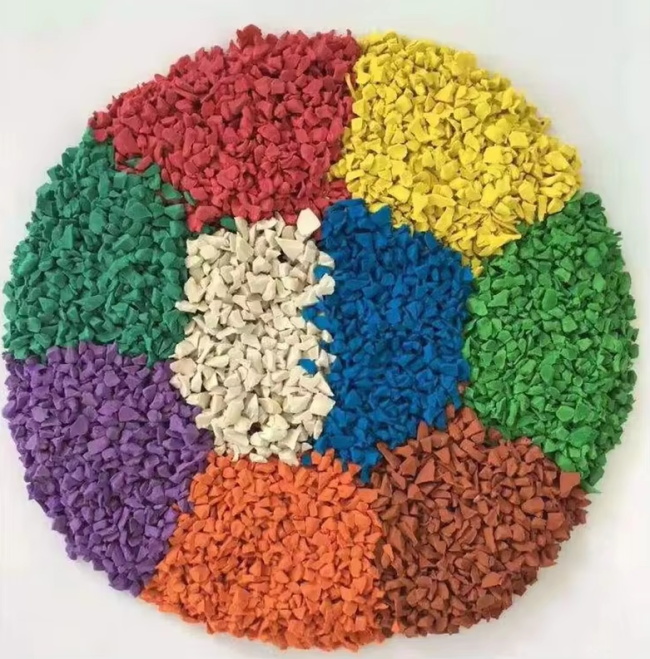
The International & Municipal Standard
For large-scale projects—whether a municipal park, a school district's new playground, or a national sports complex—there is a growing consensus that high-quality, UV-stable, no-sulfur EPDM is the gold standard. It reduces long-term maintenance costs, enhances the safety and enjoyment of public spaces, and demonstrates a commitment to quality. These advanced materials are compliant with major international standards like REACH, RoHS, and EN71-3, ensuring they are free from heavy metals and toxic compounds.

Designing with wet-poured colored EPDM granules requires more than just choosing a color. It requires a deep understanding of the system's structural mechanics, the chemistry of its components, and the common pitfalls that can ruin a project.
By focusing on the critical interplay of thickness, binder selection, and granule quality—specifically opting for advanced no-sulfur, mass-pigmented products—you are not just buying a surface. You are ensuring a safe, durable, and vibrant installation that will stand the test of time, weather, and use.

WOW(LYG) New Material Co Ltd is a manufacturer specializing in the production of EPDM rubber granules. We use sulfur-free vulcanization technology, it increases the service life by more than 3 times than traditional EPDM granules, and enhances the performance, including anti-aging, high-temperature resistance, and colorfastness.
We have over 25 years of production experience and offer customization for colors and granule sizes. NO MOQ.


