 注: 建议图片大小150px*50px
丨
注: 建议图片大小150px*50px 


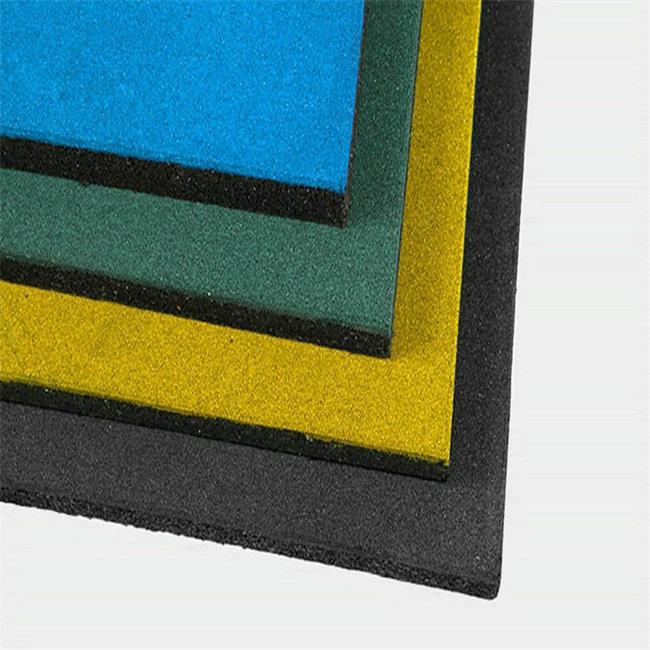

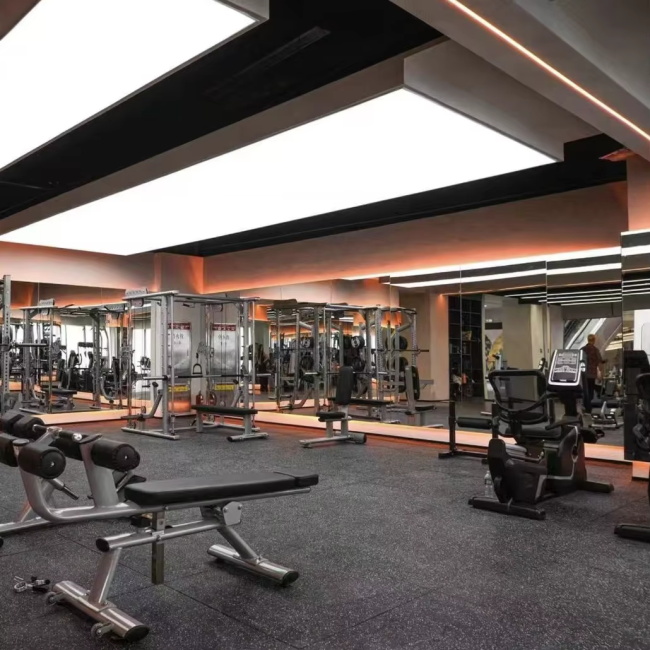

When specifying flooring for commercial gyms, playgrounds, or sports facilities, the material choice directly impacts safety, durability, and long-term maintenance costs. Among the available options, the 30-1000mm Gym EPDM rubber mat has become a reference point for procurement professionals and facility managers who need reliable performance across diverse applications.
What Is EPDM Rubber Mat?
EPDM (Ethylene Propylene Diene Monomer) is a synthetic rubber known for its chemical stability and resistance to environmental factors. In flooring applications, EPDM rubber mats are manufactured by compressing EPDM granules with a polyurethane binder, forming a dense, resilient sheet or tile.
Unlike natural rubber or recycled SBR (styrene-butadiene rubber) products, EPDM contains no unsaturated carbon bonds in its main chain. This molecular structure gives it inherent resistance to ozone, UV radiation, weathering, and temperature extremes.
EPDM Mat vs. Ordinary Rubber Mat: What’s the Difference?
The distinction matters for procurement decisions. Ordinary rubber mats, typically made from SBR or recycled tire rubber, are more affordable but come with significant trade-offs. They fade quickly under sunlight, become brittle over time, and the surface color is usually just a coating that wears off to reveal a different shade underneath.
EPDM rubber mats, on the other hand, offer through-body color—meaning the pigment runs all the way through the material. Even after years of foot traffic or surface abrasion, the mat retains its original appearance. EPDM also resists ozone cracking and performs reliably across a wide temperature range, from extreme cold to intense heat.
For projects where longevity, appearance, and safety certification matter—such as public playgrounds, commercial gyms, or outdoor sports areas—EPDM justifies the premium. For temporary setups or budget-constrained indoor applications with no UV exposure, SBR or recycled rubber mats may be sufficient.
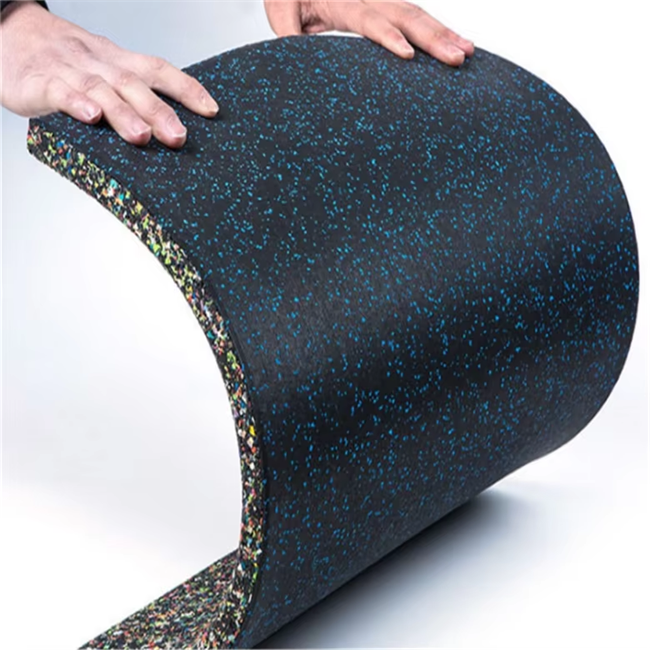
Structure and Material Composition
A typical EPDM flooring mat consists of two distinct layers working together. The top wear layer is made from colored EPDM granules bound with clear or colored polyurethane resin. This layer provides the aesthetic finish, slip resistance, and UV protection. The base layer is usually composed of black recycled rubber granules (SBR) or lower-density EPDM, bonded underneath to provide shock absorption and dimensional stability. Some premium mats use EPDM throughout both layers.
Surface Characteristics
EPDM mat surfaces are generally textured rather than smooth. The granular finish offers reliable slip resistance even when wet—critical for gym and playground safety. The surface is non-abrasive and comfortable for barefoot use, making it suitable for children's play areas and yoga or stretching zones. And because the color runs through the material, surface wear does not create contrasting marks or discoloration.
Common Sizes and Thickness
While the 30-1000mm gym EPDM rubber mat designation covers a wide size range, common configurations include tiles in 500 × 500 mm, 600 × 600 mm, and 1000 × 1000 mm formats, as well as larger mats at 1000 × 500 mm.
Thickness ranges typically start from 10–15 mm for light-use indoor areas and walking paths, move to 20–25 mm for general gym flooring and cardio zones, and reach 30–50 mm for free weight areas, heavy equipment zones, and impact protection applications.
A critical note: The "30-1000mm" range can refer to either thickness (in mm) or total size options depending on the manufacturer. Always confirm the specification units when ordering.
Key Application Scenarios
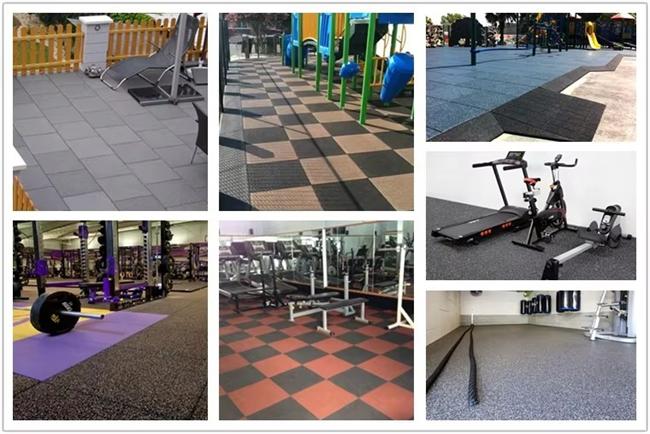
EPDM rubber mats are specified across multiple environments, each with distinct requirements.
Gyms and fitness areas represent the largest single application category.
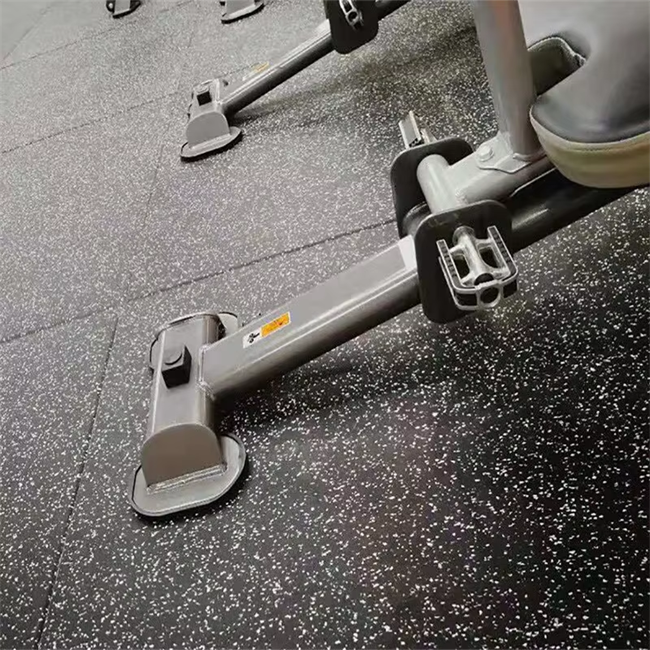
Free weight zones typically need 30–50 mm mats to protect subfloors from dropped dumbbells, barbells, and kettlebells. Cardio equipment areas perform well with 15–20 mm mats that reduce vibration and equipment noise. CrossFit and functional training spaces benefit from EPDM's shock absorption during high-impact movements. Home gyms often use smaller tile formats around 500 × 500 mm for easy DIY installation.
Playgrounds and children's facilities widely use EPDM playground mat products because they provide critical fall protection while maintaining a colorful, non-toxic surface. The through-body color means the mat remains visually consistent even after years of use, unlike painted surfaces that peel or fade.
Sports facilities including indoor courts, multi-purpose sports halls, and training areas use EPDM for its combination of resilience and slip resistance under dynamic loads.
Outdoor areas benefit from EPDM's weather resistance on walkways, pool surrounds, terrace flooring, and park paths. The material drains well and remains usable immediately after rain without becoming slippery.
Commercial and industrial spaces such as retail outlets, exhibition halls, equipment storage rooms, and even ice sports stadiums use EPDM flooring for its durability and ease of cleaning.
What Problems Does EPDM Mat Solve?
Ground safety is the primary concern in most applications. EPDM's textured surface reduces slip accidents, and its shock-absorbing properties minimize injury from falls—especially critical in playgrounds where children are running and climbing, and in gyms where users are moving heavy weights.
Impact absorption protects more than just users. In weightlifting areas, dropped loads can damage both equipment and the subfloor. EPDM mats disperse impact energy, protecting the underlying structure and reducing noise transfer to floors below.
UV and weather resistance makes EPDM suitable for outdoor installation where ordinary rubber mats degrade rapidly. Unlike recycled rubber that shrinks, cracks, or fades within months of sun exposure, EPDM maintains its shape and color year after year.
Long-term appearance is another major advantage. Because color runs through the material, surface wear does not create bald spots or discoloration. This reduces replacement frequency and maintains a professional look that reflects well on the facility.
Low maintenance requirements mean EPDM mats are water-repellent, easy to clean with standard equipment, and do not require sealing or special treatments. A simple sweep and occasional damp mop keeps them looking new.
Advantages and Value Proposition
From an engineering and procurement perspective, EPDM mats deliver several measurable benefits. UV stability allows outdoor installation with confidence, reducing replacement cycles compared to SBR alternatives. Through-body color ensures consistent appearance over multi-year use without the fading that plagues surface-dyed products. Impact absorption protects subfloors and equipment while reducing injury risk for users. Slip resistance helps meet safety compliance for commercial and public spaces. Chemical resistance withstands cleaning agents, oils, and environmental exposure without degrading. And many formulations incorporate recycled content, supporting sustainability goals without compromising performance.
The key value for procurement and engineering teams is predictable long-term performance—fewer complaints from facility managers, lower maintenance budgets, and extended service intervals that reduce total cost of ownership.

Selection Parameters: How Thickness, Size, Color, Surface, and Connection Method Affect Choice
Thickness directly correlates with impact protection and load-bearing capacity. Mats of 10–15 mm suit light foot traffic, stretching areas, and walking paths. The 20–25 mm range works well for general gym flooring, cardio zones, and multi-purpose rooms. For free weight areas, CrossFit zones, and heavy equipment, 30–40 mm provides adequate protection. Specialized heavy-load areas may require 50 mm or more for maximum impact absorption.
Size affects both logistics and installation quality. Tiles in 500×500 mm or 600×600 mm formats are easier to transport and handle, work well with interlocking systems, and allow individual replacement of damaged sections without disturbing the entire floor. Large mats at 1000×1000 mm or 1000×500 mm create fewer seams, present a cleaner appearance, and speed up installation over large open areas.
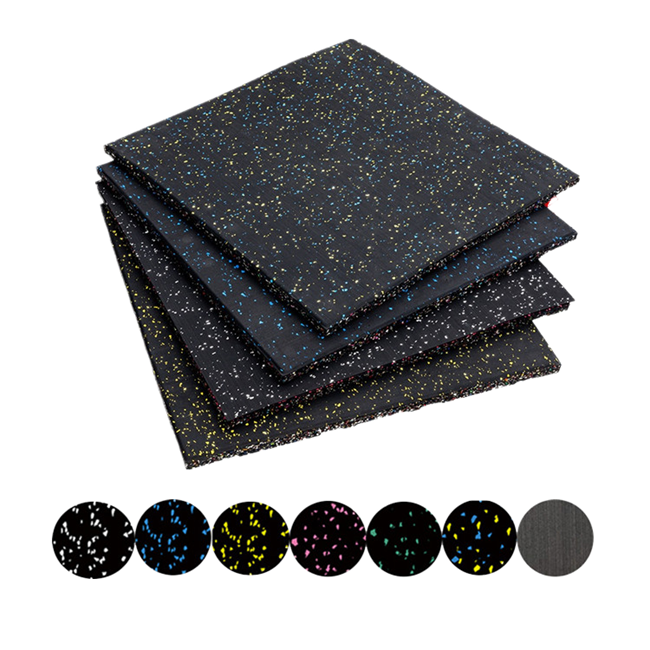
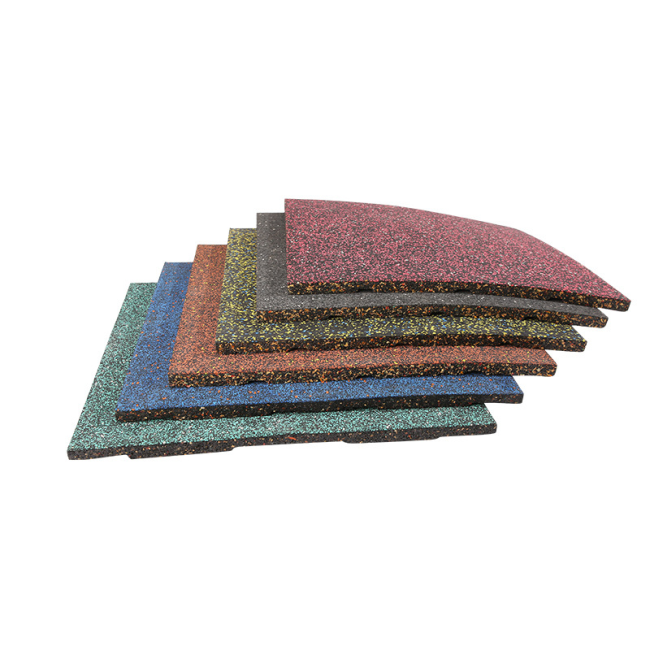
Color influences aesthetics and safety marking. Standard options include black, red, yellow, blue, green, orange, grey, and white. Bright colors are often used for safety zones, wayfinding, or children's areas where visual engagement matters. Dark colors dominate in commercial gyms for a clean, professional look that hides minor scuffs.
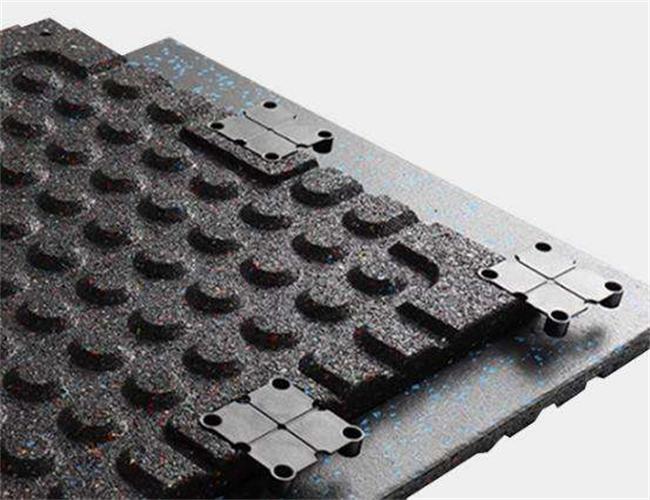
Surface structure ranges from textured granular finishes for maximum slip resistance—the standard for most applications—to smoother fine-surface options that are easier to clean in light-traffic indoor areas. Puzzle edge or interlocking designs require no adhesive, making them suitable for temporary or modular installations. Straight edges require adhesive for permanent installation but create a more seamless appearance when combined with welding or taping.
Connection method determines installation approach. Interlocking tiles connect without glue, allowing quick installation and demounting for relocation or access to subfloors. Straight-edge mats require flooring adhesive for permanent installation and create a seamless appearance when properly joined.

How to Choose EPDM Mat by Application
For home gyms with light use, 15–20 mm mats in 500×500 mm tile format offer easy installation and adequate protection. Commercial gym cardio zones benefit from 20–25 mm mats in 1000×1000 mm format for noise reduction and equipment stability. Free weight and CrossFit areas demand 30–50 mm thickness with 1000×500 mm or large tile formats to handle impact protection. Playgrounds requiring fall protection typically need 25–50 mm thickness depending on fall height, with interlocking tiles or poured-in-place systems that prioritize safety certification. Outdoor walkways perform well with 15–20 mm large mats or rolls that provide UV stability. Pool surrounds need 15–20 mm textured surfaces for slip resistance when wet.

Customization Options
Most EPDM mat manufacturers offer customization beyond standard catalog products. Color matching to brand guidelines, safety marking requirements, or design schemes is typically available. Non-standard dimensions can often be produced to fit specific floor plans rather than forcing the floor to fit standard tiles. Thickness can be specified to meet impact or load requirements unique to the project. Surface design including logo embossing, patterned surfaces, or special textures is possible with custom tooling. Structure adjustments in density, binder type, and granule size can be made for specific performance needs. Packaging options including private labeling and branded packaging are available for larger orders.
EPDM Mat vs. Other Flooring Materials
When comparing EPDM mats to poured-in-place rubber, EPDM mats are prefabricated and installed without site mixing, which reduces installation time and eliminates the quality variability that comes with on-site labor conditions. Poured-in-place systems are seamless but require skilled labor and favorable weather conditions, making them more expensive and slower to install.
PVC flooring is cheaper and available in more design options but lacks impact absorption and is less durable under heavy loads. PVC also tends to show wear more quickly in high-traffic commercial settings. EPDM is the better choice for high-impact areas where durability matters.
Standard SBR mats made from recycled tire rubber are cost-effective but prone to UV degradation, fading, and shrinkage outdoors. For indoor applications without sun exposure and where budget is the primary constraint, SBR may be adequate. But EPDM is the premium choice wherever appearance and longevity matter.
It is also important to recognize where EPDM is not the best choice. In environments with extreme oil or chemical exposure, EPDM has poor oil resistance and may degrade. Nitrile rubber (NBR) is better suited for these conditions. For very low-budget, short-term projects, recycled rubber mats may be sufficient despite their shorter lifespan. In areas requiring very high cleanliness such as food processing, some EPDM formulations may not be food-contact approved, so it is essential to verify certifications.
FAQ:
What is the standard packaging for EPDM mats?
Mats are typically shrink-wrapped and palletized for transport. Standard export packaging includes film wrapping and wooden pallets. Custom packaging such as branded boxes is available for larger orders.
What are typical shipping lead times?
Lead times generally range from 7 to 25 days, depending on order quantity, customization, and production schedule. Sample orders ship faster, often within a few days.
Can I order samples before a full order?
Yes. Most manufacturers offer free samples, with freight charges sometimes covered for serious inquiries. Ordering samples is strongly recommended to verify color, texture, and thickness before committing to large volumes.
What are the common thickness options?
Typical thicknesses range from 15 mm to 50 mm, with 20 mm being the most popular for general gym use. Custom thicknesses may be available upon request for specialized applications.
Are EPDM mats suitable for outdoor use?
Yes—this is one of their primary advantages. They resist UV, ozone, and temperature extremes, making them suitable for playgrounds, walkways, and outdoor sports facilities that would quickly destroy ordinary rubber mats.
How do I install EPDM mats?
Interlocking tiles require no adhesive and can be laid directly on a clean, level subfloor. Straight-edge tiles are usually installed with flooring adhesive. Rolls require adhesive installation and professional installation is recommended for large areas.
How do I clean EPDM mats?
Sweep or vacuum regularly to remove debris. Mop with mild detergent and water as needed. Avoid harsh solvents or oil-based cleaners that can damage the surface.
What colors are available?
Standard colors include black, red, yellow, blue, green, orange, grey, and white. Custom colors can be matched for larger orders with minimum quantity requirements.
Are EPDM mats non-toxic?
Quality EPDM mats are manufactured without toxic additives and comply with safety standards such as CE, EN71, and REACH. Always request certification documentation for your specific application requirements.
What is the minimum order quantity (MOQ)?
MOQ varies by manufacturer and product type. For standard products, MOQ may be around 50 square meters, while custom orders often require 200 square meters or more due to production setup costs.
Choosing the right EPDM mat involves balancing thickness, size, color, and customization with the specific demands of your project. For indoor commercial gyms, 20–25 mm mats in 500×500 mm or 1000×1000 mm formats are a proven baseline that handles most use cases well. For outdoor playgrounds, prioritize UV stability and fall-height requirements above all else. For free-weight zones, thickness of 30 mm or more is recommended to protect both the subfloor and the users.
EPDM mats represent a long-term investment in safety, durability, and aesthetics. When specified correctly, they reduce maintenance, enhance user experience, and maintain their appearance over years of heavy use. The upfront cost premium over SBR or PVC is recovered through longer service life and lower replacement frequency.
Need the Right EPDM Mat for Your Project?
Every project has different requirements—thickness, size, color, and quantity all affect the final product and pricing. Rather than guessing which option works best, let's discuss your specific application.
Tell us about your project type, required thickness, total area, and color preference for a tailored product recommendation.
Request specification sheets to get detailed technical data for engineering review and compliance verification.
Order samples to verify material quality, texture, and color accuracy before placing a production order.
Ask our technical team for assistance with thickness selection, installation methods, or custom design requirements.
Submit your project brief and we will help you select the right EPDM mat for your gym, playground, or facility.


