 注: 建议图片大小150px*50px
丨
注: 建议图片大小150px*50px 


Choosing the right EPDM top layer granules is one of the most critical decisions for any playground, running track, or sports surfacing project. The top layer is not just about aesthetics—it determines the surface's safety, durability, UV resistance, and long-term performance. Yet many contractors, engineers, and purchasers struggle with questions like: What size should I choose? How do I prevent color fading? What makes a granule truly UV-stable?
This guide provides professional, practical answers based on years of manufacturing and export experience, helping you make informed decisions that protect your investment and project quality.
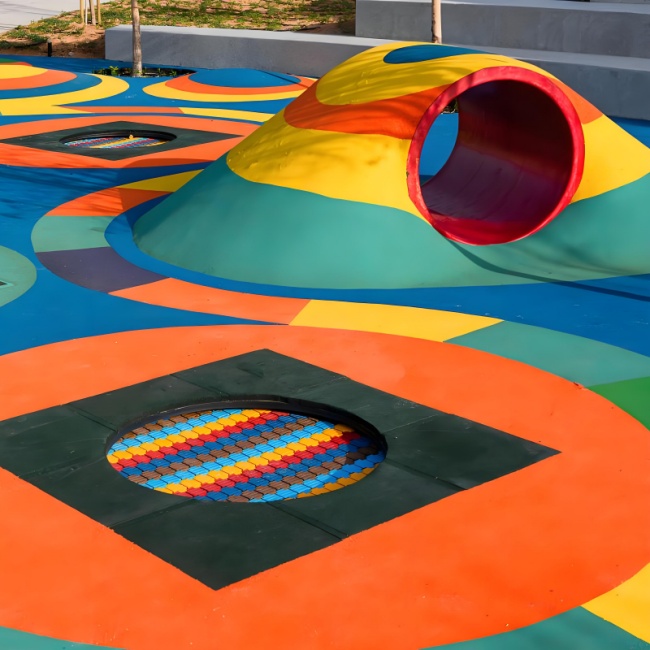
What Are EPDM Top Layer Granules?
EPDM (Ethylene Propylene Diene Monomer) top layer granules are vulcanized rubber granules specifically engineered as the wearing course for synthetic surfacing systems. Unlike SBR (Styrene-Butadiene Rubber) granules used in lower layers, EPDM is a virgin synthetic rubber prized for its exceptional weather resistance, color stability, and UV durability.
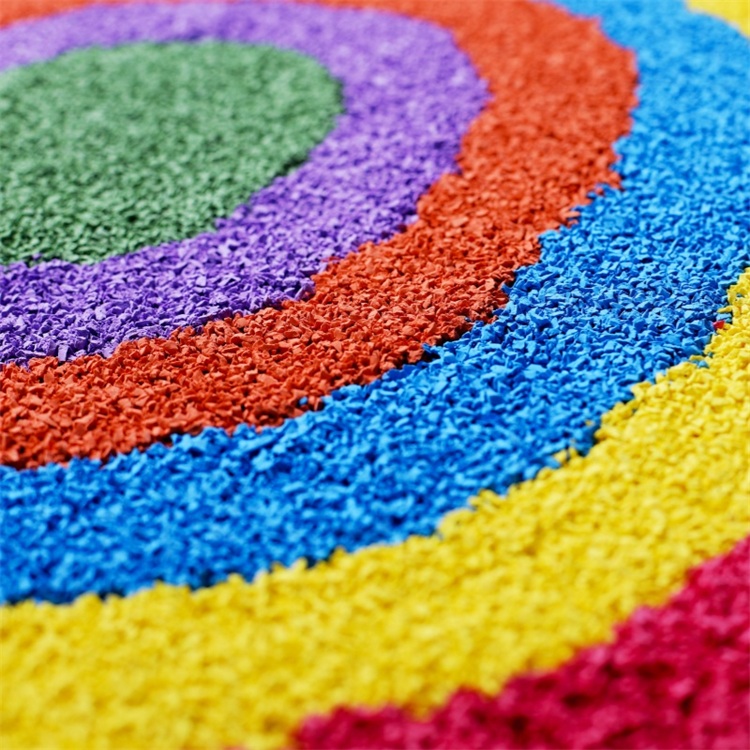
When mixed with polyurethane (PU) binder and applied as the top layer, EPDM granules create a seamless, elastic, and slip-resistant surface that performs reliably across diverse climates—from the scorching heat of the Middle East to the freezing winters of North America and Europe.
Key distinction: EPDM top layer granules are the visible surface of a rubber surfacing system. The lower shock pad layer typically uses black SBR granules for cost-effective impact absorption, while the top layer uses colored EPDM for aesthetics, UV protection, and wear resistance.

Primary Applications of EPDM Top Layer Granules
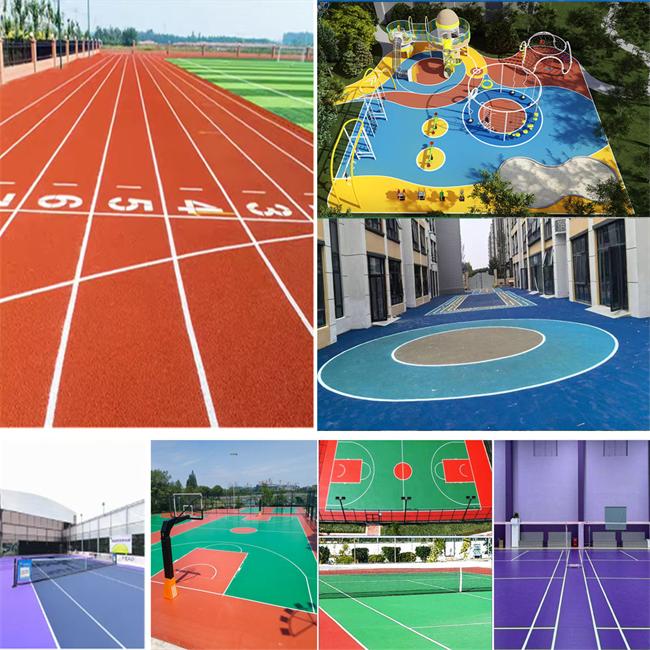
EPDM top layer granules are specified for a wide range of projects, including:
- Wet Pour Playground Surfacing – Safety surfaces for schools, kindergartens, and public parks that meet critical fall height requirements
- Poured-in-Place (PIP) Rubber Systems – Seamless, durable surfacing for recreational areas
- Running Tracks & Athletic Tracks – IAAF-certified surfaces for professional and school sports facilities
- Multi-Use Games Areas (MUGA) – Versatile surfaces for basketball, tennis, and other sports
- Walking Paths & Splash Pads – Decorative, non-slip surfaces with excellent drainage
- Commercial & Municipal Projects – Government buildings, community centers, and public spaces
Why EPDM Is the Preferred Top Layer Material
UV Stability & Color Retention
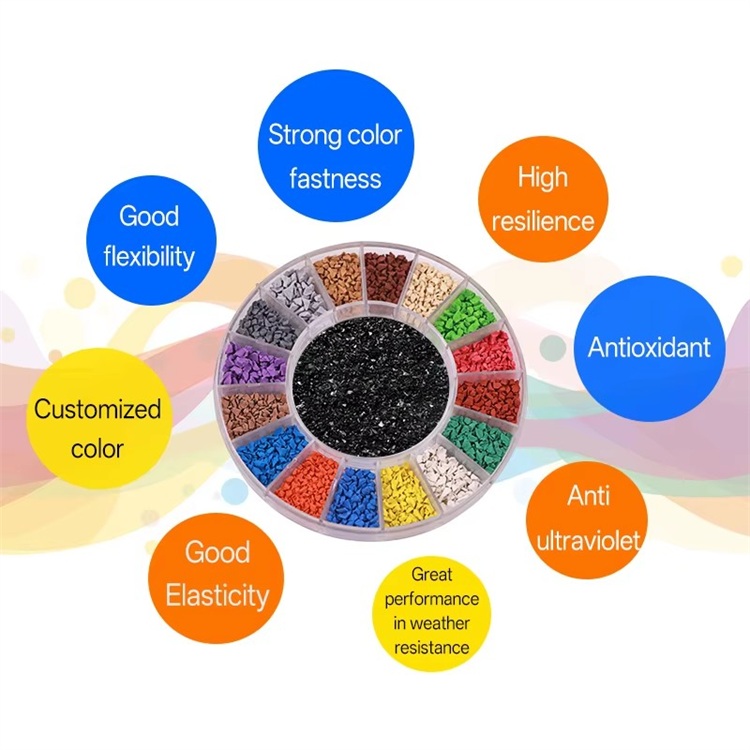
EPDM granules are formulated with high-quality inorganic pigments that resist UV degradation. Under normal weather conditions, quality EPDM retains its vibrant color for over 8 years without significant fading. This is a critical advantage over SBR, which fades and chalks when exposed to sunlight.
Exceptional Elasticity
EPDM maintains its elasticity across a wide temperature range, performing consistently from as low as -40°C up to 100°C. This provides reliable shock absorption and fall protection year-round, which is essential for playground safety and athlete performance.
Chemical & Weather Resistance
EPDM offers outstanding resistance to ozone, oxidation, and moisture. It does not degrade in humid environments or coastal areas with salt-laden air, ensuring a long service life even under harsh conditions.
Non-Toxic & Safe
Virgin EPDM granules are non-toxic, heavy metal-free, and lead-free, making them completely safe for children and pets. They do not release harmful substances even at high temperatures.
High Bond Strength
Quality EPDM granules are engineered for strong adhesion with PU binders, minimizing the risk of delamination or granule loss over time.
Common Challenges with EPDM Top Layer Granules
Even the best materials can fail if not properly selected or installed. Here are the most common challenges and how to avoid them:
Challenge 1: Color Inconsistency Between Batches
Different production batches may have slight color variations, leading to patchy or mismatched surfaces.
- Solution: Use granules from the same production batch for any single project. Reputable manufacturers can provide batch samples for approval before full production.
Challenge 2: Premature Fading or Chalking
Not all EPDM granules are created equal. Low-quality granules use inferior pigments or recycled content that degrades quickly under UV exposure.
- Solution: Insist on virgin EPDM with UV-stable pigments. Request evidence of UV testing or third-party certification.
Challenge 3: Poor Adhesion and Granule Loss
If the PU binder is applied incorrectly or the granules lack proper surface texture, they may become loose over time.
- Solution: Ensure the binder-to-granule ratio is correct and select angular granules for better mechanical keying.
Challenge 4: Dust and Surface Contamination
Inferior granules may leave powder residue on the surface or inside packaging.
- Solution: Source granules with a clean, dust-free finish. A reputable supplier conducts rigorous quality control to eliminate this issue.
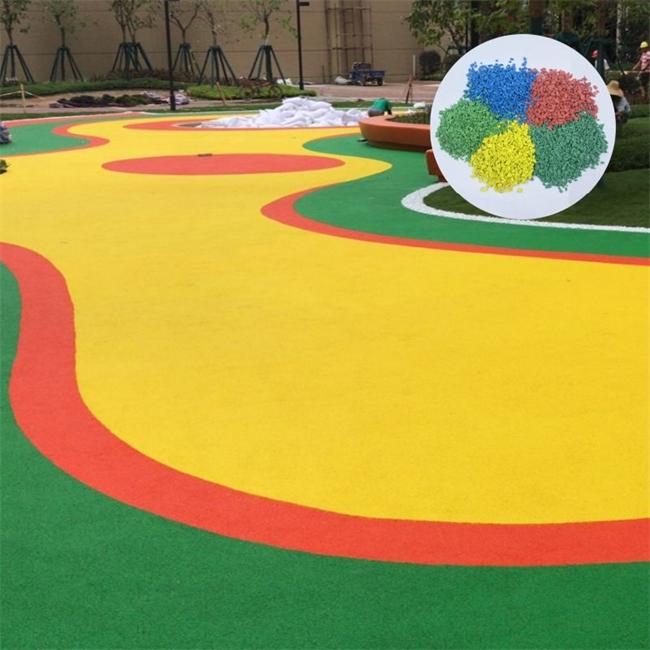
How to Choose the Right EPDM Top Layer Granules
Select the Correct granule Size
granule size directly affects the surface texture, slip resistance, and application method. For most playground and running track top layers, 1–3 mm or 2–4 mm granules are the standard choices. Here is a breakdown of common selections:
- The 0.5–1.5 mm range is typically specified for spray coating applications and fine-textured top layers where a smooth finish is desired.
- The 1–3 mm range is the most versatile option, serving as the standard top layer for general playgrounds and sports surfaces.
- The 2–4 mm range is preferred for heavy-duty surfacing, base layer integration, and high-traffic areas that require extra durability.
- The 3–5 mm range is often used for thick wearing courses on professional tracks and high-impact zones.
Assess EPDM Rubber Content
EPDM content varies by quality—from 10% to 33% or more. Higher rubber content generally means better elasticity and durability. For top-layer performance, a minimum of 13% to 15% EPDM content is recommended for playground applications, while high-performance tracks may require higher levels for optimal athlete feedback and resilience.
Verify UV Stability
Always ask: "How long will these granules retain their color?" A reliable manufacturer will provide UV testing data and quantify expected color retention, typically guaranteeing 8+ years of color stability under normal climatic conditions.
Check Tensile Strength & Elongation
EPDM granules, when bonded with PU, must achieve minimum tensile strength values. For playground surfacing, a tensile strength of at least 0.4 MPa and elongation of at least 40% are typical industry standards. For professional athletic tracks, however, the requirements are significantly higher, with expectations often reaching tensile strength of 2.2 MPa or above and elongation of 160% or more to withstand rigorous use.
Request Independent Test Reports
Ask for third-party test reports, such as those from SGS, verifying PAH content, heavy metal safety, and physical performance. Compliance with standards like EN 1177 (playground safety), EN 71/3 (children's toy safety), and IAAF (track performance) demonstrates a manufacturer's commitment to quality and safety.

Technical Specifications to Confirm
When evaluating suppliers, verify these critical parameters to ensure material compliance and project longevity:
- Color fastness should have a proven UV stability rating, typically measured against the Blue Wool Scale or Gray Scale, with a rating of 3 to 5 indicating good to excellent resistance.
- Bulk density generally falls within the range of 650 to 750 kg per cubic meter, which ensures good coverage efficiency and economical shipping costs.
- Tensile strength must meet project requirements, with a minimum of 0.4 MPa for playground safety surfaces and a higher threshold of 2.2 MPa for professional running tracks.
- Elongation at break should be at least 40% for general playground applications, while professional sports surfaces demand elongation of 160% or more to maintain integrity under dynamic loads.
- Compression set should be 15% or less, ensuring the surface retains its shape and shock-absorbing properties after repeated impact.
- Chemical safety is non-negotiable; the product must be free from PAHs and heavy metals such as lead, cadmium, chromium, and mercury.

Why Global Buyers Choose Our EPDM Granules
As a specialized manufacturer with 25+ years of experience, we offer what many generalist suppliers cannot: technical precision, full customization, and uncompromising quality control.
Our Core Advantages:
- No sulfur in formulation – Our patented sulfur-free technology eliminates unpleasant odors, even under high heat and UV exposure. This also creates a more stable molecular structure, extending product lifespan by over 3 times compared to traditional EPDM.
- Superior physical properties – Tensile strength reaches between 4 and 7 MPa, which is 2 to 3 times higher than industry averages, with corresponding increases in elasticity and elongation. Performance retention improves over 5 times, meaning your surface stays safer and looks better for longer.
- UV-stable, fade-resistant colors – We use premium inorganic pigments that keep colors vibrant for years, even in intense sunlight. Our granules are engineered to resist oxidation and yellowing, maintaining the aesthetic appeal of your project.
- Food-grade environmental safety – Our sulfur-free process meets food-grade hygiene standards, making our granules completely safe for children's playgrounds, schools, and kindergartens worldwide.
- Exceptional coverage efficiency – Low bulk density combined with strong angular granule shape provides high yield per ton and superior mechanical interlocking with PU binders, reducing material waste and improving installation efficiency.
- Zero MOQ and full customization – Need a specific RAL or Pantone color? A custom granule size for a unique project? A private label packaging solution? We deliver. We have no minimum order quantity, supporting projects from small school playgrounds to major municipal contracts.
- Global export experience – We ship to Europe, North America, Australia, the Middle East, and beyond, with flexible options for full containers or LCL (Less than Container Load). We provide TDS, MSDS, and all required certification documentation for smooth customs clearance.
Manufacturer Insights: Professional Advice from the Factory Surface
With decades of EPDM production experience, here are our top recommendations:
Choose granule Size Based on Traffic & Purpose
The 1–3 mm range is the "sweet spot" for most playgrounds and general sports surfaces, offering an excellent balance of texture, drainage, and cost-effectiveness. The 2–4 mm range is preferred for heavy-use areas and thicker systems where extra durability is required. For spray applications or when a smoother, more uniform finish is desired, the 0.5–1.5 mm range is the best choice.
Consider Custom Colors for Brand Identity
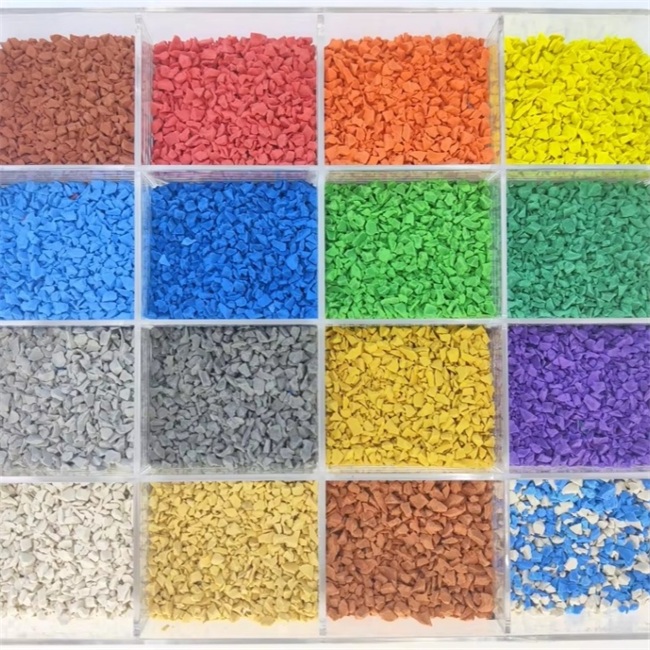
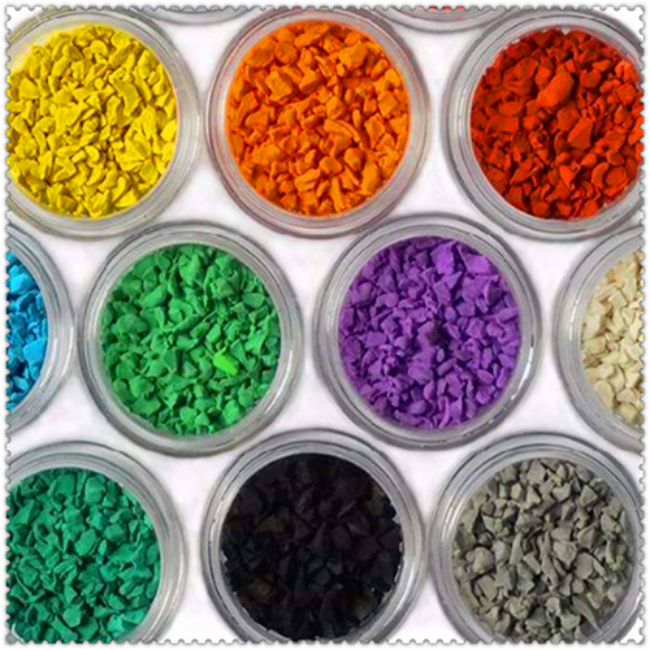
Many sports facilities, schools, and municipalities require specific brand colors or architectural schemes. We offer RAL, Pantone, and custom color matching to ensure your project looks exactly as designed, enhancing visual appeal and brand recognition.
Control Costs Without Sacrificing Quality
For non-critical infill or lower layers, SBR granules may be sufficient to save costs. We recommend saving your budget for premium EPDM on the top layer where appearance and UV resistance matter most. Additionally, ordering full-container quantities when possible can reduce logistics costs, but we support LCL with no MOQ for your convenience.
Confirm These Certifications for Compliance
Before finalizing a purchase, ask the manufacturer for a Material Safety Data Sheet (MSDS), a Technical Data Sheet (TDS) with physical properties, and third-party test reports verifying compliance with SGS, REACH, PAH, and EN71/3 standards. A reputable manufacturer will provide these documents promptly and without hesitation.
Frequently Asked Questions (FAQ)
Q1: What size EPDM granules should I choose for a playground?
A: For most playground wet pour systems, 1–3 mm or 2–4 mm granules are recommended. Smaller sizes in the 0.5–1.5 mm range are used for spray coatings, while larger 2–4 mm granules suit heavy-duty surfaces and high-traffic zones.
Q2: Can EPDM granules fade in sunlight?
A: Quality EPDM with UV-stable pigments resists fading for 8 years or more under normal conditions. Cheaper granules with inferior pigments may begin to fade within 2 to 3 years, so it is crucial to verify UV stability before purchase.
Q3: How long does an EPDM surfacing system last?
A: With proper installation and routine maintenance, an EPDM top layer can last between 10 and 15 years or even longer. Regular cleaning and occasional professional inspections significantly extend the service life.
Q4: What is the difference between EPDM and SBR granules?
A: EPDM is a virgin synthetic rubber with superior UV, weather, and color stability, making it ideal for the top layer. SBR is a recycled rubber that is cost-effective for lower shock pad layers but fades and chalks quickly when exposed to sunlight.
Q5: Do you offer custom colors?
A: Yes. We fully support RAL, Pantone, and customer-supplied sample color matching. We also produce custom blends and multicolor combinations to meet unique design requirements.
Q6: What certifications do your EPDM granules have?
A: Our granules comply with international standards including EN71/3 for children's toy safety, REACH for chemical safety, and rigorous PAH testing. We also meet relevant playground and track performance standards. We provide TDS and MSDS for every order.
Q7: How much PU binder do I need per square meter?
A: Binder requirement depends on granule size and application. Typical ratios are 4:1 to 6:1 by weight of EPDM granules to PU binder. For a 10 to 13 mm thick top layer, you can expect to use approximately 0.8 to 1.2 kg of PU binder per square meter. Always follow the specific binder manufacturer's guidelines for best results.
Q8: Can I install EPDM granules in cold weather?
A: Construction is recommended at temperatures between 10°C and 35°C with relative humidity below 80%. At lower temperatures, binder curing slows significantly and adhesion may be compromised, potentially leading to surface failure.
Q9: Do you offer private labeling or OEM packaging?
A: Yes. We support OEM, ODM, and private label solutions. We can customize packaging—from 25 kg bags to bulk containers—with your brand design and specifications.
Q10: What is your minimum order quantity?
A: We have no MOQ. Whether you need a sample quantity for testing, a partial container, or a full 40-foot container, we can accommodate your specific requirements with flexible shipping options.
Selecting the right EPDM top layer granules is a decision that impacts safety, aesthetics, and long-term project costs. By understanding granule size selection, UV stability requirements, and the importance of virgin material quality, you can avoid common pitfalls—color fading, granule loss, and premature surface degradation.
As a dedicated manufacturer with 25+ years of experience and a patented sulfur-free technology advantage, we provide the technical expertise, customization capabilities, and quality assurance that global contractors, importers, and government buyers rely on. From custom colors and granule sizes to private labeling and flexible shipping, we are equipped to support projects of any scale.
Ready to discuss your project? Contact us for samples, TDS/MSDS, and a quote tailored to your specifications.

WOW(LYG) New Material Co Ltd is a manufacturer specializing in the production of EPDM rubber granules. We use sulfur-free vulcanization technology, it increases the service life by more than 3 times than traditional EPDM granules, and enhances the performance, including anti-aging, high-temperature resistance, and colorfastness.
We have over 25 years of production experience and offer customization for colors and granule sizes. NO MOQ.


