 注: 建议图片大小150px*50px
丨
注: 建议图片大小150px*50px 


If you are a playground contractor, sports flooring installer, or municipal project manager, you have likely encountered the specification "grey EPDM granules" on a project bill of materials. But what exactly distinguishes grey EPDM granules from other colors, and why does it matter for your application?
As an experienced manufacturer and exporter of EPDM colored rubber granules, we have supplied grey EPDM granules to projects ranging from school playgrounds in Europe to splash pads in Australia. This article provides a comprehensive overview of grey EPDM granules—their technical specifications, primary applications, and critical considerations for procurement—to help you make informed decisions for your next project.
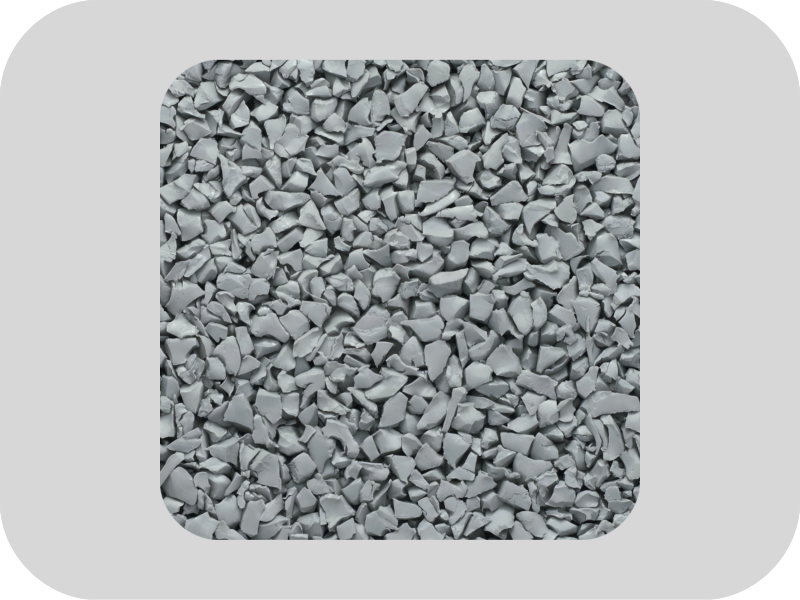
What Is Grey EPDM Granules?
EPDM (Ethylene Propylene Diene Monomer) granules are high-performance rubber granules manufactured through a vulcanization process that cross-links the polymer chains. Grey EPDM granules refer specifically to the grey color variant of these granules, formulated with specialized pigments and UV stabilizers to achieve the desired shade and lightfastness.
Unlike SBR (Styrene-Butadiene Rubber) granules, which are typically black and derived from recycled tires, EPDM granules are manufactured from virgin rubber compounds. This gives them superior UV resistance, color retention, and mechanical properties that make them the preferred choice for outdoor surfacing applications.
Key Characteristics
- Color: Grey, available in various shades such as Light Grey, Middle Grey (RAL 7037), and Dark Grey (RAL 7011)
- granule Shape: Angular or cubic, mechanically cut for optimal interlocking and drainage
- Density: Loose density approximately 575–670 g/liter, with packed density around 760 g/liter
- Hardness: Shore A 60–65 ± 5
- Tensile Strength: ≥ 6.0 MPa
- EPDM Content: Typically greater than 20% elastomer content

Common Applications
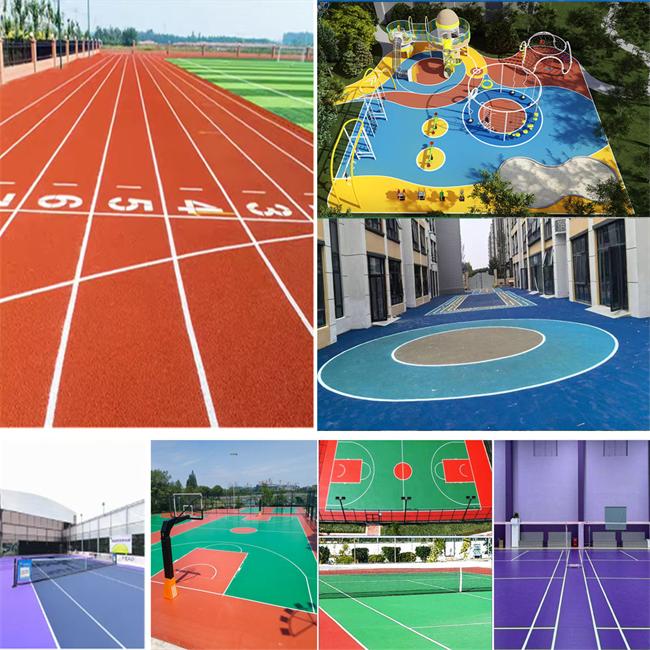
Grey EPDM granules are versatile and appear across numerous surfacing applications.
1. Wet Pour Playground Surfacing
Grey EPDM granules are commonly used as the top wearing layer in Poured-in-Place (PIP) rubber surfacing systems. The grey color provides a neutral, professional aesthetic that complements surrounding landscape elements. Key benefits include shock absorption and fall protection (critical for playground safety), a slip-resistant surface, and antibacterial properties, making them ideal for schools and kindergartens.
2. Running Tracks and Sports Surfaces
Grey granules are frequently specified for running tracks and multi-sport surfaces, particularly for top-layer decorative surfaces, base layers beneath colored top coatings, and professional athletic tracks that meet IAAF and FIFA standards. Technical data shows that EPDM granules for these applications typically require tensile strength of 6 MPa and elongation at break exceeding 600%.
3. Safety Surfacing for Commercial Projects
Municipal parks, commercial plazas, and public spaces increasingly specify grey EPDM granules for their all-weather durability (resistant to temperature extremes from hot to cold), low maintenance requirements, and aesthetic neutrality.
4. Splash Pads and Pool Surrounds
Grey EPDM granules are chlorine and bleach resistant, making them well-suited for water play areas. The light color also helps keep surfaces cooler under direct sun exposure.
5. Artificial Grass Infill
In certain applications, grey EPDM granules serve as infill material for synthetic turf systems, providing drainage layer support, weight stabilization, and UV-resistant performance.
Benefits of Grey EPDM Granules
Understanding why grey is specified can help you make better product selections.
UV Stability and Color Retention
One of the most significant concerns for outdoor installations is color fading. High-quality EPDM granules retain color even under prolonged UV exposure. Independent testing reports show grey EPDM achieving Grey Scale ratings of 4 to 5 under EN 14836 artificial weathering standards, indicating minimal color change. This contrasts sharply with SBR granules, which exhibit significant color degradation and fading when exposed to sunlight.
Thermal Performance
Light grey shades help reduce surface temperature compared to darker colors, making them safer and more comfortable in warm climates. The material remains flexible across a wide temperature range, resisting cracking and deformation.
Environmental Compliance
Quality grey EPDM granules comply with major international standards including EN 71-3 (Toy Safety — migration of certain elements), REACH compliance (EU chemical regulations), PAH limits under the German Product Safety Act, and VOC emissions as per ASTM D5116.
Technical Specifications: What to Look For
When procuring grey EPDM granules, these technical parameters matter most.
Granule Size
Different granule size ranges serve different applications:
- 0.5 to 1.5 mm granules are typically used for thin-layer applications and artificial grass infill.
- 1 to 3 mm granules are the standard choice for playground wearing courses and sports surfaces.
- 1 to 4 mm granules are suitable for multi-purpose surfacing and poured-in-place systems.
- 2 to 4 mm granules are commonly specified for running track top layers.
- 3 to 5 mm granules are used for base layers and high-drainage applications.
The granule shape—angular versus spherical—also influences performance. Angular granules provide better interlocking and drainage, while cubic shapes offer improved wear resistance.
EPDM Content
The percentage of EPDM elastomer in the granule directly affects durability, elasticity, and UV resistance. Typical EPDM content ranges from 20% to 40%, depending on the grade and application.
Apparent Density
Lower density translates to better coverage, meaning more square meters per kilogram. Quality grey EPDM granules typically achieve apparent densities of 575 to 670 grams per liter.
Binder Compatibility
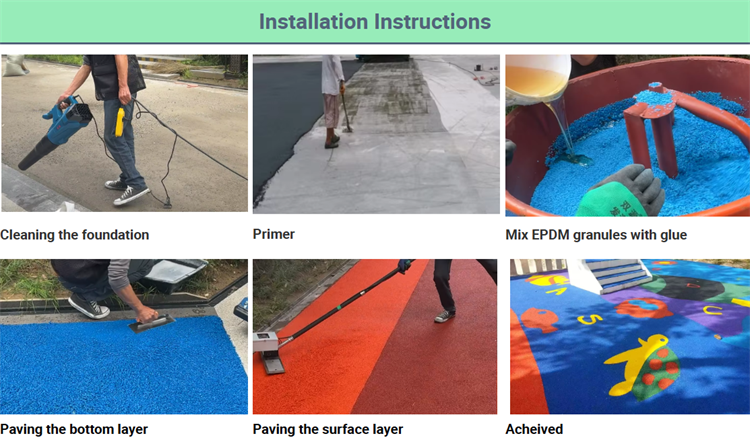
A critical but often overlooked factor: grey EPDM granules require compatible polyurethane binders. For grey color shades, both aromatic and aliphatic resins can be used. However, for light and medium grey shades, aliphatic binders are strongly recommended because they resist yellowing under UV exposure.

Common Challenges and How to Avoid Them
Challenge 1: Color Inconsistency
The problem: Different batches of grey granules showing noticeable shade variations.
The solution: Work with manufacturers who use automated color measurement systems (such as spectrophotometers), maintain strict pigment-to-polymer ratios, and produce granules from continuous, controlled processes rather than intermittent batches.
Challenge 2: Binder Yellowing
The problem: The grey surface develops a yellowish tint after 6 to 12 months of outdoor exposure.
The solution: Ensure compatibility between granules and binder. For grey shades, specify aliphatic (UV-stable) binders rather than aromatic binders, which are prone to the yellowing effect.
Challenge 3: Delamination or Premature Wear
The problem: The granule surface separates from the binder or shows rapid wear.
The solution: Check that tensile strength exceeds 6.0 MPa, elongation at break exceeds 600%, and that the granules are manufactured with peroxide curing rather than sulfur curing for improved oxidative resistance.
Challenge 4: Dust Contamination
The problem: Excessive dust affects binder adhesion and aesthetics.
The solution: Purchase from manufacturers who implement multi-stage dust removal during production. Quality suppliers test for dust content at each stage of processing.
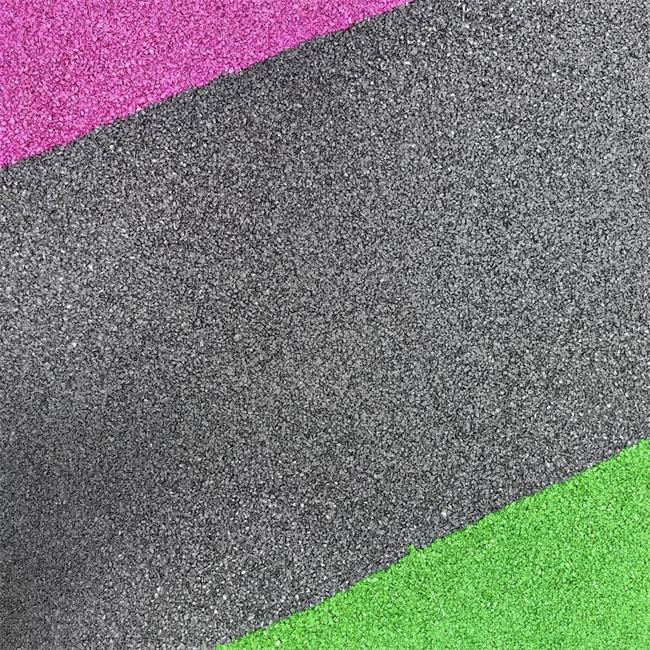
How to Choose the Right Grey EPDM Granules
Step 1: Define Your Application
Different applications demand different specifications. For playground safety surfacing (top layer), you should prioritize UV stability and EN 1177 compliance with a 1 to 3 mm size. For running track top layers, focus on tensile strength and abrasion resistance with a 2 to 4 mm size. Artificial grass infill requires careful attention to density and drainage characteristics with a 0.5 to 1.5 mm size. For base layer applications such as shock pads, elasticity and compression set are the priority with a 3 to 5 mm size.
Step 2: Verify Technical Compliance
Request and review the Technical Data Sheet (TDS), Material Safety Data Sheet (MSDS), and third-party test reports covering UV aging, PAH, REACH, and EN 71-3 compliance.
Step 3: Assess Supplier Capabilities
Evaluate whether the supplier has in-house color customization using RAL or Pantone matching, can provide consistent color across production batches, offers flexible packaging options (such as 25 kg bags, big bags, or custom packaging), and has adequate production capacity and reasonable lead times.
Step 4: Request Samples
Before finalizing large orders, request production samples to verify color match to specification, granule size distribution, dust content, and compatibility with your chosen binder system.

Manufacturer Insights: Expert Advice from the Production Floor
With over 25 years of EPDM manufacturing experience, we offer these practical recommendations for procurement professionals and contractors.
On Color Selection
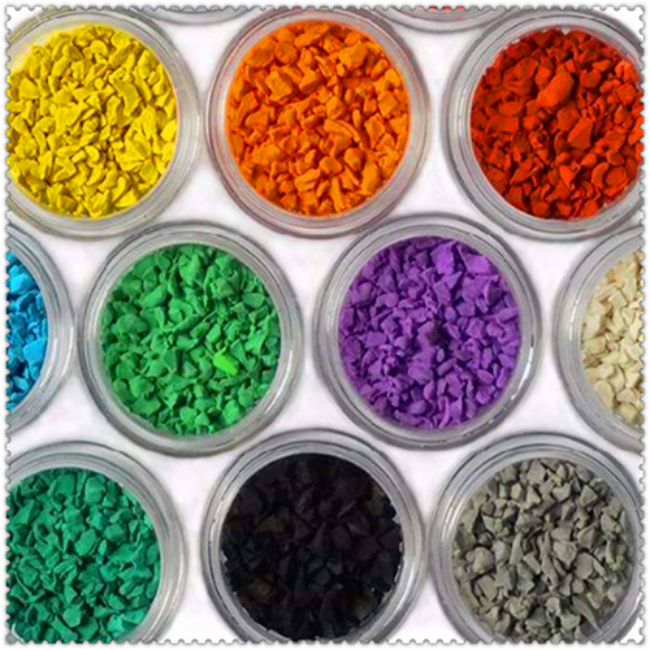
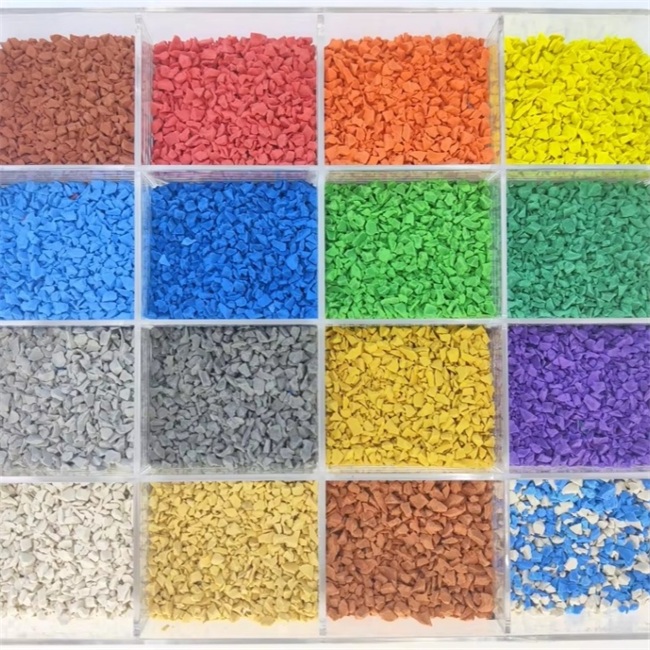
Grey is not a single color. The grey spectrum ranges from light stone to charcoal. For projects requiring exact matching, provide a physical sample or RAL/Pantone reference. We support custom color matching to ensure your project achieves its intended aesthetic.
On granule Size Selection
Selecting the wrong granule size is one of the most common and costly errors we see. For a 10 to 12 mm poured-in-place surface, 1 to 3 mm or 1 to 4 mm granules are typically specified. Larger granules create a more textured finish with better drainage but may be less comfortable for barefoot play areas. Always consult your binder manufacturer's recommendation—some binders have minimum or maximum granule size compatibility.
On Cost Optimization
We regularly help clients balance cost and performance. Higher EPDM content (30% or more) provides better UV resistance and durability but increases material cost. For moderate-traffic applications where budget is constrained, 20 to 22% EPDM content may be sufficient. We offer custom formulations to match your specific performance requirements and budget.
On Certification Requirements
Different markets require different certifications. European projects typically require EN 71-3 and REACH compliance. FIFA and World Rugby standards apply to sports surfaces. Confirm certification requirements with your client before finalizing specification.
On Quality Verification
We recommend new buyers verify three things before committing to a long-term supply relationship: color consistency across at least three different production batches, UV stability through third-party testing (a Grey Scale rating of 4 or higher is excellent), and mechanical properties (tensile strength of 6.0 MPa or higher, elongation of 600% or higher).
Why Global Buyers Choose Our EPDM Granules
As a specialized EPDM rubber granules manufacturer with global export experience, we understand the technical and logistical requirements of international projects.
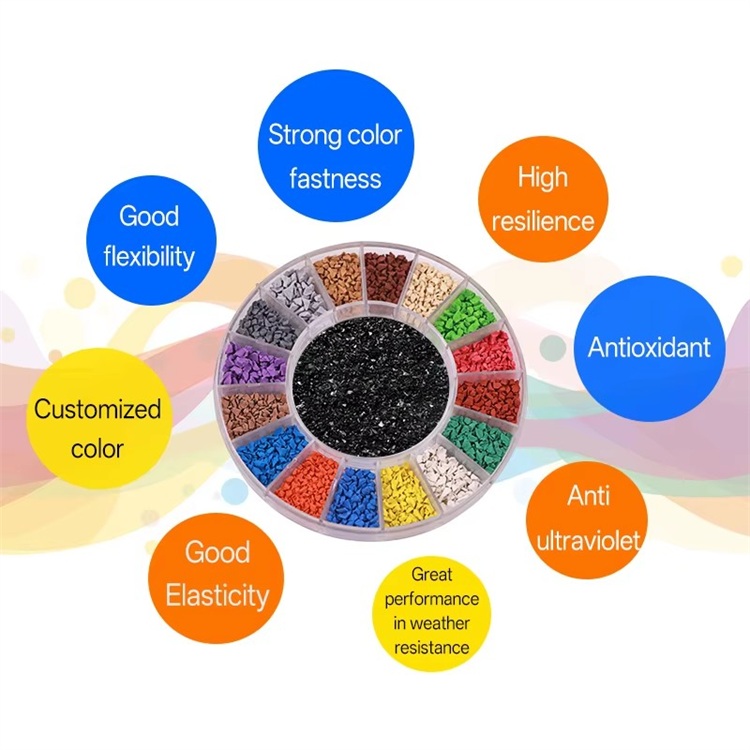
Our pure EPDM formulation uses sulfur-free production technology, which eliminates the unpleasant odors associated with sulfur-cured granules while delivering superior molecular stability and UV resistance. This results in exceptional mechanical properties—our granules achieve tensile strength of 4 to 7 MPa and up to three times better elasticity compared to standard EPDM formulations.
Our advanced pigment dispersion technology and UV stabilizers ensure exceptional long-term color retention. We offer full customization including RAL color matching, Pantone color matching, custom colors, and flexible granule sizes ranging from 0.5 to 1.5 mm, 1 to 3 mm, 1 to 4 mm, 2 to 4 mm, and other custom specifications.
We provide flexible ordering with no minimum order quantity. We support both full container loads (FCL) and less-than-container loads (LCL). Our global shipping experience covers Europe, North America, Australia, the Middle East, and other international markets.
Frequently Asked Questions
What size grey EPDM granules should I choose for a playground safety surface?
For a poured-in-place playground top layer, 1 to 3 mm or 1 to 4 mm granules are typical. The specific size affects texture, drainage, and impact absorption. A larger size such as 2 to 4 mm provides more texture but may be less comfortable for barefoot use.
How do I prevent grey EPDM granules from fading over time?
Choose high-quality granules with adequate UV stabilizers and EPDM content above 20%. Also, ensure compatibility with an aliphatic (UV-stable) polyurethane binder to prevent yellowing.
Does EPDM develop odors over time?
Low-quality, sulfur-cured EPDM can develop odors when exposed to heat and UV. Our sulfur-free formulation ensures no unpleasant odors, even under extreme weather conditions.
How much PU binder do I need for installation?
Binder consumption varies by granule size and application. For a typical 1 to 3 mm granule, approximately 20 to 25% binder by weight is common. Always refer to your binder manufacturer's recommendations.
How long does EPDM last?
Quality EPDM granules, when properly installed and maintained, can last 15 to 20 years or longer. Our sulfur-free formulation significantly extends service life compared to conventional EPDM.
Do you offer custom color matching for grey shades?
Yes. We support custom color matching using RAL and Pantone references, or we can match your physical sample.
What is the difference between sulfur-cured and peroxide-cured EPDM?
Peroxide-cured EPDM offers superior oxidative resistance, better color stability, and higher mechanical strength. Sulfur-cured EPDM may develop odors and has a shorter service life under UV exposure. Our sulfur-free peroxide curing system provides superior performance.
Grey EPDM granules are a technically sophisticated surfacing material with specific performance characteristics that make them ideal for playgrounds, sports surfaces, and commercial installations. Success with this material depends on selecting the right granule size, ensuring UV stability, verifying binder compatibility, and working with a manufacturer who understands the technical requirements of your application.
For contractors and procurement professionals, taking the time to verify product specifications, request samples, and understand the full technical data ensures project success and long-term surface durability.
Whether you need a standard grey shade or a custom color match, require flexible packaging, or have specific certification requirements, we invite you to contact us with your project specifications. We can provide samples, TDS, MSDS, and technical support to help you select the optimal EPDM granules for your application.

WOW(LYG) New Material Co Ltd is a manufacturer specializing in the production of EPDM rubber granules. We use sulfur-free vulcanization technology, it increases the service life by more than 3 times than traditional EPDM granules, and enhances the performance, including anti-aging, high-temperature resistance, and colorfastness.
We have over 25 years of production experience and offer customization for colors and granule sizes. NO MOQ.


