 注: 建议图片大小150px*50px
丨
注: 建议图片大小150px*50px 


Rubber Safety Surface: EPDM Granules for Playgrounds & Tracks
When specifying materials for playgrounds, running tracks, or sports surfacing, the choice of rubber safety surface material directly impacts not only user safety but also project longevity, maintenance costs, and overall performance. For contractors, engineers, and procurement professionals, selecting the right EPDM rubber granules can be the difference between a project that performs flawlessly for a decade and one that shows signs of failure within months.
This guide provides comprehensive, practical information about EPDM rubber safety surfacing—from material selection and technical specifications to procurement strategies and quality verification. Whether you are a playground contractor bidding on a municipal project, an engineer specifying materials for a school renovation, or an importer sourcing for distribution, this guide is designed to help you make informed decisions that protect your investment and reputation.

What Is a Rubber Safety Surface?
Rubber safety surface refers to impact-absorbing surfacing systems made from synthetic rubber materials, typically installed over concrete or asphalt bases. Among the various options available, poured in place rubber (PIP) systems using EPDM rubber granules are widely regarded as the premium choice for outdoor applications requiring both safety and durability.
The Key Component: EPDM Rubber Granules
EPDM (Ethylene Propylene Diene Monomer) is a synthetic rubber known for its exceptional resistance to weathering, UV radiation, ozone, and extreme temperatures. When processed into colored granules and bound with polyurethane resin, EPDM creates seamless, permeable safety surfaces that:
- Reduce impact forces to prevent serious injuries from falls
- Provide excellent traction even in wet conditions
- Maintain color stability for years of outdoor exposure
- Drain water efficiently through the porous structure
- Remain resilient across wide temperature ranges
Critical Distinction: EPDM vs. SBR Rubber
Many buyers mistakenly assume all rubber granules are the same. This is one of the most costly errors in playground surfacing procurement. SBR (Styrene-Butadiene Rubber) granules are made from recycled tires and are significantly less durable, particularly in outdoor applications. SBR contains sulfur compounds that degrade under UV exposure, causing:
- Premature hardening and cracking
- Accelerated color fading
- Unpleasant odors from sulfur outgassing
- Reduced impact absorption within 2-3 years
Quality wet pour EPDM rubber granules, in contrast, are manufactured using virgin EPDM polymer with sulfur-free vulcanization technology. This fundamental difference in chemistry explains why EPDM safety surfaces typically last 8-10 years or more, while SBR-based systems often require replacement after just 3-5 years.
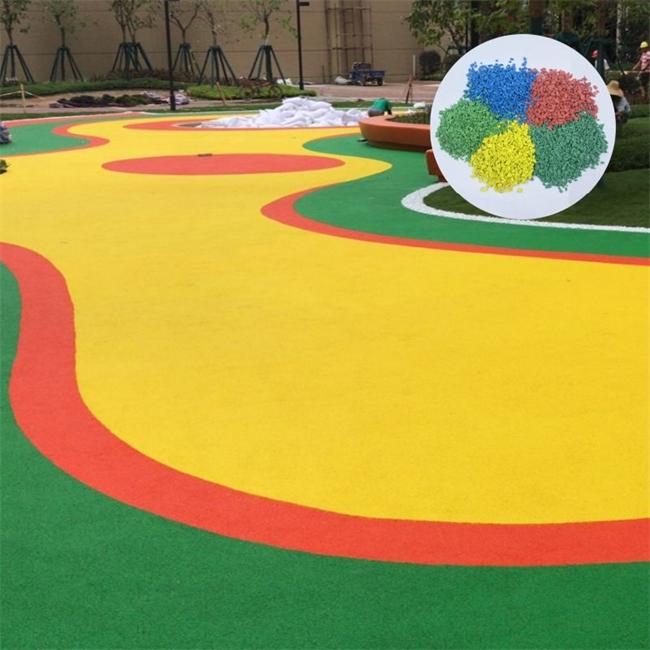
Applications of EPDM Rubber Safety Surfacing
Understanding where and how EPDM granules for playground applications are used helps contractors and buyers select appropriate specifications for each project type:
1. Playgrounds & Schools
- Wet pour playground surfacing beneath swings, slides, and climbing structures
- Critical fall height protection (typically 1.5–3.0 meters)
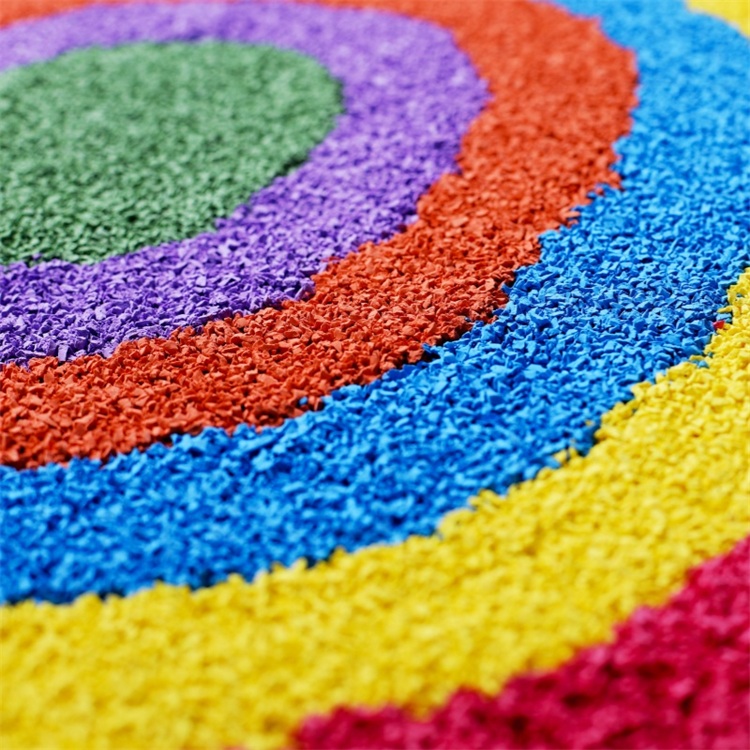
- Colorful patterns for wayfinding and designated play zones
- Safety surfacing meeting EN 1177 or ASTM F1292 standards
2. Running Tracks
- Running track EPDM top layers for athletic facilities
- 13mm-15mm thickness with precisely engineered shock absorption
- IAAF-certified track surfaces for competitive venues
3. Sports Surfacing
- Multi-sport courts and recreational facilities
- Tennis courts, basketball courts, and fitness zones
- Shock-absorbing surfaces to reduce joint stress
4. Commercial & Municipal Projects
- Poured in place rubber for public parks
- Outdoor rubber surfacing around water features
- Walking paths and recreational areas in retirement communities
- Splash pads requiring exceptional slip resistance
- Kindergartens and daycare centers
5. Landscape & Architectural Projects
- Decorative pathways integrating with landscape design
- ADA-compliant accessible routes
- Rooftop terraces and urban playgrounds
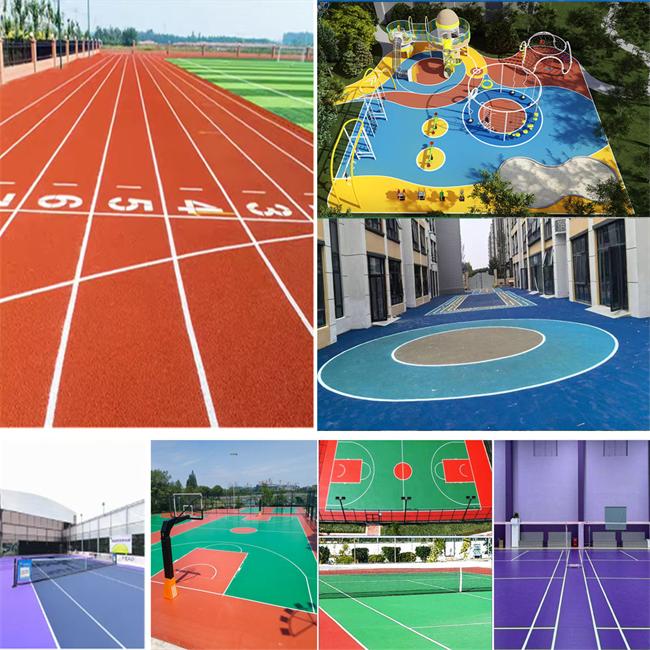
Benefits of Quality EPDM Safety Surfacing
Choosing high-grade EPDM rubber safety surface materials delivers measurable advantages over lower-cost alternatives:
Impact Absorption & Fall Protection
EPDM safety surfacing significantly reduces the risk of injury from falls—a primary concern for any playground or sports facility. A properly installed 40mm-50mm EPDM system can provide critical fall height protection of 2.5-3.0 meters.
Color Stability & UV Resistance
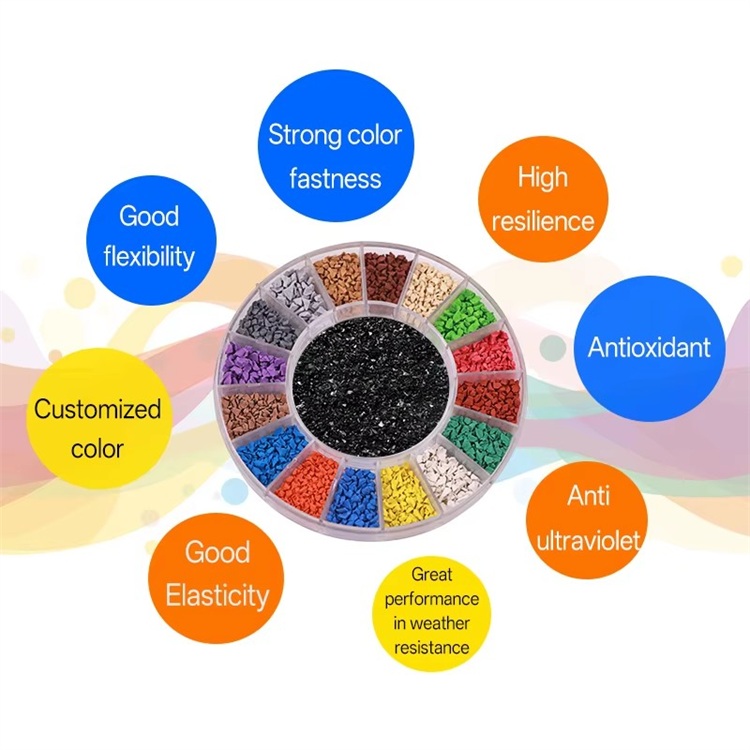
High-quality EPDM granules resist UV degradation, meaning colors remain vibrant for years. Poor-quality granules fade within months of installation, particularly in high-sunlight regions like Australia, the Middle East, and Southern Europe.
Weather Resistance
EPDM remains flexible and resilient in temperatures ranging from -40°C to +80°C. It withstands freeze-thaw cycles, heavy rain, and intense heat without cracking or losing performance.
Permeability & Drainage
The porous nature of PIP rubber systems allows water to drain through, eliminating puddles and reducing slip hazards. This also extends the lifespan of the substrate beneath.
Low Maintenance
Properly installed EPDM safety surfaces require minimal maintenance—typically just occasional cleaning and spot repairs—making them cost-effective over their service life.
Environmental Credentials
Virgin EPDM granules contain no heavy metals, sulfur compounds, or toxic plasticizers, making them safe for use in children's play areas. The sulfur-free manufacturing process also eliminates the risk of sulfuric acid outgassing, which can cause unpleasant odors and surface degradation.
Common Challenges in Rubber Safety Surfacing Projects
Based on our experience working with contractors and engineers across Europe, North America, Australia, and the Middle East, the following challenges consistently emerge as the most critical concerns:
1. Color Inconsistency
Color matching between batches can be a significant issue, particularly with custom colors. Even slight variations become highly visible on large surfaces, leading to rejection and rework.
2. Fading & UV Degradation
Many buyers discover too late that their "colorfast" granules lose vibrancy within 6-12 months of installation. This happens primarily because:
- The pigment formulation lacks UV stabilizers
- The EPDM polymer contains low-grade fillers
- The curing process was inadequate
3. Bonding Failure Between Layers
When the top EPDM layer separates from the rubber base layer or substrate, the surface fails. This is often caused by:
- Incompatible binder/EPDM combinations
- Moisture at the time of application
- Insufficient binder-to-granule ratio
4. Overly Hard or Soft Surfaces
If the EPDM granule size is too large or too small for the application, or if the binder ratio is incorrect, the finished surface may be too hard (reducing impact absorption) or too soft (causing rapid wear).
5. Cost Overruns from Inefficient Installation
Contractors often waste 10-15% of material due to poor estimating, improper mixing, or inconsistent application techniques. This directly cuts into profit margins.
6. Supply Chain Disruptions
Delays in production or shipping, particularly for custom orders, can derail project schedules and incur penalties.
7. Regulatory Compliance Failures
Many buyers fail to verify that the EPDM granules meet ASTM F1292, EN 1177, or other applicable safety standards before installation—and only discover non-compliance during inspection.

How to Choose the Right EPDM Rubber Safety Surface
Making the right selection requires evaluating multiple factors simultaneously:
Step 1: Define the Application & Impact Requirements
- Determine the required critical fall height (per EN 1177 or ASTM F1292)
- Consider expected foot traffic volume and intensity
- Assess weather conditions at the installation site
Step 2: Select the Appropriate granule Size
EPDM granule size directly affects surface texture, drainage, and shock absorption:
- 0.5-1.5mm: Fine-grade granules for top layers, smooth finishes, and detailed color patterns; ideal for decorative surfaces and splash pads
- 1-3mm: Versatile multi-purpose granule for playgrounds, walking paths, and recreational areas with moderate traffic
- 1-4mm: Standard all-purpose size for most playground safety surfacing and track applications
- 2-4mm: Coarser granules for higher-traffic areas, base layers, and sports surfaces requiring greater drainage
Step 3: Evaluate Color Requirements
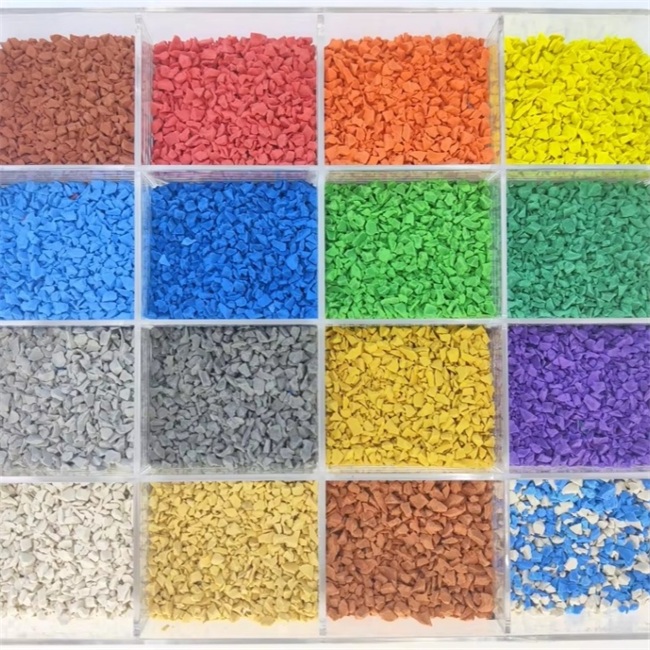
- Standard colors: Cost-effective and readily available
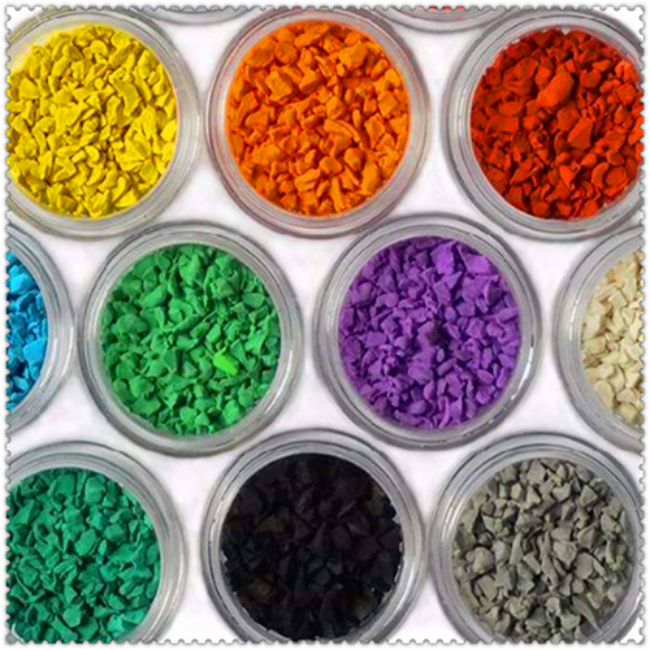
- Custom colors (RAL/Pantone): Ideal for branding or matching existing schemes; requires lead time for production
- Color combinations: Create patterns and zones for designated play areas
- Color consistency: Verify the supplier's ability to match color batch-to-batch
Step 4: Verify Quality Standards
- Request Test Reports for color fastness, UV stability, and tensile strength
- Verify EN 1177, ASTM F1292, or relevant certification
- Ask about the manufacturing process—sulfur-free technology is non-negotiable for durability
Step 5: Calculate Required Quantities
Typical coverage for EPDM safety surfacing:
- For a 10-12mm wear layer, you need approximately 6-8 kg of EPDM granules per square meter
- For base layer applications, about 12-14 kg per square meter of recycled or SBR rubber is required
- Factor in 10-15% waste allowance for on-site installation
Step 6: Assess Supplier Capabilities
- Production capacity: Can the supplier handle your order volume and timeline?
- Customization: Do they offer color matching, packaging options, and private labeling?
- Export experience: Are they familiar with international shipping, documentation, and customs compliance?
- Quality control: Do they have in-house lab testing and traceability systems?

Technical Specifications for EPDM Safety Surfacing
When evaluating EPDM granules, the following technical parameters are essential:
Granule Density
High-quality virgin EPDM granules have a lower bulk density (approximately 0.55-0.65 g/cm³) compared to recycled or filled granules. Lower density translates to:
- Better elasticity
- Reduced material consumption per square meter
- More efficient shipping (more volume per kilogram)
Tensile Strength
Quality EPDM granules should achieve tensile strength of 4-7 MPa—significantly higher than industry average. Higher tensile strength means:
- Greater resistance to tearing and wear
- Superior mechanical bonding with PU binder
- Extended service life
Elongation at Break
A minimum of 300-400% elongation indicates excellent elasticity and flexibility, critical for impact absorption and freeze-thaw resistance.
Color Fastness
Tested at 6-8 on the blue wool scale (ISO 105-B02) for UV resistance. Granules with lower ratings will fade significantly within 18-24 months.
Heat Aging Resistance
After 72 hours at 70°C, quality EPDM maintains 85%+ of original tensile strength. Inferior products degrade rapidly at elevated temperatures.
Ozone Resistance
No cracking after 200 hours at 50°C and 50 pphm ozone concentration—critical for long-term outdoor performance.
Sulfur-Free Technology
Sulfur compounds are the leading cause of EPDM degradation. Our sulfur-free manufacturing process ensures:
- Elimination of sulfuric acid outgassing (no odor)
- Molecular stability 3x greater than conventional EPDM
- Performance retention 5x longer than sulfur-cured alternatives
- Food-grade safety standards (no harmful decomposition byproducts)
How to Avoid Common Procurement Mistakes
Mistake 1: Buying Based on Price Alone
The cheapest EPDM granules are typically made with high filler content, recycled materials, or conventional sulfur-based curing. The short-term savings are far outweighed by:
- Early replacement costs (3-5 years vs. 10+ years)
- Reputation damage from fading surfaces
- Loss of future business
Mistake 2: Not Requesting Test Reports Before Ordering
Always request:
- TDS (Technical Data Sheet)
- MSDS (Material Safety Data Sheet)
- UV stability test reports
- Tensile and elongation test results
- Ozone and heat aging test data
Mistake 3: Ordering Insufficient Material
Under-ordering is common when contractors underestimate waste or thickness requirements. Always order 10-15% additional material for:
- On-site mixing losses
- Edge trimming and fitting
- Repairs and touch-ups
Mistake 4: Ignoring Binder Compatibility
Not all binders work well with all EPDM granules. We recommend:
- Using aliphatic PU binders for maximum UV resistance
- Verifying compatibility testing before full-scale application
- Consulting with the EPDM manufacturer for recommended binder types
Mistake 5: Failing to Plan for Custom Lead Times
If you require custom colors (RAL, Pantone, or customer-supplied samples), factor in 2-4 weeks for color matching and production. Last-minute orders often require expensive air freight or compromise on color accuracy.

Manufacturer Insights: Expert Guidance from the Production Surface
With over two decades of EPDM manufacturing experience, we offer the following insights to help buyers, contractors, and engineers make better decisions:
On Selecting granule Size
The choice of granule size should be driven by two factors: desired surface texture and required impact absorption. Finer granules (0.5-1.5mm) create smoother, more visually detailed surfaces but may reduce permeability. Coarser granules (2-4mm) offer better drainage and are more forgiving of substrate imperfections. For most playground applications, 1-3mm or 1-4mm provides the optimal balance of aesthetics, safety, and drainage. For running tracks, use 1-3mm for top layers and 2-4mm for base layers.
On Color Customization
Custom colors are not just about aesthetics—they're about branding, safety (visible zones), and regulatory compliance. We recommend custom color matching for:
- Projects with specific branding or architectural requirements
- Municipal projects requiring consistent color across multiple phases or sites
- International buyers sourcing for distributors with proprietary color requirements
- When standard color options do not meet design specifications
Standard color matching takes 2-3 weeks; complex or multi-color matches may require 4 weeks. Allow adequate time in your project schedule.
On Minimizing Cost While Maintaining Quality
The most effective cost-control strategies are:
1. Order full container loads (20FT or 40FT): Shipping costs per kilogram are significantly lower.
2. Consolidate multiple projects into single orders: Reduces production setup costs and shipping fees.
3. Order standard colors when possible: Custom colors require additional production time and may involve higher costs.
4. Plan inventory with buffer stock: Emergency reorders are always more expensive due to expedited shipping.
On Quality Verification at Receiving
Before accepting delivery:
1. Take samples from multiple bags to verify color consistency
2. Check granule shape (should be angular with textured surfaces, not smooth spheres)
3. Assess for odor (no sulfur smell indicates quality manufacturing)
4. Request a small field test before full installation
On Building Long-Term Supplier Relationships
The most successful buyers treat their EPDM suppliers as strategic partners rather than one-off vendors. Benefits include:
- Priority production scheduling
- First access to new colors and formulations
- More favorable payment terms
- Shared technical expertise for new applications

Why Global Buyers Choose Our EPDM Granules
As a specialized EPDM manufacturer with 25+ years of industry experience, we have built our reputation by delivering consistent quality, customized solutions, and reliable service to buyers across Europe, North America, Australia, and the Middle East.
Manufactured for Performance, Not Just Appearance
Our EPDM granules are produced using sulfur-free vulcanization technology, a critical differentiator from conventional EPDM. This proprietary process:
- Eliminates odor: No sulfur compounds mean no acidic decomposition products—even under high heat and UV exposure. Our granules are completely odor-free.
- Extends service life 3x: The sulfur-free molecular structure is significantly more stable, resisting degradation from UV, ozone, and thermal cycling.
- Delivers 4-7 MPa tensile strength: 2-3 times higher than industry average, meaning our granules maintain mechanical integrity under heavy traffic and extreme weather.
- Maintains 5x better performance retention: While conventional EPDM loses 30-50% of mechanical properties within 5 years, our sulfur-free granules retain over 85% of original specifications.
- Resists oxidation and fading: Enhanced antioxidant formulation keeps colors vibrant 3-5x longer than standard EPDM.
- Performs in extreme temperatures: Superior heat and cold resistance (-40°C to +80°C)
- Achieves food-grade safety standards: No toxic leachates or outgassing makes our EPDM suitable for children's play areas with the strictest safety requirements.
- Low bulk density: Our granules are lighter (0.55-0.65 g/cm³), reducing material costs per square meter and improving shipping efficiency.
- Angular, textured granule shape: Increases mechanical bonding with PU binders, reducing binder consumption and improving surface durability.
Comprehensive Customization Capabilities
We understand that every project has unique requirements. Our manufacturing flexibility includes:
Colors: We support RAL matching, Pantone matching, and custom color development from customer-supplied samples. We can also produce multi-color blends and combinations.
granule Sizes: Standard and custom sizes available, including 0.5-1.5mm, 1-3mm, 1-4mm, 2-4mm, and specialized specifications per customer requirements.
Packaging: Custom packaging options including branded bags, private labeling (OEM/ODM), and various bag weights to suit project logistics.
Logistics: Flexible shipping arrangements including FCL (full container load) and LCL (less than container load) options, with reliable delivery timelines.
No Minimum Order Quantity (MOQ)
Unlike many manufacturers, we welcome smaller orders for sample verification, trial projects, or urgent small-scale requirements. This flexibility is particularly valued by:
- Contractors testing new product lines
- Distributors entering new markets
- Buyers requiring rapid verification of color and quality before large-scale commitment
- Landscape companies with smaller recurring needs
Quality Control & Documentation
Every production batch undergoes rigorous testing for:
- Color consistency and UV stability
- Tensile strength and elongation
- Bulk density and granule size distribution
- Ozone and heat aging resistance
Global Export Experience
We have successfully delivered EPDM granules to projects in:
- Europe: Scandinavia, Germany, United Kingdom, Italy, and Eastern European markets
- North America: USA, Canada, and Mexico
- Australia & New Zealand: Wide range of playground and sports surfacing projects
- Middle East: UAE, Saudi Arabia, and neighboring markets requiring exceptional UV resistance
- Other international markets: On-demand, with expertise in export documentation and logistics
Frequently Asked Questions
What is the difference between EPDM and SBR rubber granules?
EPDM is a virgin synthetic rubber with superior UV, ozone, and weather resistance. SBR is made from recycled tires and degrades rapidly under outdoor exposure, causing fading, hardening, and odor. For outdoor safety surfacing, EPDM is the professional-grade material; SBR is suitable only for base layers or indoor applications.
Can EPDM rubber safety surfaces fade?
Yes—but only if inferior-quality granules are used. High-quality EPDM with proper UV stabilizers and sulfur-free technology will maintain color integrity for 8-10+ years. When fading occurs within 1-2 years, it indicates either insufficient UV protection, high filler content, or sulfur-based curing.
What granule size should I choose for my project?
Choose based on application:
- 0.5-1.5mm: Fine texture for top layers, decorative patterns, and splash pads
- 1-3mm: All-purpose for playgrounds, walking paths, and general safety surfacing
- 1-4mm: Standard for most sports surfaces and heavy-duty applications
- 2-4mm: Coarse for base layers and high-traffic areas requiring drainage
How much PU binder is required for installation?
Typically, 10-15% binder by weight relative to EPDM granules (approximately 0.8-1.2 kg binder per kg of EPDM). The exact ratio depends on the EPDM granule size, weather conditions, and the specific PU binder formulation. We recommend testing on a small sample area before full application.
How long does a quality EPDM safety surface last?
With proper installation and maintenance, a sulfur-free EPDM safety surface lasts 10-15 years. Conventional EPDM surfaces typically last 5-8 years, while SBR surfaces may require replacement within 3-5 years.
Can you customize colors beyond standard options?
Yes, we support RAL, Pantone, and custom color matching from customer samples. Custom colors typically require 2-4 weeks for color development, formulation, and production. Multi-color blends and combinations are also available.
Is there a minimum order quantity (MOQ)?
No, we have no minimum order quantity. We supply sample quantities for testing and trial installations as well as full container loads for large-scale projects. This flexibility is designed to support buyers at every stage of their project—from initial sample verification to bulk procurement.
How do I verify the quality of EPDM granules before ordering?
We recommend:
1. Requesting samples for physical inspection
2. Reviewing test reports and certifications
3. Performing a small field test with your chosen binder
4. Checking UV stability with a QUV or outdoor exposure test (if applicable)
5. Verifying the manufacturing process—specifically, confirm sulfur-free technology for outdoor applications
Selecting the right rubber safety surface is a critical decision that affects project safety, longevity, cost, and reputation. By understanding the technical properties of EPDM granules—particularly the critical distinction between sulfur-free and conventional EPDM—contractors, engineers, and procurement professionals can avoid costly mistakes and deliver surfaces that perform for a decade or more.
We specialize in manufacturing high-quality, sulfur-free EPDM colored rubber granules for playgrounds, running tracks, sports surfacing, and safety applications worldwide. With no minimum order requirement and full customization across colors, granule sizes, and packaging, we support buyers of all sizes—from contractors testing new materials to large-scale distributors and OEM buyers.
If you are planning a project, considering a new supplier, or need technical guidance on product selection, we welcome your inquiry. We can provide samples, technical data sheets, test reports, and competitive quotations based on your specific project requirements.


Contact us today to discuss your EPDM rubber safety surface needs.
WOW(LYG) New Material Co Ltd is a manufacturer specializing in the production of EPDM rubber granules. We use sulfur-free vulcanization technology, it increases the service life by more than 3 times than traditional EPDM granules, and enhances the performance, including anti-aging, high-temperature resistance, and colorfastness.
We have over 25 years of production experience and offer customization for colors and granule sizes. NO MOQ.


