 注: 建议图片大小150px*50px
丨
注: 建议图片大小150px*50px Views: 0 Author: Site Editor Publish Time: 2026-07-18 Origin: Site


If you specify, purchase, or install playground surfacing for projects in Europe or markets that follow EU standards, you have likely encountered the requirement: “Must comply with EN 1177.” But what does that actually mean for your project, your budget, and your long-term maintenance costs? And more importantly, how do you choose a material that not only passes the test at installation but continues to perform safely for years?
This guide answers those questions. It addresses the real-world concerns of playground contractors, municipal project managers, architects, and importers—from passing site acceptance tests to avoiding costly mistakes with materials that fail to deliver the performance they promise.

EN 1177 Is Not Just a Test—It Is a Safety Threshold
EN 1177 is the European standard that specifies test methods for determining the impact attenuation of playground surfacing. In simpler terms, it measures how well a surface absorbs the energy of a fall to reduce the risk of a life-threatening head injury.
The core of the standard revolves around the Critical Fall Height (CFH) . This is the maximum height from which a surface can protect a child. The test uses a metal headform fitted with an accelerometer, dropped from increasing heights onto the surface. The goal is to measure the Head Injury Criterion (HIC) value. If the HIC stays below 1000 at a given fall height, the surface is considered compliant for that height.
This directly links to EN 1176, the standard for playground equipment. EN 1176 defines the free fall height of equipment (like the top of a climbing frame). EN 1177 is the verification that the ground beneath it can handle a fall from that height.

Why This Matters to You: The Real-World Application
Understanding the standard is one thing. Managing the reality of the site is another.
The Installation Risk: You can have a material with a lab-tested CFH of 3.0 meters. However, EN 1177 specifically allows for on-site drop tests. If the installation is poor, if the base layer is uneven, or if the material is too thin, the surface will fail the on-site test. This leads to delays, costly repairs, and potential contract penalties.
The Sourcing Risk: As a distributor or importer, you face the issue of “batch consistency.” One shipment might pass the test; the next might not. This is often due to the manufacturer using different recipes or recycled materials that are not processed consistently.
The Aging Risk: This is perhaps the most critical point for government procurement and maintenance teams. A surface passes the test on day one. But after two years of UV exposure, rain, and heavy use, the rubber hardens, and the impact attenuation degrades. The surface is no longer safe, but no one knows until a test is done—or worse, after an accident.
How to Ensure EN 1177 Compliance on Your Project
Based on years of industry experience, these are the key factors that determine success:
1. Material Composition Matters
The standard does not dictate materials, but the material determines the outcome. The binder (PU glue) and the rubber granules must work together. If the binder is too hard, it prevents the rubber from compressing to absorb shock. If the granules are brittle, they break down under foot traffic, reducing thickness.
2. Thickness is Critical
EN 1177 does not prescribe a specific thickness; it prescribes a performance result. However, the critical fall height is directly tied to thickness. For example, a playground with equipment that has a free fall height of 2.5 meters will likely require an EPDM or rubber surface thickness of 60mm to 80mm to pass the test. You must confirm the required CFH and ensure the installation thickness meets the design specifications.
3. Installation Consistency
For contractors, the rule is simple: control the thickness and the bonding. Areas that are too thin will fail the drop test. Areas where the binder did not cure properly will be sticky or crumbly, affecting performance. A skilled installer is as critical as the material itself.
4. The "On-Site" Drop Test Reality
Many projects require an on-site test post-installation. This is the ultimate verification. As a contractor, if you are using cheap materials, you are gambling that they will pass the on-site HIC test. Failure means tearing up the surface and starting again—an expense that can destroy your profit margin.
The "Hidden" Standards You Need to Check
While EN 1177 governs impact absorption, it does not govern toxicity, colorfastness, or durability. You must also ensure compliance with other standards to meet project specifications:
- PAH (Polycyclic Aromatic Hydrocarbons) Levels: European buyers often require testing to ensure PAH levels are safe.
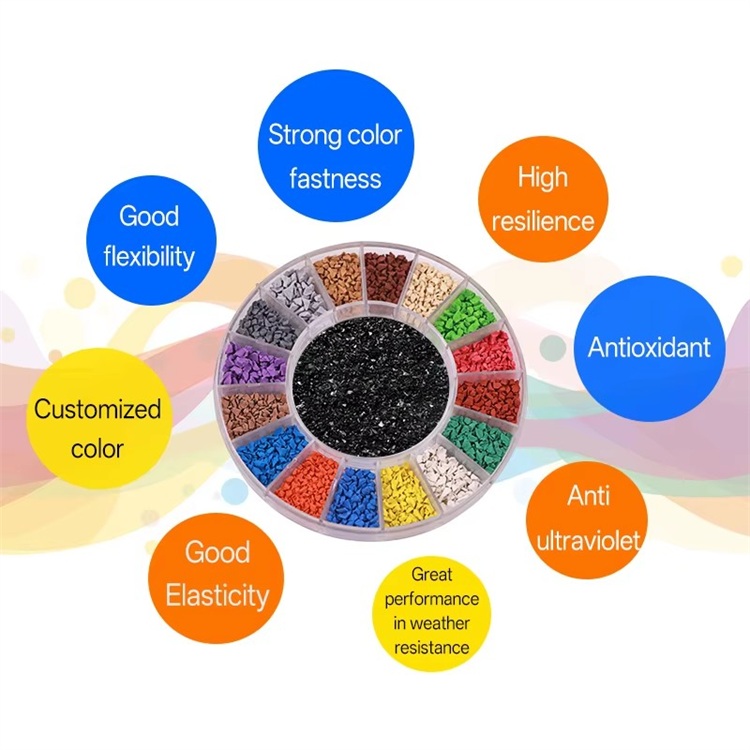
- UV Resistance: Surfaces exposed to direct sunlight degrade. They harden and lose their elasticity, failing EN 1177 over time. This is why UV aging tests are essential.
- Bonding Strength: The adhesion between the granules and the binder must be strong enough to prevent "delamination" or “dislodging” of the granules, which creates an uneven surface and reduces thickness.

The Common Pain Points and How to Solve Them
Let’s address the specific concerns raised by professionals in the field:
1. The Inconsistent Color and Fading Issue
Pain Point: You installed a vibrant red surface, but six months later it is pink.
Solution: Look for EPDM manufacturers that use high-quality pigments and UV stabilizers. Cheaper alternatives use recycled rubber or low-grade pigments. Specifically, you can require certification that the material has passed UV aging tests such as GB/T 16422.3-2022 (or similar standards) to ensure a colorfastness rating of 4-5.
2. The "Sulfur Smell" and Toxicity Concerns
Pain Point: The playground smells like tires on a hot day, or the material contains chemicals that may be harmful.
Solution: Traditional rubber contains sulfur. When heated by the sun, it can break down and release sulfuric compounds and volatile organic compounds. Advanced production methods, such as the proprietary sulfur-free formulation used by manufacturers with over 25 years of industry expertise, eliminate this issue. A sulfur-free EPDM does not decompose to release sulfides, making it odorless even in high temperatures. Its molecular structure is more stable, extending the life of the surface significantly.
3. The High Minimum Order Quantity (MOQ)
Pain Point: You are an importer or distributor who wants to test the market, but the factory demands a 20-foot container (5 tons) as a minimum.
Solution: There are high-quality manufacturers with no MOQ restrictions. Flexibility in volume allows you to secure projects of any size, manage inventory efficiently, and bid on projects without the risk of over-purchasing.
4. The "Low Bidder" Trap
Pain Point: You bought the cheapest EPDM, and now it is falling apart.
Solution: There is a direct correlation between material cost and performance.
- High-quality EPDM maintains its tensile strength (often reaching 4 - 7 MPa, which is 2-3 times higher than standard grades).
- High-quality materials retain their performance properties up to five times longer than low-grade alternatives.
- Cheap granules often have a high "bulk density" (they weigh more per volume), meaning you get less coverage per kilogram and must use more material to achieve the required thickness, negating the cost savings.
Why More Infrastructure Projects Are Choosing High-Grade EPDM
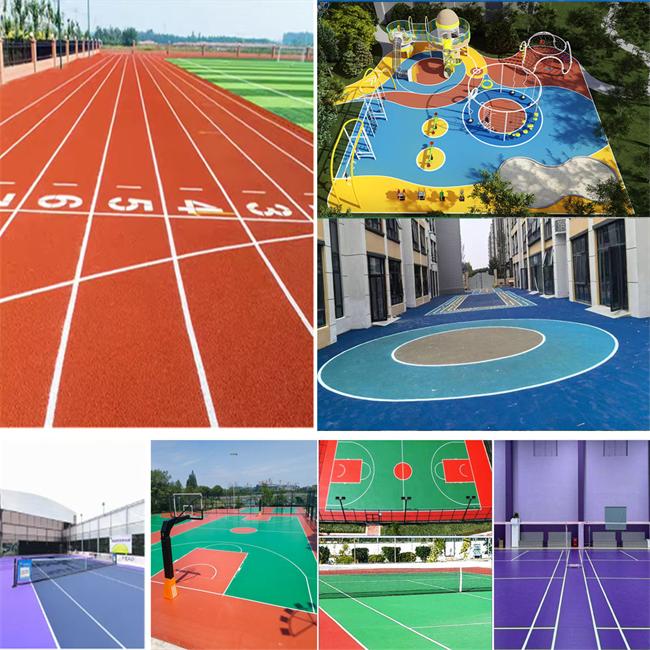
The trend in modern landscaping and municipal projects is moving toward high-performance, sulfur-free EPDM for several reasons:
1. Lifecycle Costing: A cheap surface lasts 3-5 years before it hardens and needs replacement. A premium, sulfur-free EPDM can last 15+ years (three times longer). Over a decade, the total cost of ownership for cheap surfaces is higher due to replacement and maintenance costs.
2. Safety Longevity: The elastic properties of standard materials degrade faster. The sulfur-free molecular bond ensures that the material stays "alive" longer, maintaining its impact attenuation properties (passed EN 1177) over a much longer period.
3. Environmental and Health Compliance: With stricter government procurement policies, materials must now meet "food-grade" or "close to food-grade" safety standards. High-quality EPDM meets these requirements for safe contact with humans, a detail that is critical for public liability.
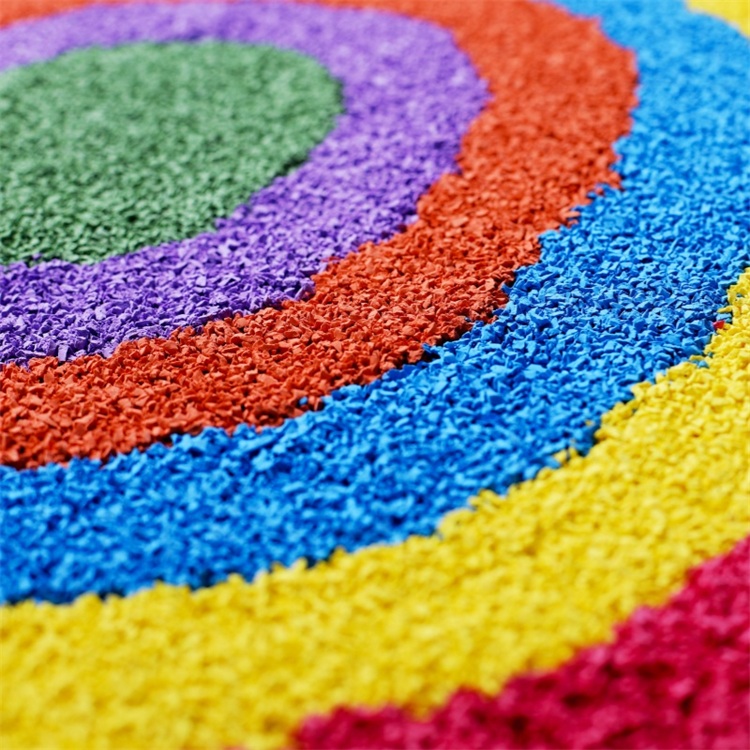
4. Customization: To meet the aesthetic requirements of architects and landscape designers, a supplier must be able to produce custom sizes (1-3mm, 2-4mm, etc.) and a wide range of colors to create patterns and designs. This ensures the design is not compromised by material limitations.
Key Specifications Checklist for Procurement and Specification
When issuing a tender or evaluating a product, ensure the following boxes are ticked:
- EN 1177 Compliance: Specifies the required Critical Fall Height (CFH) and the requirement for an on-site drop test post-installation.
- UV & Aging Resistance: Long-term resistance to UV degradation and weathering to protect color and performance.
- PAHs & ROHS Compliance: Safe levels of Polycyclic Aromatic Hydrocarbons (PAHs), heavy metals, and prohibited substances.
- Sulfur-Free Technology: Ensure the material is truly sulfur-free to prevent odor and ensure longevity and stability.
- No MOQ (Minimum Order Quantity): Look for suppliers offering flexible quantities to support projects of all scales and to allow the procurement of exact quantities required.

We are an industry leader with over 25 years of experience in the production of high-quality EPDM rubber granules and full advanced production lines. We understand that EN 1177 is not just a testing standard; it is a safety promise that directly affects your project’s success and your reputation.
Our proprietary sulfur-free technology delivers a product that meets and exceeds the standards. We offer:
- Odorless and Non-toxic: Safe for public use and food-grade compliant.
- Superior Durability: Increases tensile strength and elasticity by up to 2-3 times and extends performance retention by 5 times.
- Vibrant and Long-Lasting Color: Exceptional UV resistance to prevent fading.
- Flexible Supply: Custom colors and particle sizes with no MOQ constraints—allowing you to order exactly what you need.


WOW(LYG) New Material Co Ltd is a manufacturer specializing in the production of EPDM rubber granules. We use sulfur-free vulcanization technology, it increases the service life by more than 3 times than traditional EPDM granules, and enhances the performance, including anti-aging, high-temperature resistance, and colorfastness.
We have over 25 years of production experience and offer customization for colors and granule sizes. NO MOQ.


