 注: 建议图片大小150px*50px
丨
注: 建议图片大小150px*50px Views: 0 Author: Site Editor Publish Time: 2026-08-21 Origin: Site


Yes, EPDM granule colors can fade when exposed to sunlight over time. However, the degree of fading depends heavily on the quality of the raw materials, the specific pigments used, and the formulation of the granule. High-quality EPDM granules formulated with advanced UV stabilizers and premium pigments are engineered to resist fading and maintain color vibrancy for many years, even under intense UV exposure .
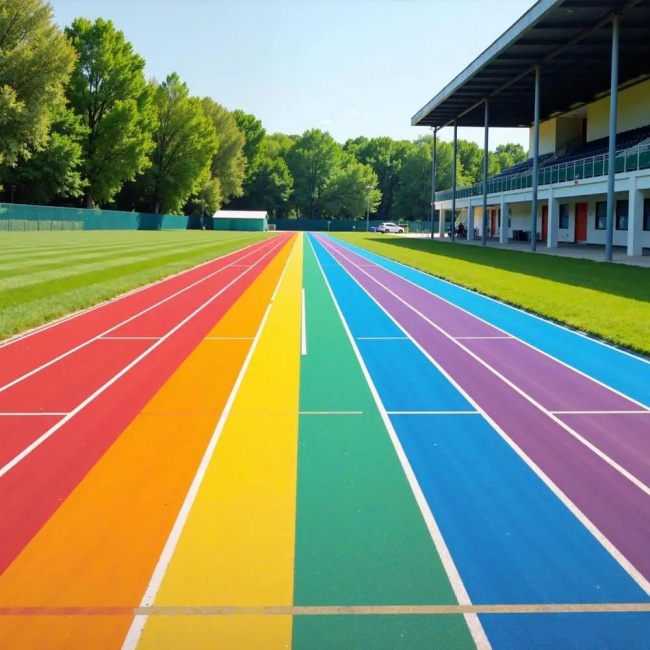
EPDM (Ethylene Propylene Diene Terpolymer) is a synthetic rubber known for its excellent weather resistance. However, like many materials, it is susceptible to degradation from ultraviolet (UV) radiation, a primary component of sunlight. The fading process is not a simple wash-out of color but a complex chemical reaction.
The Science of Fading
Color fading in EPDM granules occurs due to the breakdown of pigment molecules by UV radiation. When UV light hits the surface, it can break the chemical bonds in the pigment, causing the color to lose its intensity and become lighter or duller over time . The polymer itself (the EPDM rubber) can also degrade, leading to a "chalking" effect, where the surface breaks down and leaves a white, powdery residue that further masks the original color.
Factors Influencing Fading
Several factors determine how quickly an EPDM surface will fade:
- Pigment Quality: The type and grade of pigment used are the most critical factors. Some pigments, particularly organic or lower-grade ones, are inherently less UV-stable. High-quality, automotive-grade pigments are far more resistant to UV degradation .
- Additives and Stabilizers: The presence of effective UV stabilizers and antioxidants in the formulation is essential. These additives act as "sacrificial" agents, absorbing UV radiation or neutralizing free radicals before they can damage the pigment or polymer. Without a robust stabilization package, fading and surface degradation will occur much more rapidly .
- Formulation and Rubber Content: The overall durability of the granule is tied to its polymer content and cross-linking density. A higher-quality EPDM compound with a higher polymer content and a stable, sulfur-free cross-linking system is better able to protect its pigments from the elements .
- Binder System: For installed surfaces, it is crucial to distinguish between the fading of the granule itself and the yellowing of the polyurethane binder. Aromatic binders are not UV-stable and will turn yellow over time, which can change the perceived color of the entire surface. Aliphatic binders are UV-stable and are recommended for light or bright colors to prevent this "yellowing effect" .
Practical Considerations
For engineers, contractors, and procurement specialists, understanding the difference between standard and UV-resistant EPDM products is key to specifying the right material for a project.
Where to Specify UV-Resistant EPDM
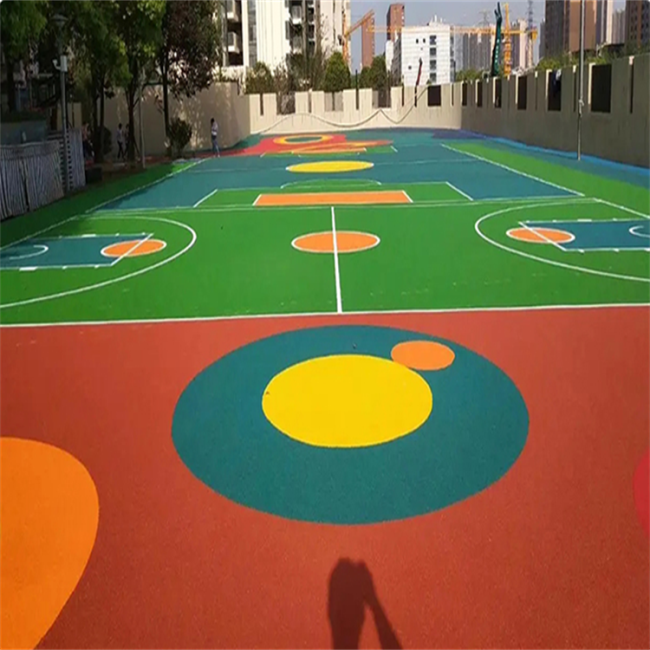
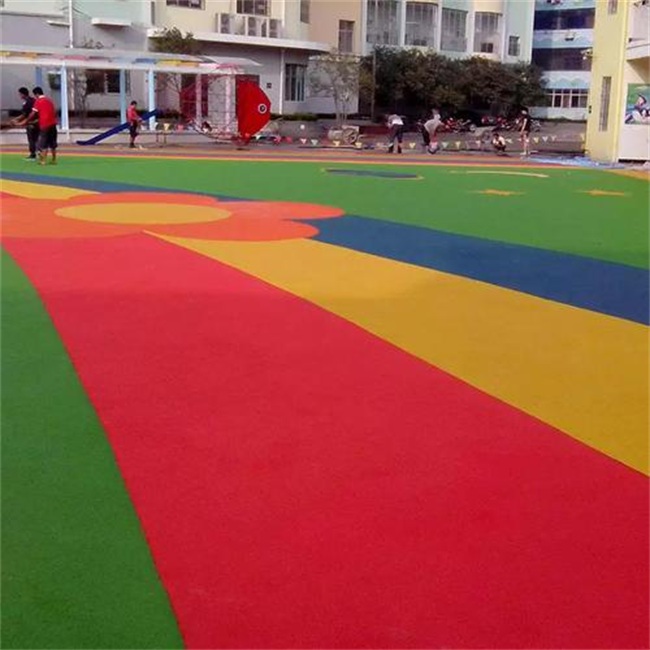
For any outdoor application where long-term aesthetics are important—such as playgrounds, running tracks, or sports surfacing in areas with high solar radiation—investing in UV-stable EPDM granules is a wise decision. Standard EPDM may fade quickly in these environments, leading to an unattractive surface that may need replacement sooner than expected .
Understanding the Metrics
Industry standards often test UV resistance using accelerated weathering. A common standard is to test UVA exposure at 340 nm for 2,550 hours, requiring a minimum rating of ≥3 on the grey scale for color change. High-performance UV-resistant EPDM granules significantly exceed this, with some products scoring 4–5 on the grey scale even after 5,000 hours of exposure . This indicates minimal visible color change.
Evaluate the Whole System
When specifying an EPDM surface, do not evaluate the granules in isolation. The complete system (granules + binder) determines the final durability. The use of an aliphatic (UV-stable) binder is often recommended, especially for light, bright, or pastel-colored surfaces, to ensure that the binder does not yellow and alter the final color over time .
EPDM Granules Selection
When selecting EPDM granules for outdoor projects, focus on the following criteria to ensure long-term color stability:
For Color-Critical Projects: If maintaining a specific, vibrant color is a non-negotiable requirement, select EPDM granules that are explicitly marketed as having superior UV stability. This is essential for sports fields with corporate branding or safety zones with specific colors.
Specify the Additive Package: Inquire about the type of pigments and UV stabilizers used. A product that uses premium, automotive-grade pigments and a carefully optimized stabilization package is more likely to deliver consistent performance.
Consider the Application: For high-traffic areas that also see extreme sunlight, the durability of the granule's physical properties is just as important as its color. A product that is both UV-resistant and maintains excellent elasticity (e.g., with a tensile strength of 4–7 MPa) will outperform lower-grade materials.
Minimum Specifications: Use technical data sheets (TDS) to compare products. Look for specifications that confirm a high polymer content, the use of an angular cut for better binding, and test results that validate its UV and weather resistance.

FAQ
Can EPDM colors be protected from fading?
Yes, the rate of fading can be significantly reduced by using high-quality EPDM granules formulated with UV stabilizers and premium pigments. The correct choice of a UV-stable polyurethane binder (aliphatic) is equally important to prevent the binder from yellowing.
Do all EPDM colors fade at the same rate?
No. Generally, bright and light colors (e.g., bright red, yellow, blue, white, pink) are more susceptible to visible changes from UV exposure and are more likely to require a UV-stable aliphatic binder . Darker colors (e.g., brown, dark green, dark blue) are often more forgiving and may show less noticeable fading.
Does the binder affect color stability?
Absolutely. The binder holds the granules together. An aromatic (non-UV-stable) binder will yellow when exposed to sunlight, which can discolor the entire surface . An aliphatic (UV-stable) binder prevents this yellowing, preserving the original color.
How long does it take for EPDM granules to fade?
This depends entirely on the quality of the product. Standard granules can show signs of fading within months in intense sunlight . High-quality, UV-resistant EPDM granules can maintain their color vibrancy for 8-10 years or more, with minimal to no fading.
Why does my EPDM surface look white or chalky?
This is likely a phenomenon called "chalking," which results from the degradation of the EPDM polymer itself by UV radiation. It is a sign of material breakdown and can be prevented with a well-stabilized formulation.
Is UV-resistant EPDM more expensive?
Typically, yes. The use of higher-quality raw materials, more expensive pigments, and advanced additive packages increases the production cost. However, this is an investment in the longevity of the surface, reducing long-term maintenance and replacement costs.
How can I test EPDM granules for UV stability?
You can request a technical data sheet (TDS) from the supplier. Look for test results from accelerated weathering, such as results from lab testing to EN 14877 or ASTM standards . Reputable suppliers will provide objective, third-party test data to support their claims.
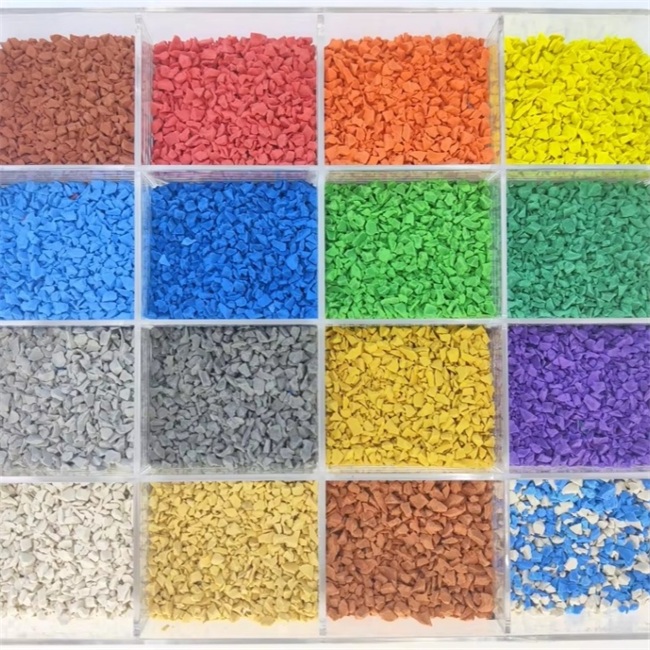
While all EPDM granules are susceptible to some degree of fading under prolonged sunlight, the reality is that not all products are created equal. The key to a vibrant, long-lasting outdoor surface lies in selecting high-quality EPDM granules with proven UV resistance and pairing them with the correct, UV-stable binder system. By prioritizing material quality, you are not just investing in a color; you are investing in the durability and longevity of the entire project.
If you are looking for EPDM rubber granules for a specific outdoor application and require long-term color stability, we are here to help. Our products feature advanced, sulfur-free technology for superior UV resistance, stability, and longevity. [Contact us today] to discuss your project requirements, particle size, or color specifications.

WOW(LYG) New Material Co Ltd is a manufacturer specializing in the production of EPDM rubber granules. We use sulfur-free vulcanization technology, it increases the service life by more than 3 times than traditional EPDM granules, and enhances the performance, including anti-aging, high-temperature resistance, and colorfastness.
We have over 25 years of production experience and offer customization for colors and granule sizes. NO MOQ.


