 注: 建议图片大小150px*50px
丨
注: 建议图片大小150px*50px Views: 0 Author: Site Editor Publish Time: 2026-08-21 Origin: Site


Dark, earthy, and inorganic pigment-based colors like browns, dark greens, and reds generally exhibit the best inherent weather resistance and color stability when exposed to UV radiation. These colors are typically achieved using inorganic pigments (such as iron oxide for reds and chromium oxide for greens), which are chemically stable and resist fading . However, it's crucial to understand that the overall weather resistance of an EPDM surface depends not only on the granule color but also on the choice of polyurethane binder used to set them. For lighter or brighter colors (e.g., white, bright blue, pink), the binder must be UV-stable to prevent a "yellowing effect" that can alter the surface's appearance .
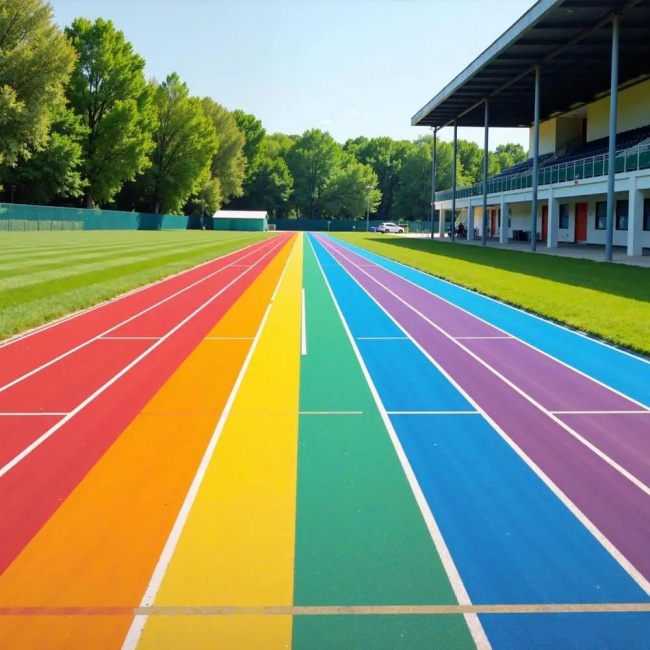
Why Some Colors Outperform Others
The weather resistance of colored EPDM granules is determined by two primary factors: the type of pigment used and the interaction with the polyurethane binder.
The Role of Pigments
EPDM granules are colored by adding pigments before the material is cured, resulting in a homogenous, through-colored granule .
Inorganic Pigments: These are metallic compounds like iron oxide (for reds, browns) and chromium oxide (for greens). They are highly stable against UV radiation, heat, and chemicals, making them the gold standard for long-term colorfastness . Darker colors, in general, are less susceptible to visible fading.
Organic Pigments: These are carbon-based and used to achieve brighter, more vibrant colors like bright yellow, bright orange, and bright blue. While they offer a broader color palette, they are generally less stable and can be more susceptible to fading over time under intense UV exposure . A study on EPDM aging found that the type of colorant significantly affects the material's mechanical properties after long-term heat aging, with different pigments impacting tensile strength and elongation at break to varying degrees .
The Binder Factor: A Critical Component
This is where many projects go wrong. The EPDM granules themselves may be UV-resistant, but the polyurethane resin used to bind them can be the weak link.
Aromatic Binders: These are not UV-stable. Under sunlight, they undergo a chemical reaction called "yellowing." While this yellowing is reversible over time and does not affect the granules' mechanical properties, it is visually undesirable and can significantly alter the color of the finished surface .
Aliphatic Binders: These are UV-stable and do not yellow. Their use is highly recommended, especially for light, bright, or pastel colors where any yellowing would be immediately obvious. For instance, bright blue, turquoise, grey, lilac, pink, and white EPDM granules are strongly recommended to be installed with aliphatic binders to ensure color integrity .
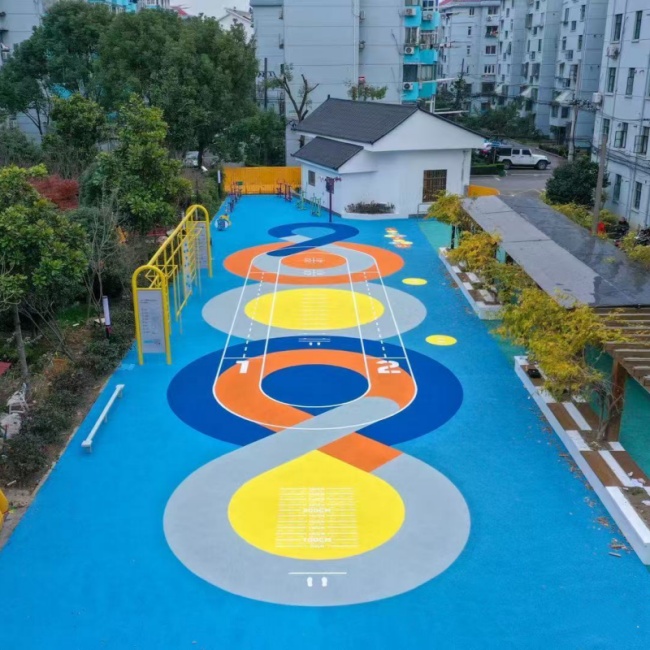
Practical Considerations for Engineers and Contractors
When selecting EPDM colors for a project, here are the key points to evaluate:
- Prioritize Granule Quality: The weather resistance of the EPDM granule begins with the polymer content and raw materials. A higher percentage of EPDM rubber in the granule often correlates with better overall durability and resistance to weathering, as it indicates a higher quality base material .
- Don't Overlook the Binder: The binder is as important as the granule. For any outdoor project, especially in regions with high UV exposure, using an aliphatic (UV-stable) binder is essential. The recommendation often depends on the chosen color: earthy tones may tolerate an aromatic binder, while lighter, brighter, or pastel shades require an aliphatic binder to avoid a yellowed appearance .
- Consider "Extra Stable" Formulations: For demanding projects with maximum UV exposure, there are specialized EPDM granules on the market. Some manufacturers have developed "endurance" lines that are engineered for unprecedented UV stability, surpassing industry standard requirements (like the ≥3 on the grey scale after 2,550 hours of UVA exposure) and continuing to perform well even at 5,000 hours of exposure .

EPDM Granules Selection
Choosing the right EPDM granule color is a balance of aesthetics, performance, and project requirements.
- For Maximum Longevity and Fade Resistance: Select colors from the inorganic pigment family. Red, brown, and dark green are historically the most reliable for color stability over decades .
- For Bright, Vibrant Designs: You can still achieve bright colors, but you must account for the binder. Work with your supplier to ensure the correct aliphatic binder is specified, and consider using premium or endurance-grade granules designed for superior UV performance .
- granule Size: Weather resistance is separate from granule size. Your choice of size (e.g., 1-2mm for thin top layers, or 1-4mm for thicker wet-pour systems) will depend on the application, not the color. Many suppliers offer a wide range of sizes for all standard RAL colors .
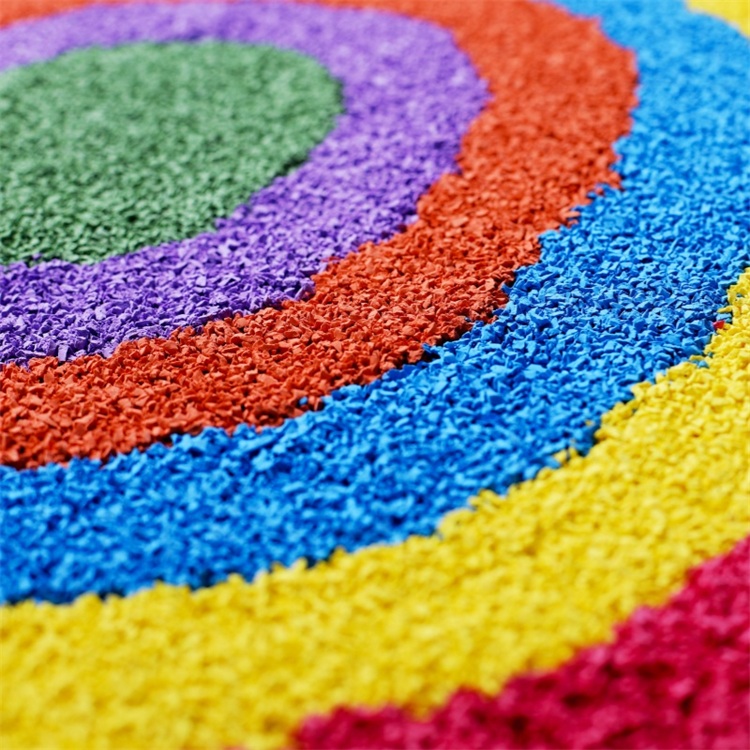
FAQ
Do darker EPDM colors have better UV resistance than lighter ones?
Generally, yes. Darker colors and those using inorganic pigments (like reds, browns, and greens) are inherently more stable and show less visible fading than brighter organic pigment-based colors .
What is the main cause of color fading in an EPDM surface?
While the EPDM granules can fade, a very common cause is the "yellowing" of an aromatic polyurethane binder. This is a reversible chemical reaction caused by UV exposure that alters the overall visual appearance of the floor .
Is it always necessary to use a UV-stable binder with bright EPDM colors?
Yes, highly recommended. Colors like white, pink, lilac, bright blue, and turquoise are particularly sensitive to color change. Using an aliphatic (UV-stable) binder is critical to maintaining the desired aesthetic .
Can I use an aromatic (non-UV-stable) binder with red or brown EPDM granules?
It is often possible. For earthy and dark tones like brown (RAL 8025), dark green (RAL 6005), and red (RAL 3016), an aromatic binder is commonly recommended as the "yellowing" effect is less visually noticeable on these darker, warmer colors .
Does weather resistance affect the physical properties of EPDM granules?
Yes, prolonged UV exposure can degrade the rubber over time, leading to reduced elasticity and potential surface chalking. However, quality granules are formulated with UV stabilizers and antioxidants to mitigate this . The yellowing of a binder is a separate visual issue that does not affect mechanical properties .
How can I ensure the EPDM color I choose will last for my specific outdoor project?
Choose a high-quality granule from a reputable supplier with a proven track record, and use an aliphatic binder for your entire installation. For projects with extreme UV exposure, specify a product engineered for superior UV stability .
Are there standard testing methods for EPDM color stability?
Yes, tests like the artificial weathering test (often referenced as EN 14877) use a grey scale to rate color change after a set amount of UVA exposure (e.g., 4,896 kJ after 2,550 hours). A high rating (e.g., 4-5 on the grey scale) indicates excellent color stability .

In summary, while EPDM granules in red, brown, and dark green offer the most inherently weather-resistant color options, the true key to a durable, long-lasting surface lies in a holistic approach. The project's success depends on selecting a high-quality granule, understanding the critical role of the polyurethane binder, and choosing the right combination of both for the specific color and environmental conditions.
If you are planning a project and need guidance on selecting the optimal EPDM rubber granules, granule size, or color for your specific application and exposure conditions, we are here to help. Contact us to discuss your requirements and ensure your surface remains vibrant and durable for years to come.


WOW(LYG) New Material Co Ltd is a manufacturer specializing in the production of EPDM rubber granules. We use sulfur-free vulcanization technology, it increases the service life by more than 3 times than traditional EPDM granules, and enhances the performance, including anti-aging, high-temperature resistance, and colorfastness.
We have over 25 years of production experience and offer customization for colors and granule sizes. NO MOQ.


