 注: 建议图片大小150px*50px
丨
注: 建议图片大小150px*50px Views: 0 Author: Site Editor Publish Time: 2026-08-21 Origin: Site


The best EPDM colors for running tracks are red and green, which are the most widely specified and commonly available options. Red remains the traditional and most popular choice for competitive athletics tracks, while green is frequently used for multi-purpose sports surfaces and recreational facilities. For design flexibility, standard EPDM granules are available in a broad spectrum including blue, yellow, orange, purple, and grey, with many suppliers offering custom color matching for specific project requirements.
However, the "best" color for your running track depends on more than aesthetics. The critical factor is color stability and UV resistance—a vibrant color that fades within a year is poor value regardless of its initial appeal. High-quality EPDM granules use select inorganic pigments and UV stabilizers to maintain color integrity under prolonged sun exposure. This guide explains how to evaluate EPDM color options and select the right pigment system for your specific track application.

Why Color Choice Matters
EPDM (Ethylene Propylene Diene Terpolymer) granules are colored using pigments added during manufacturing. The durability of that color depends heavily on pigment quality, the base polymer formulation, and the UV stabilizers used.
UV Resistance and Fading
Outdoor running tracks face continuous UV radiation. Without adequate protection, colors degrade and fade. This is not simply an aesthetic issue: significant fading may indicate surface degradation that can affect performance and safety.
Industry standards like EN 14877 and NF P90-100 assess colorfastness using the grey scale (EN 20105-A02), where ratings range from 1 (severe fading) to 5 (no change). Premium UV-stable EPDM formulations can achieve ratings of 4–5 after 2,550 hours of UVA exposure (4,896 kJ) , and 3.5–4 even after 5,000 hours (9,600 kJ) —nearly double the standard requirement.
Standard Colors and Their Typical Applications
Most suppliers offer a core range of colors for running track applications. Red is the most common choice for competitive athletics tracks, benefiting from well-established pigment systems that offer reliable performance. Green is a popular alternative for multi-sport surfaces and recreational facilities, frequently specified for school and park projects. Blue is increasingly used for training tracks and visual contrast zones, offering a modern aesthetic. Yellow, orange, and purple are often chosen for decorative patterns and play areas, though they typically require higher-quality pigments to achieve adequate UV stability. Grey provides a practical, low-maintenance option for urban settings and is known for excellent UV resistance.
The Role of the Binder System
Color stability is not solely determined by the EPDM granules themselves. The polyurethane binder used to adhere the granules can significantly influence final color appearance. Aromatic resins—commonly used but not UV-stable—can yellow under sunlight, causing a "yellowing effect" that alters the visual color of the surface. Aliphatic resins, while UV-stable and recommended for lighter or brighter colors, are also available. This is a critical consideration when specifying a full track system, not just the granules.

Practical Considerations for Engineers, Contractors, and Procurement
When selecting EPDM colors for a running track project, these are the practical factors to evaluate:
Contrast and Visibility. Color should meet functional requirements, such as marking contrast for lane lines, zone delineation, and overall visibility. Red tracks with white lane markings remain the international standard for a reason: they offer excellent contrast. Darker colors like green or grey may offer practical advantages in terms of hiding dirt or scuff marks.
Surface Temperature. Dark colors absorb more heat than light ones, which can affect surface temperature in hot climates. While this is rarely the primary deciding factor, it is worth mentioning for projects in high-temperature regions.
Color Matching Between Batches. Even with consistent formulations, slight color deviations can occur between production batches due to natural raw material variations. Reputable suppliers recommend mixing granules from different batches during installation to minimize visible differences. This is critical for ensuring a uniform finish.
Regulatory and Specification Requirements. Different regions have specific standards for sports surfaces, including color. In China, for example, EPDM track surfaces are often required to meet standards like GB 36246, which covers environmental safety and performance, though color itself is typically specified by the project owner.
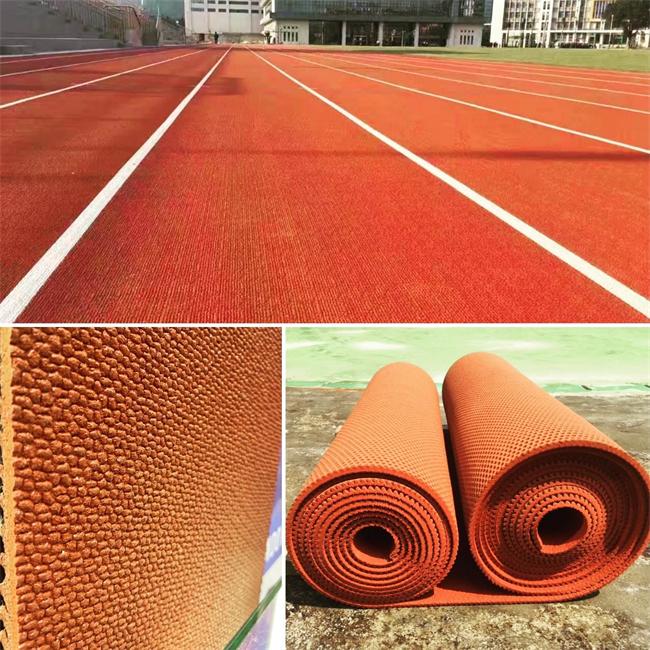
EPDM Granules Selection: Matching Color to Application
Choosing the right EPDM granules extends beyond color. Here’s how color relates to the broader selection process:
Grain Size. For running track surfaces, 2–4 mm granules are standard for the top layer, providing the right balance of traction and comfort. Finer 0.5–2 mm granules may be used for specialized spray-on applications. The color choice is independent of grain size but should be specified for the correct layer.
New Material vs. Recycled Material. This is a crucial distinction. EPDM granules made from virgin (new) material maintain color vibrancy and structural integrity for 8–10 years. Granules made from recycled rubber may contain impurities and significantly lower polymer content, often fading within 3–5 years. For long-term projects, the initial cost savings of recycled material rarely justify the maintenance and replacement costs.
Polymer Content. A higher percentage of EPDM polymer within the granule generally indicates better elasticity, weather resistance, and color stability. Premium products often have a polymer content of 20% or higher. This is a key specification to check in any technical data sheet.
Color Customization. Many suppliers offer custom color matching for projects with specific branding or design needs. Minimum order quantities often apply (e.g., three tons or more), so check with your supplier early in the planning phase.

FAQ
Can I use any color of EPDM granules for a running track?
Yes, technically. Most colors are available, but red is the traditional choice for competition tracks, and some surfaces like green and blue are used for recreational and multi-sport facilities. The primary consideration should be UV stability rather than color alone.
Which EPDM colors fade the fastest?
Lighter and brighter shades—such as white, light blue, bright yellow, and pink—are more susceptible to fading and are more likely to show yellowing from the binder. Darker colors like red, dark green, brown, and grey tend to hold color better over time.
What does "UV-stable" EPDM mean?
UV-stable EPDM is a formulation specifically designed to resist degradation from sunlight. It contains selected pigments and stabilizers that prevent color fading and surface chalking, ensuring the track retains its appearance and performance over many years.
Is red or green better for track surfaces?
There is no performance difference. Red is the classic choice for professional athletics tracks. Green is often preferred for multi-sport fields or recreational areas. The best choice depends on visual preference, branding, and contrast with surrounding surfaces.
How can I tell if EPDM granules will fade?
Request technical data confirming UV resistance, ideally referencing the grey scale rating after a defined UVA exposure (e.g., EN 14877). The higher the number after extended testing, the more color-stable the product. Ask the supplier for a color sample and expose it to direct sunlight to observe any change.
Why does the binder color matter for track aesthetics?
Some polyurethane binders, particularly aromatic types, yellow when exposed to UV light. This yellowing can shift the perceived color of the track, especially with light-colored granules. Using a UV-stable aliphatic binder is recommended for bright or light color schemes.
Can colors be mixed for custom patterns?
Yes, EPDM granules of different colors can be mixed during the installation process to create custom patterns, logos, and designs. This is common in playgrounds and recreational areas.

Selecting the best EPDM colors for your running track starts with understanding that color durability is as important as the color itself. While red and green are the most widely specified, a wide range of colors is available to meet design requirements. The critical technical differentiator is UV stability, determined by the quality of the pigments, polymer content, and the use of effective UV stabilizers. For any project, prioritizing color stability over initial cost will ensure a track that remains visually appealing and performs well over its intended lifespan.
If you are planning a running track or sports surfacing project and need EPDM rubber granules in specific colors, granule sizes, or UV performance specifications, contact us to discuss your requirements. We can provide technical data sheets, color swatches, and guidance to ensure your project is a success.

WOW(LYG) New Material Co Ltd is a manufacturer specializing in the production of EPDM rubber granules. We use sulfur-free vulcanization technology, it increases the service life by more than 3 times than traditional EPDM granules, and enhances the performance, including anti-aging, high-temperature resistance, and colorfastness.
We have over 25 years of production experience and offer customization for colors and granule sizes. NO MOQ.


