 注: 建议图片大小150px*50px
丨
注: 建议图片大小150px*50px Views: 0 Author: Site Editor Publish Time: 2026-08-21 Origin: Site


Yes, EPDM granule color significantly affects surface temperature. Lighter-colored EPDM granules absorb less solar radiation and remain cooler, while dark colors—especially black—absorb more heat, leading to substantially higher surface temperatures. In full sun, the temperature difference between black and light-colored EPDM can reach 20–40°F (approximately 11–22°C) under similar conditions.
This makes color selection a critical consideration for applications where users contact the surface directly, such as playgrounds, running tracks, and sports surfacing.
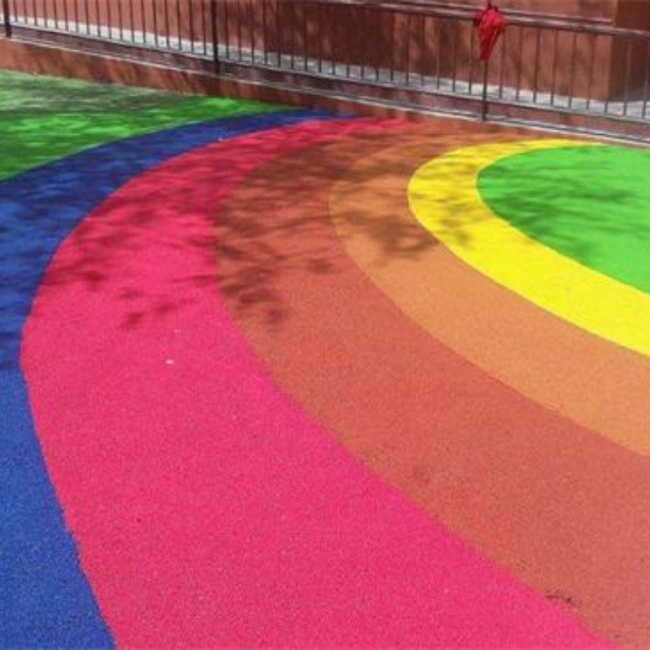
How Color Affects Heat Absorption
The relationship between color and temperature comes down to solar reflectance. Dark pigments absorb a broader spectrum of sunlight, converting more solar energy into heat, while light pigments reflect more radiation. This is why black EPDM granules—especially those containing carbon black as a pigment and filler—heat up significantly more than beige, green, or other light-colored granules.
Research on outdoor playground surfaces has shown that surface material surface temperatures follow the order: black > dark-colored > light-colored materials. In some cases, dark surfaces have been measured at temperatures exceeding 80°C, while lighter surfaces remain cooler by a meaningful margin.
Material Properties vs. Color
It is important to distinguish between the base material and the color. EPDM itself, as a polymer, has certain thermal properties, but the color—specifically, the pigment used—determines how much solar energy the surface absorbs. Light-colored EPDM or TPE infill typically runs cooler than dark rubber-based infills on the same surface.
That said, the actual temperature outcome depends on multiple factors in addition to color: sun angle, latitude, season, ambient air temperature, shade, wind, and surface ventilation all play a role. Real-world results vary, and specific temperature readings depend on the unique combination of these variables.
Does EPDM Itself Retain Heat Differently?
The heat capacity of the rubber material itself is relatively similar regardless of color. What changes is the rate of heat absorption and re-radiation. Dark surfaces absorb heat at a higher flux on sunny days and consequently feel hotter. Light-colored surfaces simply absorb less heat in the first place.
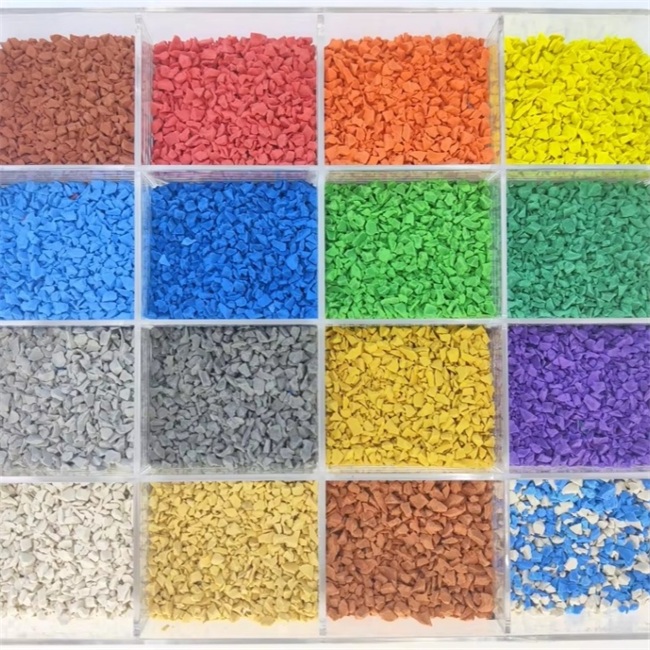
Practical Considerations for Engineers, Contractors, and Buyers
Where Temperature Matters Most
Color-driven temperature differences are most significant in:
- Playgrounds – Surfaces can become hot enough to cause contact burns on typical summer days. Children are more vulnerable to burn injuries, making temperature a safety concern.
- Running tracks and sports surfacing – Athletes training in full sun are affected by surface heat radiating upward.
- Artificial turf infill – Lighter EPDM infill helps reduce overall turf system temperature.
Choosing Based on Location and Use
- Full sun exposure – If the surface will be in direct sunlight during peak hours, lighter colors are strongly recommended, especially in hot or arid regions.
- Shaded areas – Temperature differences are less pronounced in shade, offering more flexibility in color selection.
- Aesthetic requirements – While custom colors are available, projects that require dark or black granules should consider whether the site receives significant sun exposure.
Other Factors in Temperature Management
- Shade – Installing shade structures over playgrounds or sports surfaces can dramatically reduce surface temperatures.
- Moisture – Evaporative cooling from water on the surface lowers temperatures temporarily.
- Surface ventilation – Permeable surfaces allow some heat dissipation.

EPDM Granules Selection: Balancing Temperature, Performance, and Aesthetics
When selecting EPDM rubber granules, color is one of several performance-related decisions. Consider the following:
- Application – Playground safety surfaces, running tracks, and artificial turf infill all have different temperature exposure profiles. For barefoot contact areas in sunny climates, prioritize light colors.
- granule size – Granule size affects surface texture, shock absorption, and drainage. Standard sizes include 1.0–2.5mm for turf infill and 1.0–4.0mm for base mats and surfaces.
- Color stability – High-quality EPDM granules maintain their color over time. Our EPDM granules are formulated with advanced antioxidants for excellent color retention and resistance to fading under UV exposure.
- Material quality – Look for consistent granule size distribution, good elasticity, and proven UV resistance.
Our EPDM granules are manufactured using a sulfur-free technology that enhances molecular stability, resulting in superior durability, excellent elasticity (4–7 MPa tensile strength), and minimal odor even under high heat and UV exposure. They are also environmentally friendly, meeting food-grade safety standards.
Temperature-Related Advantages of High-Quality EPDM
While all light-colored granules have some temperature advantage, high-quality virgin EPDM—especially granules processed with peroxide vulcanization—offers additional benefits for outdoor applications: UV and weather resistance, consistent shape and size, low moisture absorption, and color stability over time.

FAQ
What temperature difference can I expect between black and light EPDM granules?
In full summer sun, the surface temperature of black EPDM can be 20–40°F (11–22°C) higher than light-colored EPDM under otherwise similar conditions.
Does color affect EPDM durability?
Color itself does not affect structural durability. However, dark colors can accelerate heat-related aging of the binder or adhesive system in the substrate. High-quality EPDM with UV-resistant properties—like sulfur-free formulations—provides better long-term performance regardless of color.
Are light-colored EPDM granules more expensive?
Light pigments can be more expensive than carbon black, but the cost difference depends on the specific color and pigment used. Some custom colors may carry a premium.
Do black EPDM granules cool down faster than light ones?
Black granules may cool down slightly faster due to higher heat radiation rates, but they also heat up faster. The practical effect is that black surfaces stay hotter for longer during peak sun hours.
Can dark EPDM granules cause burns?
Yes. Dark surfaces in playgrounds can reach temperatures capable of causing contact burns on warm, sunny days when children are likely to play. This is a key safety consideration for playground designers and operators.
Does EPDM color affect performance in cold climates?
Color has less practical impact in cold environments. However, light-colored granules may reduce unwanted solar heat gain in climates that have hot summers.
Is color the only factor affecting EPDM surface temperature?
No. Sun exposure, shade, wind, moisture, and the underlying base material all influence surface temperature. Color is one of the controllable variables.

EPDM granule color directly affects surface temperature: light colors stay cooler, while dark colors absorb more heat. For outdoor applications with direct sun exposure—particularly playgrounds, running tracks, and sports surfaces—color selection should consider both aesthetics and user safety. Temperature differences of 20–40°F between black and light-colored EPDM are realistic, and in hot climates, this can be the difference between a comfortable surface and one that risks burns.
Beyond temperature management, EPDM granules should be evaluated on granule size consistency, color stability, durability, weather resistance, and overall material quality. A thoughtful selection process ensures the surface performs well for its intended use and environment.

If you are planning a project and need guidance on EPDM granule color, granule size, or specification for your specific application and climate, we are here to help. Our team has over 25 years of industry experience and can support custom color and size requirements with flexible order quantities.
Contact us to discuss your EPDM granule requirements.
WOW(LYG) New Material Co Ltd is a manufacturer specializing in the production of EPDM rubber granules. We use sulfur-free vulcanization technology, it increases the service life by more than 3 times than traditional EPDM granules, and enhances the performance, including anti-aging, high-temperature resistance, and colorfastness.
We have over 25 years of production experience and offer customization for colors and granule sizes. NO MOQ.


